Park Dongsun, Shin Kyungha, Choi Ehn-Kyoung, Choi Youngjin, Jang Ja-Young, Kim Jihyun, Jeong Heon-Sang, Lee Wooryoung, Lee Yoon-Bok, Kim Seung Up, Joo Seong Soo, Kim Yun-Bae
College of Veterinary Medicine, Chungbuk National University, Cheongju, Chungbuk 362-763, Republic of Korea ; Ajou University School of Medicine, Suwon, Gyeonggi 443-380, Republic of Korea.
College of Veterinary Medicine, Chungbuk National University, Cheongju, Chungbuk 362-763, Republic of Korea.
Evid Based Complement Alternat Med. 2015;2015:764251. doi: 10.1155/2015/764251. Epub 2015 Mar 31.
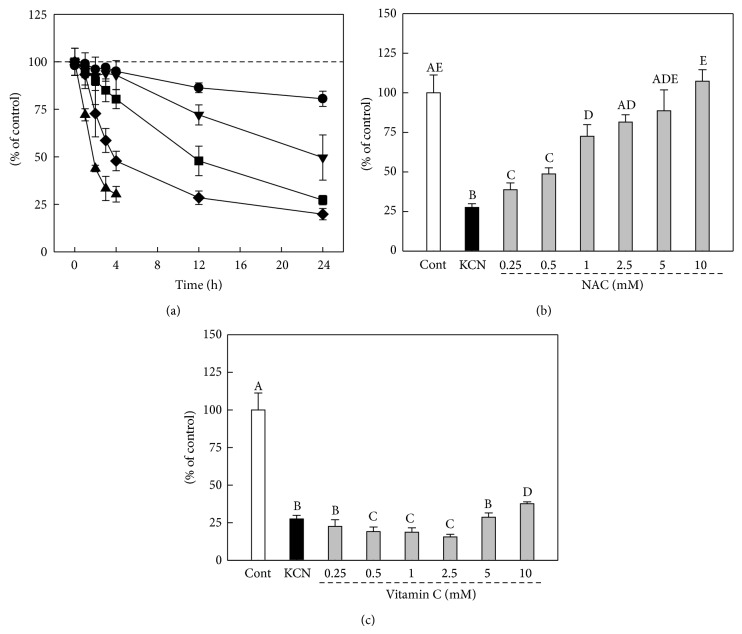
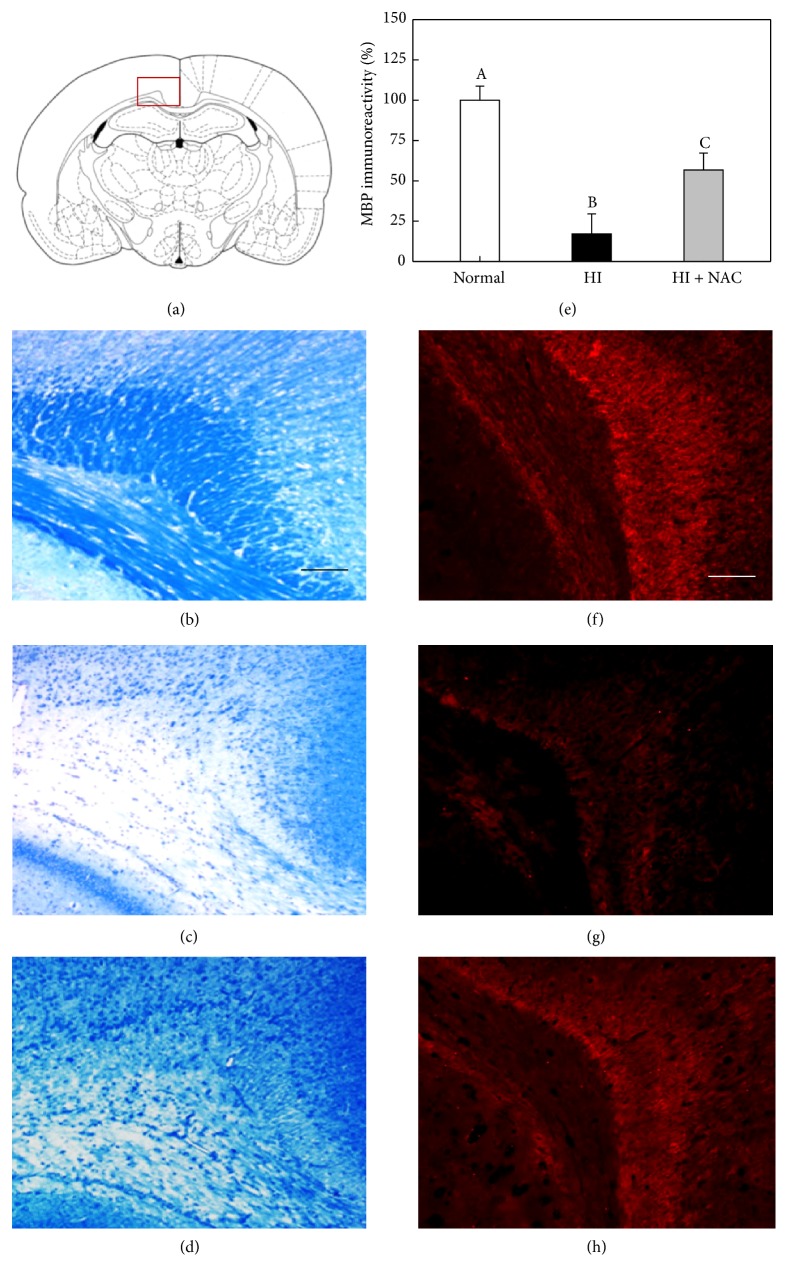
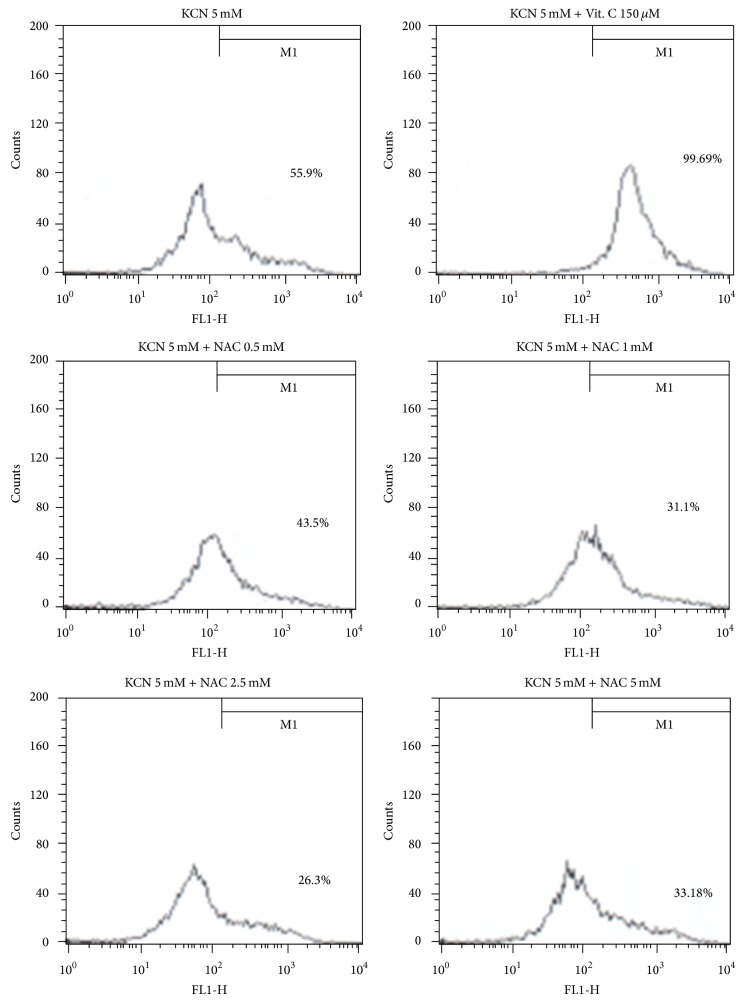
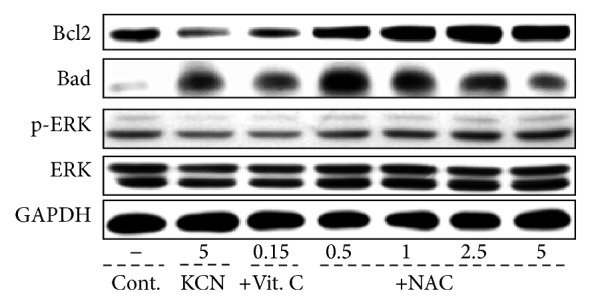
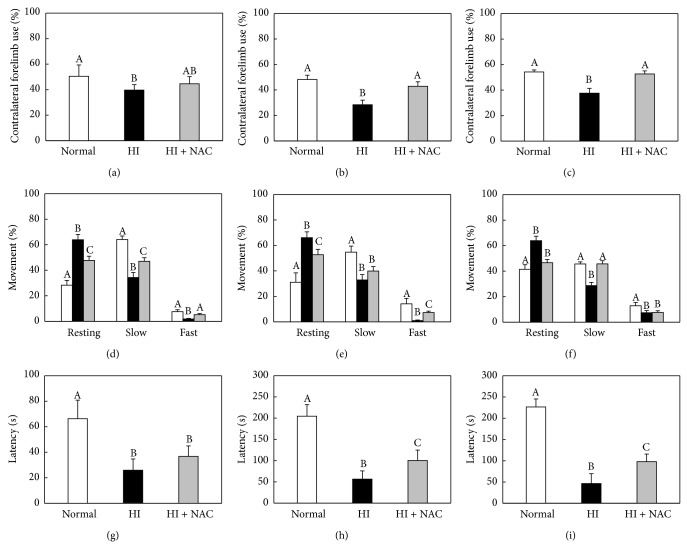
Objective. Since oligodendrocyte progenitor cells (OPCs) are the target cells of neonatal hypoxic-ischemic encephalopathy (HIE), the present study was aimed at investigating the protective effects of N-acetyl-l-cysteine (NAC), a well-known antioxidant and precursor of glutathione, in OPCs as well as in neonatal rats. Methods. In in vitro study, protective effects of NAC on KCN cytotoxicity in F3.Olig2 OPCs were investigated via MTT assay and apoptotic signal analysis. In in vivo study, NAC was administered to rats with HIE induced by hypoxia-ischemia surgery at postnatal day 7, and their motor functions and white matter demyelination were analyzed. Results. NAC decreased KCN cytotoxicity in F3.Olig2 cells and especially suppressed apoptosis by regulating Bcl2 and p-ERK. Administration of NAC recovered motor functions such as the using ratio of forelimb contralateral to the injured brain, locomotor activity, and rotarod performance of neonatal HIE animals. It was also confirmed that NAC attenuated demyelination in the corpus callosum, a white matter region vulnerable to HIE. Conclusion. The results indicate that NAC exerts neuroprotective effects in vitro and in vivo by preserving OPCs, via regulation of antiapoptotic signaling, and that F3.Olig2 human OPCs could be a good tool for screening of candidates for demyelinating diseases.
目的。由于少突胶质前体细胞(OPCs)是新生儿缺氧缺血性脑病(HIE)的靶细胞,本研究旨在探讨N-乙酰-L-半胱氨酸(NAC),一种著名的抗氧化剂和谷胱甘肽前体,对OPCs以及新生大鼠的保护作用。方法。在体外研究中,通过MTT法和凋亡信号分析研究NAC对F3.Olig2 OPCs中KCN细胞毒性的保护作用。在体内研究中,对出生后第7天进行缺氧缺血手术诱导HIE的大鼠给予NAC,并分析其运动功能和白质脱髓鞘情况。结果。NAC降低了F3.Olig2细胞中的KCN细胞毒性,特别是通过调节Bcl2和p-ERK抑制了细胞凋亡。给予NAC恢复了新生HIE动物的运动功能,如损伤脑对侧前肢的使用比例、运动活性和转棒试验表现。还证实NAC减轻了胼胝体(一个易受HIE影响的白质区域)的脱髓鞘。结论。结果表明,NAC通过调节抗凋亡信号来保护OPCs,从而在体外和体内发挥神经保护作用,并且F3.Olig2人OPCs可能是筛选脱髓鞘疾病候选药物的良好工具。