Kumar Rajesh, Singh Gajendra P, Grønhaug Kirsten M, Afseth Nils K, de Lange Davies Catharina, Drogset Jon O, Lilledahl Magnus B
Department of Physics, Norwegian University of Science and Technology (NTNU), N-7491 Trondheim, Norway.
Physical Optics and Electronics Group, Massachusetts Institute of Technology (MIT), Cambridge, MA 02139, USA.
Int J Mol Sci. 2015 Apr 24;16(5):9341-53. doi: 10.3390/ijms16059341.
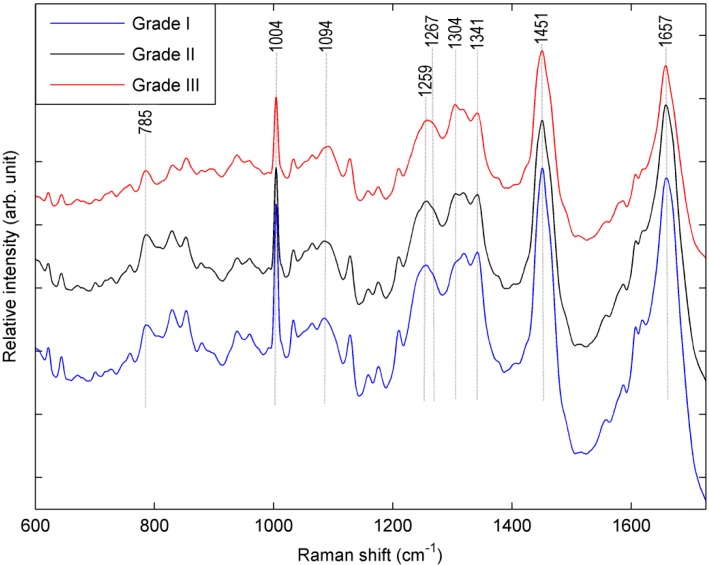
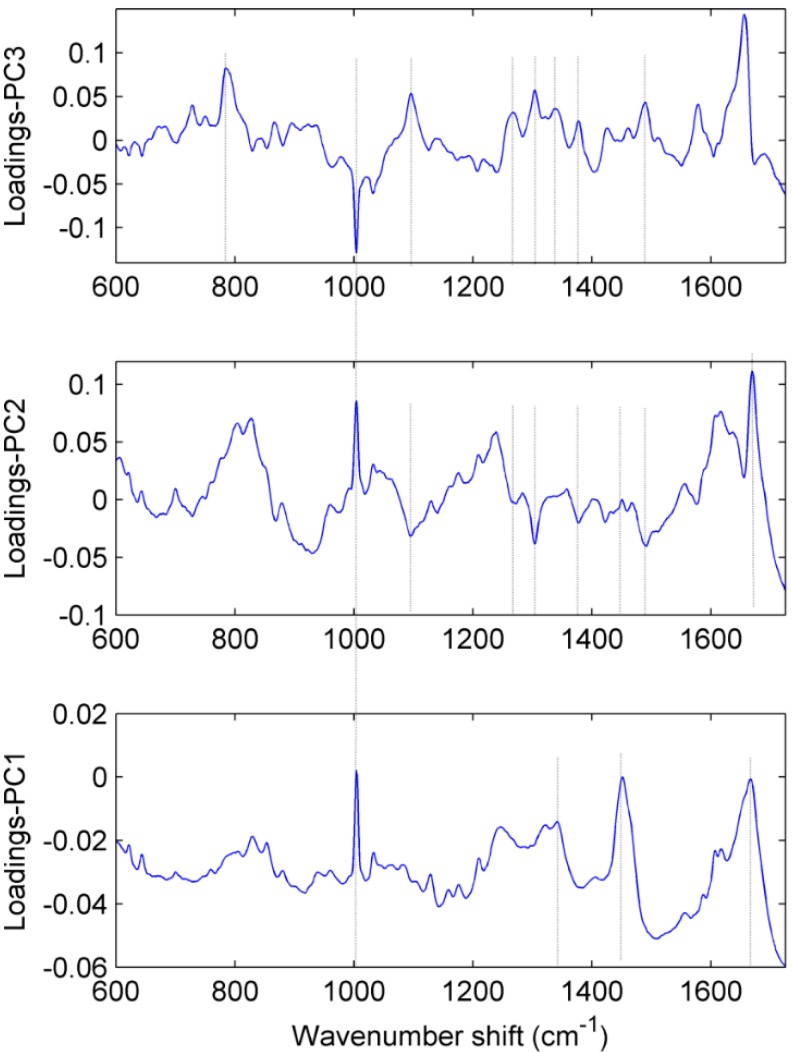
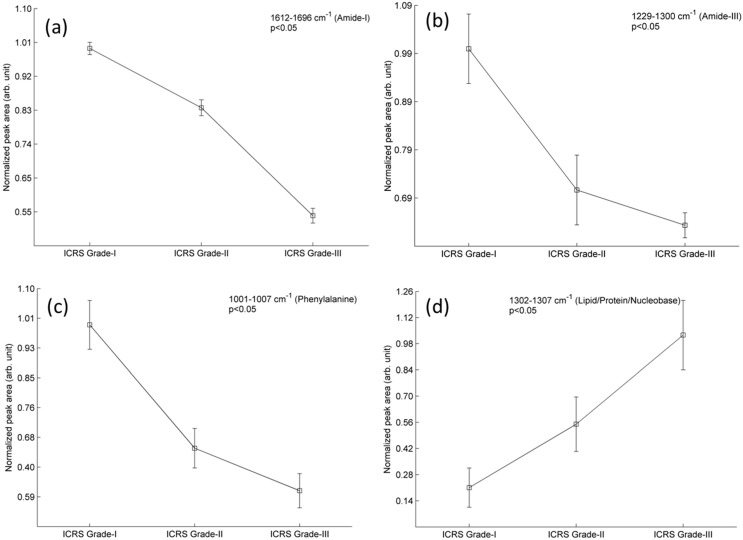
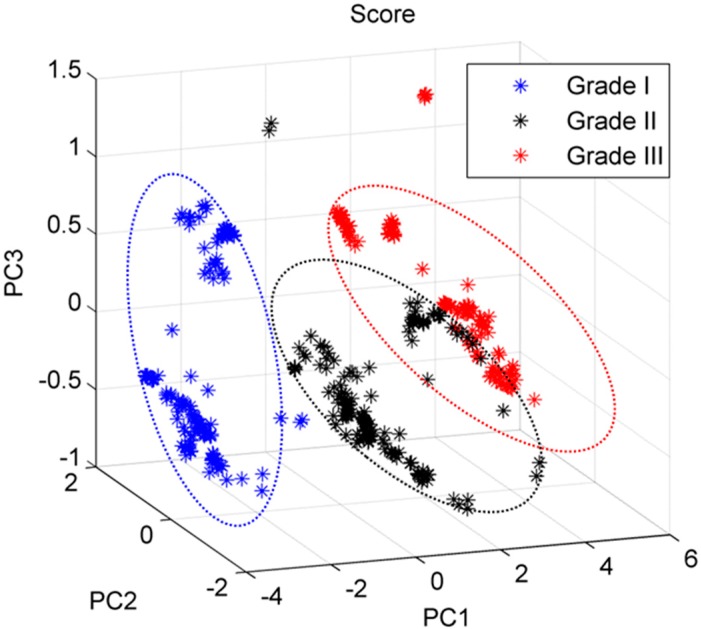
A great deal of effort has been focused on exploring the underlying molecular mechanism of osteoarthritis (OA) especially at the cellular level. We report a confocal Raman spectroscopic investigation on human osteoarthritic chondrocytes. The objective of this investigation is to identify molecular features and the stage of OA based on the spectral signatures corresponding to bio-molecular changes at the cellular level in chondrocytes. In this study, we isolated chondrocytes from human osteoarthritic cartilage and acquired Raman spectra from single cells. Major spectral differences between the cells obtained from different International Cartilage Repair Society (ICRS) grades of osteoarthritic cartilage were identified. During progression of OA, a decrease in protein content and an increase in cell death were observed from the vibrational spectra. Principal component analysis and subsequent cross-validation was able to associate osteoarthritic chondrocytes to ICRS Grade I, II and III with specificity 100.0%, 98.1%, and 90.7% respectively, while, sensitivity was 98.6%, 82.8%, and 97.5% respectively. The overall predictive efficiency was 92.2%. Our pilot study encourages further use of Raman spectroscopy as a noninvasive and label free technique for revealing molecular features associated with osteoarthritic chondrocytes.
大量的努力都集中在探索骨关节炎(OA)的潜在分子机制上,尤其是在细胞水平。我们报告了一项对人类骨关节炎软骨细胞的共聚焦拉曼光谱研究。这项研究的目的是根据与软骨细胞中细胞水平生物分子变化相对应的光谱特征,识别分子特征和骨关节炎的阶段。在本研究中,我们从人类骨关节炎软骨中分离出软骨细胞,并获取了单细胞的拉曼光谱。确定了从不同国际软骨修复协会(ICRS)分级的骨关节炎软骨中获得的细胞之间的主要光谱差异。在骨关节炎进展过程中,从振动光谱中观察到蛋白质含量下降和细胞死亡增加。主成分分析及随后的交叉验证能够将骨关节炎软骨细胞分别与ICRS I级、II级和III级相关联,特异性分别为100.0%、98.1%和90.7%,而敏感性分别为98.6%、82.8%和97.5%。总体预测效率为92.2%。我们的初步研究鼓励进一步使用拉曼光谱作为一种非侵入性且无标记的技术来揭示与骨关节炎软骨细胞相关的分子特征。