Fosca Marco, Basoli Valentina, Della Bella Elena, Russo Fabrizio, Vadalà Gianluca, Alini Mauro, Rau Julietta V, Verrier Sophie
Istituto di Struttura della Materia, Consiglio Nazionale delle Ricerche (ISM-CNR), Via del Fosso del Cavaliere, Rome, Italy.
AO Research Institute Davos, Davos, Switzerland.
Tissue Eng Part B Rev. 2022 Oct;28(5):949-965. doi: 10.1089/ten.TEB.2021.0139. Epub 2022 Jan 5.
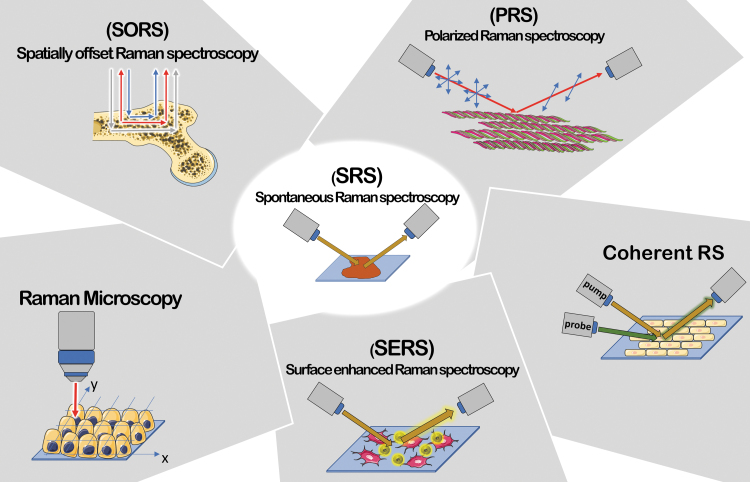
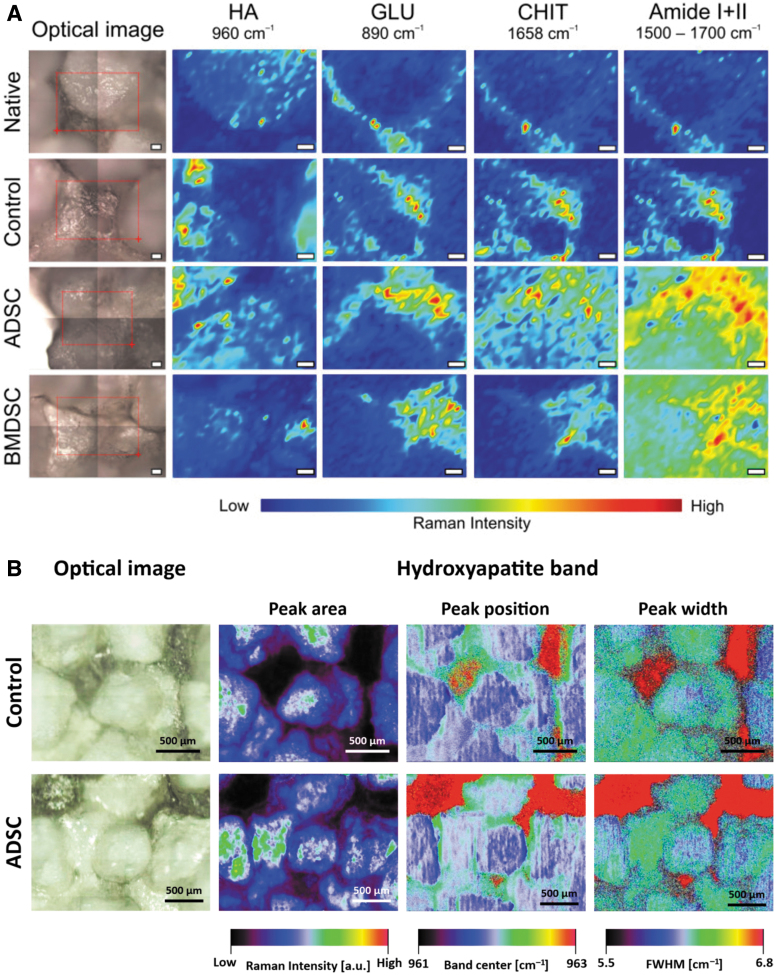
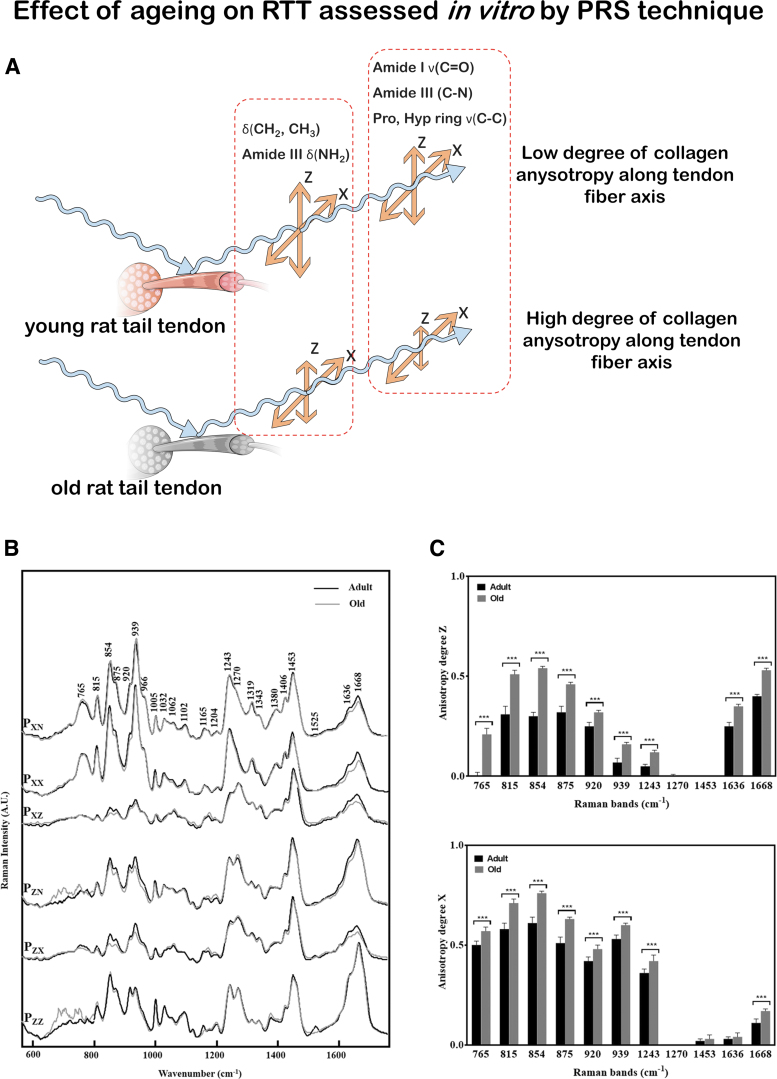
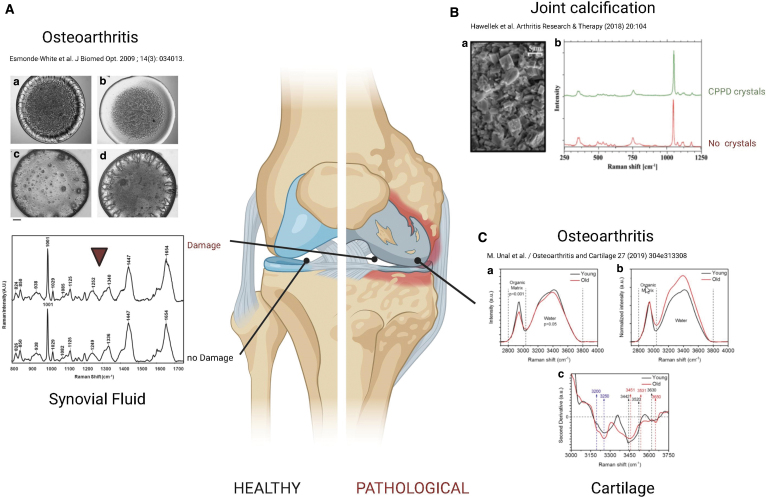
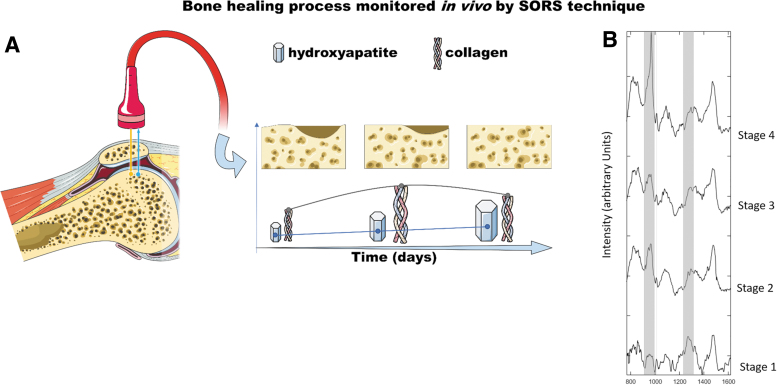
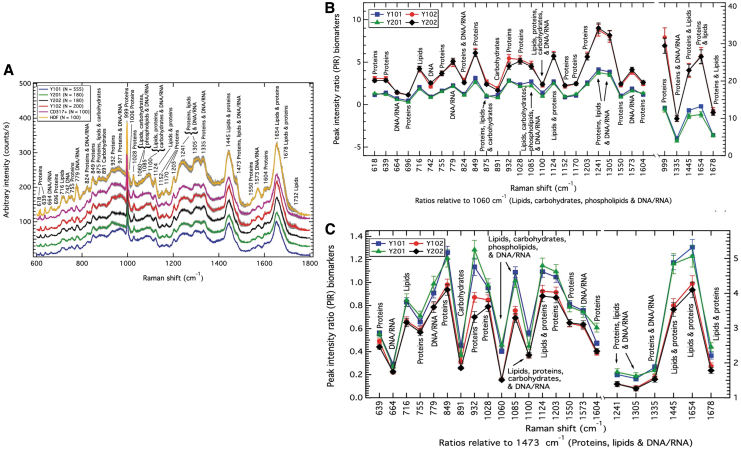
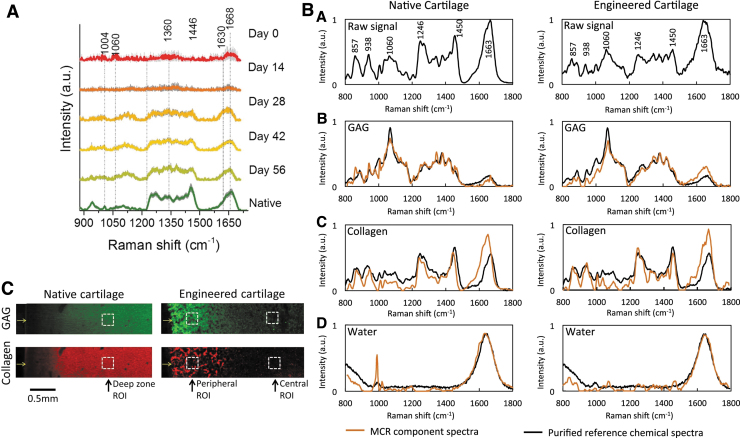
Musculoskeletal disorders are the most common reason of chronic pain and disability, representing an enormous socioeconomic burden worldwide. In this review, new biomedical application fields for Raman spectroscopy (RS) technique related to skeletal tissues are discussed, showing that it can provide a comprehensive profile of tissue composition , in a rapid, label-free, and nondestructive manner. RS can be used as a tool to study tissue alterations associated to aging, pathologies, and disease treatments. The main advantage with respect to currently applied methods in clinics is its ability to provide specific information on molecular composition, which goes beyond other diagnostic tools. Being compatible with water, RS can be performed without pretreatment on unfixed, hydrated tissue samples, without any labeling and chemical fixation used in histochemical methods. This review first provides the description of the basic principles of RS as a biotechnology tool and is introduced into the field of currently available RS-based techniques, developed to enhance Raman signals. The main spectral processing, statistical tools, fingerprint identification, and available databases are mentioned. The recent literature has been analyzed for such applications of RS as tendon and ligaments, cartilage, bone, and tissue engineered constructs for regenerative medicine. Several cases of proof-of-concept preclinical studies have been described. Finally, advantages, limitations, future perspectives, and challenges for the translation of RS into clinical practice have been also discussed. Impact statement Raman spectroscopy (RS) is a powerful noninvasive tool giving access to molecular vibrations and characteristics of samples in a wavelength window of 600 to 3200 cm, thus giving access to a molecular fingerprint of biological samples in a nondestructive way. RS could not only be used in clinical diagnostics, but also be used for quality control of tissues and tissue-engineered constructs, reducing number of samples, time, and the variety of analysis required in the quality control chain before implantation.
肌肉骨骼疾病是慢性疼痛和残疾的最常见原因,在全球范围内造成了巨大的社会经济负担。在本综述中,讨论了拉曼光谱(RS)技术在骨骼组织相关的新生物医学应用领域,表明它能够以快速、无标记和非破坏性的方式提供组织成分的全面概况。RS可作为一种工具来研究与衰老、病理和疾病治疗相关的组织变化。相对于目前临床应用方法的主要优势在于其能够提供关于分子组成的特定信息,这超越了其他诊断工具。由于与水兼容,RS可以在未固定、含水的组织样本上进行,无需预处理,也无需组织化学方法中使用的任何标记和化学固定。本综述首先描述了RS作为一种生物技术工具的基本原理,并介绍了当前可用的基于RS的技术领域,这些技术是为增强拉曼信号而开发的。文中提到了主要的光谱处理、统计工具、指纹识别和可用数据库。分析了最近关于RS在肌腱和韧带、软骨、骨骼以及再生医学组织工程构建体等方面应用的文献。描述了几个概念验证临床前研究的案例。最后,还讨论了将RS转化为临床实践的优势、局限性、未来前景和挑战。影响声明拉曼光谱(RS)是一种强大的非侵入性工具,能够在600至3200 cm的波长窗口内获取样品的分子振动和特征,从而以非破坏性方式获取生物样品的分子指纹。RS不仅可用于临床诊断,还可用于组织和组织工程构建体的质量控制,减少植入前质量控制链中所需的样品数量、时间和分析种类。