Boyd Andy, Tilling Kate, Cornish Rosie, Davies Amy, Humphries Kerry, Macleod John
ALSPAC, School of Social and Community Medicine, University of Bristol, Oakfield House, Oakfield Grove, Bristol BS8 2BN, UK.
ALSPAC, School of Social and Community Medicine, University of Bristol, Oakfield House, Oakfield Grove, Bristol BS8 2BN, UK.
J Clin Epidemiol. 2015 Aug;68(8):877-87. doi: 10.1016/j.jclinepi.2015.03.014. Epub 2015 Mar 31.
To investigate whether different study-to-participant communication methods increase response, increase response from hard-to-engage individuals, and influence participants' consent decisions.
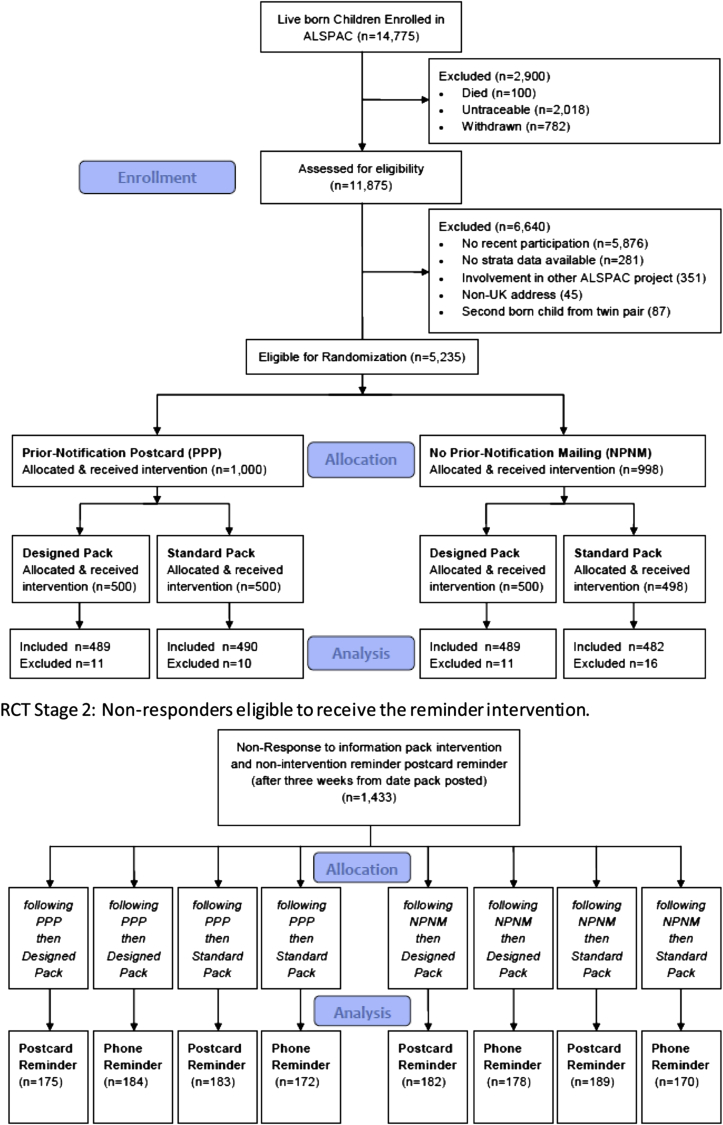
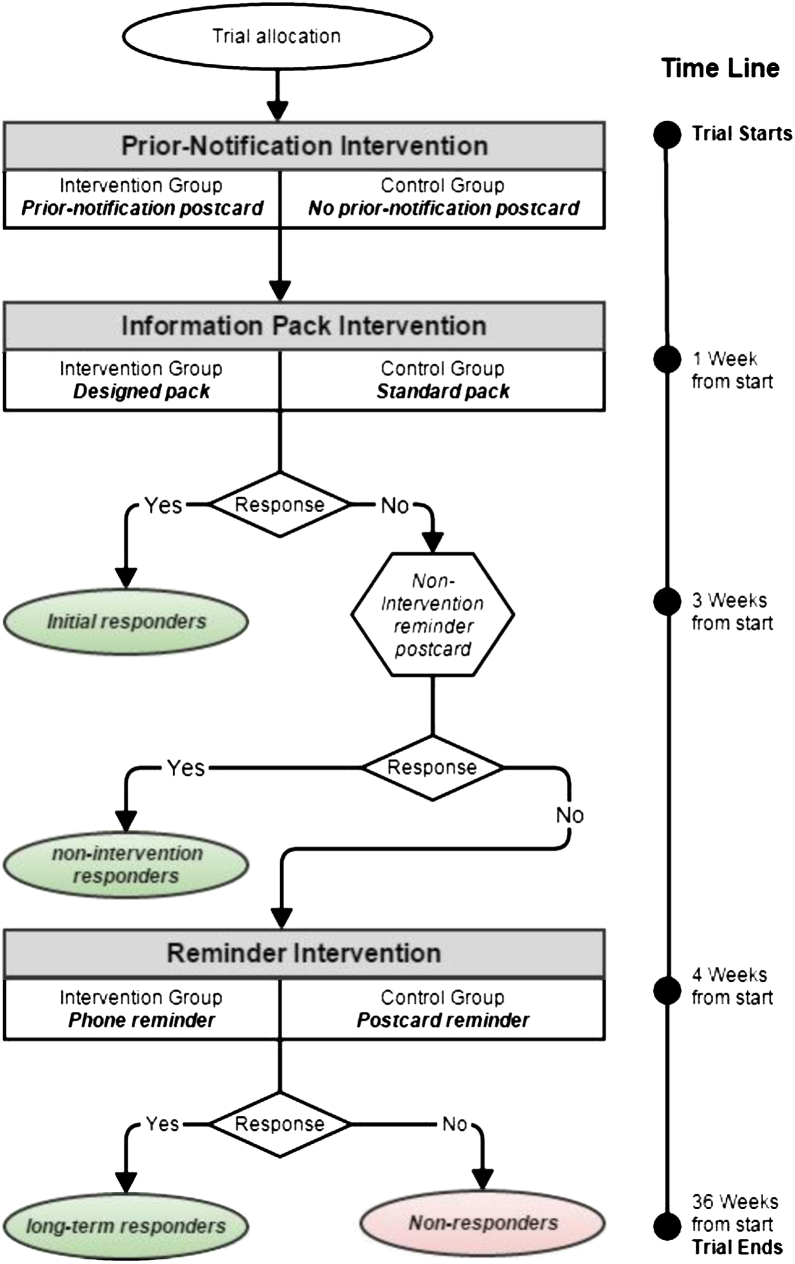
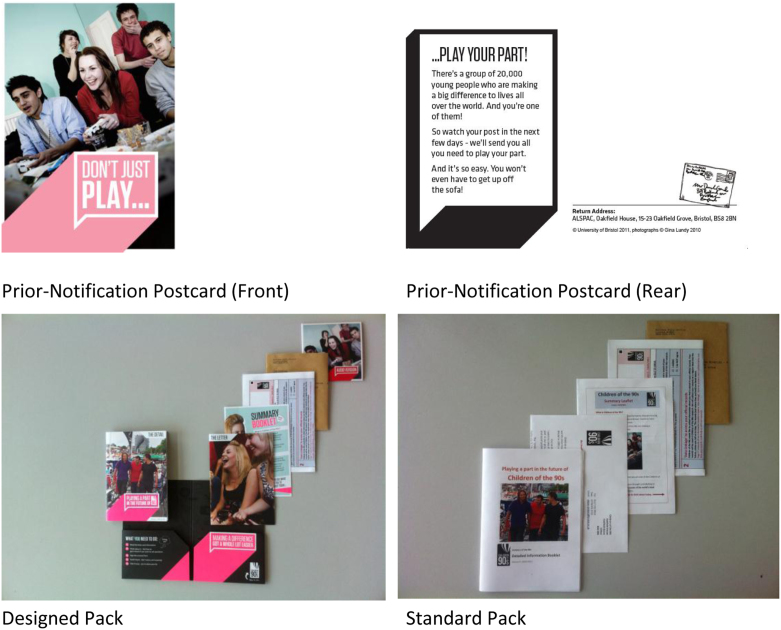
A randomized controlled trial within the Avon Longitudinal Study of Parents and Children. Cohort members were invited to re-enroll at age 18 and consent to linkage to their health and administrative records. Participants were randomized to receive one of eight combinations of three interventions: a prior-notification postcard or no contact, a standard or professionally designed consent pack, and a phone or postal reminder. The primary outcome was return of the consent form ("response"), with consent decision being the secondary outcome.
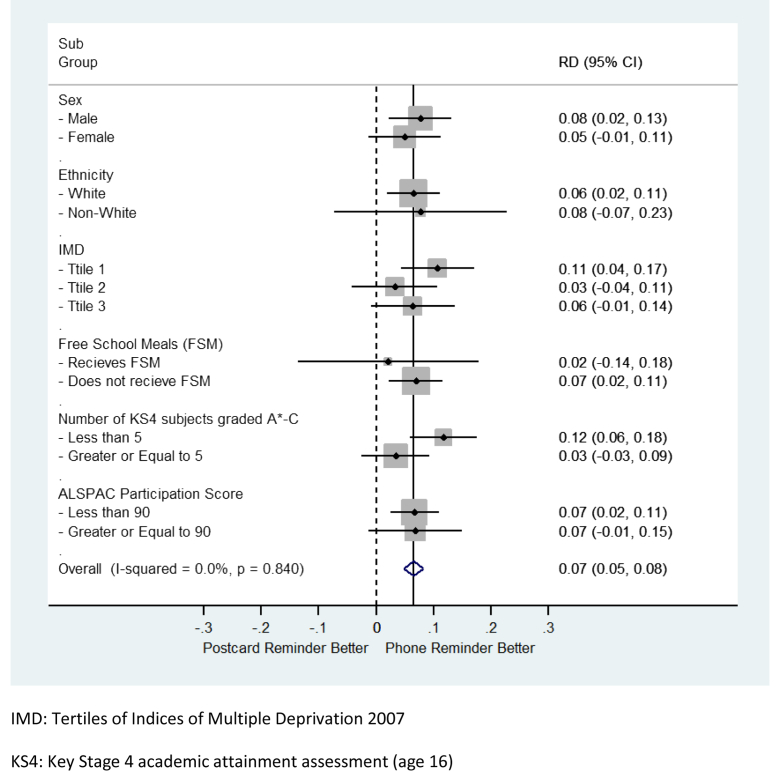
Of 1,950 participants, 806 (41%) responded. Response rates were 2.7% higher (95% confidence interval: -0.06, 5.5%; P = 0.06) among those receiving designed packs than among those receiving standard packs and 6.4% higher (2.3, 10.6%; P = 0.002) among those receiving phone reminders (compared with postal reminders). The prior-notification postcard did not influence response rates [difference = 0% (-2.8, 2.8%; P = 1.0)], and we found no evidence that the communication method influenced consent decision.
This trial provides evidence that communication material design can influence response rates and that phone reminders have superior cost/benefit returns over designed materials. Experimental evaluation of communications strategies and dissemination of findings may benefit cohort studies.
研究不同的研究与参与者沟通方式是否能提高回复率,增加难以参与的个体的回复率,并影响参与者的同意决定。
在雅芳亲子纵向研究中进行的一项随机对照试验。队列成员在18岁时被邀请重新登记,并同意将他们的健康和行政记录进行关联。参与者被随机分配接受三种干预措施的八种组合之一:预先通知明信片或无接触,标准或专业设计的同意书套装,以及电话或邮寄提醒。主要结果是同意书的返回(“回复”),同意决定为次要结果。
1950名参与者中,806人(41%)做出了回复。接受设计套装的参与者的回复率比接受标准套装的参与者高2.7%(95%置信区间:-0.06,5.5%;P = 0.06),接受电话提醒的参与者的回复率比接受邮寄提醒的参与者高6.4%(2.3,10.6%;P = 0.002)。预先通知明信片对回复率没有影响[差异 = 0%(-2.8,2.8%;P = 1.0)],且我们没有发现证据表明沟通方式会影响同意决定。
该试验提供了证据表明沟通材料设计可影响回复率,并且电话提醒在成本效益回报方面优于设计材料。对沟通策略进行实验评估并传播研究结果可能会使队列研究受益。