Watase Hiroko, Hagiwara Yusuke, Chiba Takuyo, Camargo Carlos A, Hasegawa Kohei
Department of Radiology, University of Washington, Seattle, Washington, USA.
Department of Radiology, University of Washington, Seattle, Washington, USA Department of Emergency Medicine, Tokyo Metropolitan Children's Medical Center, Tokyo, Japan.
BMJ Open. 2015 Apr 28;5(4):e007435. doi: 10.1136/bmjopen-2014-007435.
Emergency department (ED) visits for asthma exacerbation reflect a failure of longitudinal asthma management. However, little is known about the characteristics of patients with frequent ED visits (≥2 visits in a 1-year period). We aimed to characterise the adult patients who frequently presented to the ED for asthma exacerbation in Japan.
A multicentre chart review study of 23 EDs across Japan.
Adults aged 18-54 years who presented to the ED with asthma exacerbation from 2009 to 2011.
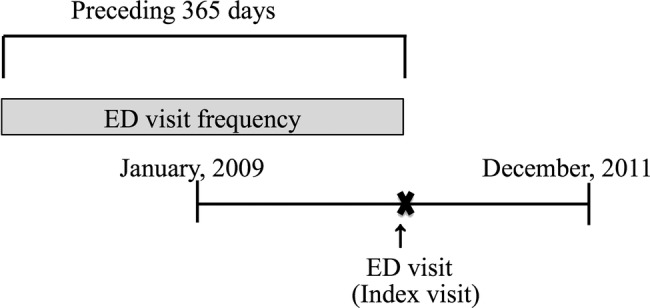
Frequency of ED visits for asthma exacerbation in a 1-year period, including the index ED visit.
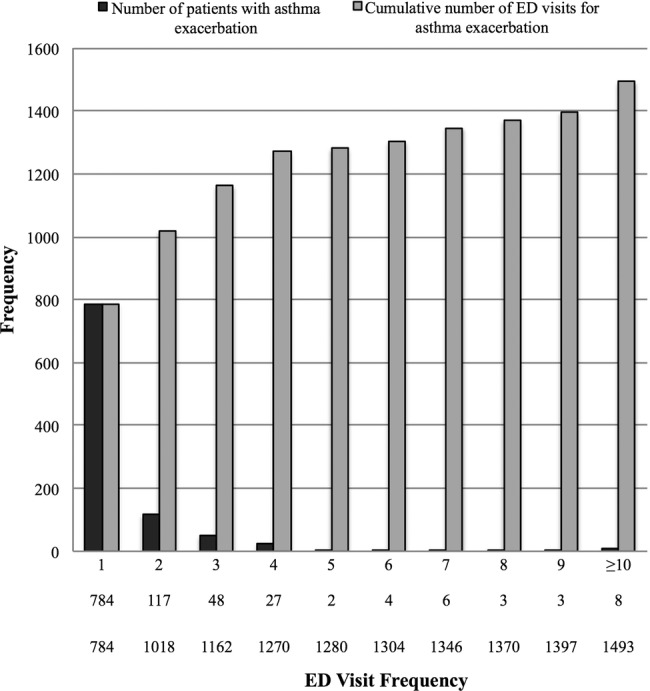
Of the 1002 eligible patients, 218 (22%) had frequent ED visits, accounting for 48% of total ED visits for asthma exacerbation in the 1-year period. Specifically, 12% had 2 ED visits and 10% had ≥3 visits. In these patients, guideline-recommended chronic management was suboptimal. For example, among patients with ≥3 ED visits, only 63% were treated with inhaled corticosteroids and 49% were current smokers. In a multinomial logistic regression model, markers of chronic asthma severity (history of hospitalisation for asthma and use of inhaled corticosteroids) were significantly associated with a higher frequency of ED visits (both p<0.05).
This multicentre study in Japan demonstrated that many patients are frequent ED users for asthma exacerbation. We also found that their asthma control management is suboptimal, most likely contributing to worse chronic severity and more frequent ED visits. Further dissemination and adoption of evidence-based guidelines are required to reduce asthma morbidity in this high-risk population.
因哮喘急性加重而到急诊科就诊反映了哮喘纵向管理的失败。然而,对于频繁到急诊科就诊(1年内≥2次就诊)的患者特征了解甚少。我们旨在描述在日本因哮喘急性加重而频繁到急诊科就诊的成年患者的特征。
一项对日本23家急诊科的多中心病历回顾研究。
2009年至2011年因哮喘急性加重到急诊科就诊的18 - 54岁成年人。
1年内因哮喘急性加重到急诊科就诊的频率,包括本次索引就诊。
在1002名符合条件的患者中,218名(22%)有频繁的急诊科就诊,占1年内哮喘急性加重总就诊次数的48%。具体而言,12%有2次急诊科就诊,10%有≥3次就诊。在这些患者中,指南推荐的慢性管理并不理想。例如,在有≥3次急诊科就诊的患者中,只有63%接受吸入性糖皮质激素治疗,49%为当前吸烟者。在多项逻辑回归模型中,慢性哮喘严重程度的指标(哮喘住院史和吸入性糖皮质激素的使用)与更高的急诊科就诊频率显著相关(均p<0.05)。
这项在日本的多中心研究表明,许多患者因哮喘急性加重而频繁到急诊科就诊。我们还发现他们的哮喘控制管理不理想,很可能导致更差的慢性严重程度和更频繁的急诊科就诊。需要进一步传播和采用基于证据的指南,以降低这一高危人群的哮喘发病率。