Cousijn Janna, van Benthem Patty, van der Schee Evelien, Spijkerman Renske
Consortium Individual Development, Departments of Developmental and Experimental Psychology, Utrecht University, Utrecht, The Netherlands; ADAPT-lab, Department of Developmental Psychology, University of Amsterdam, Amsterdam, The Netherlands.
Parnassia Addiction Research Center (PARC), Brijder Addiction Care, The Hague, The Netherlands.
Dev Cogn Neurosci. 2015 Dec;16:36-45. doi: 10.1016/j.dcn.2015.04.001. Epub 2015 Apr 14.
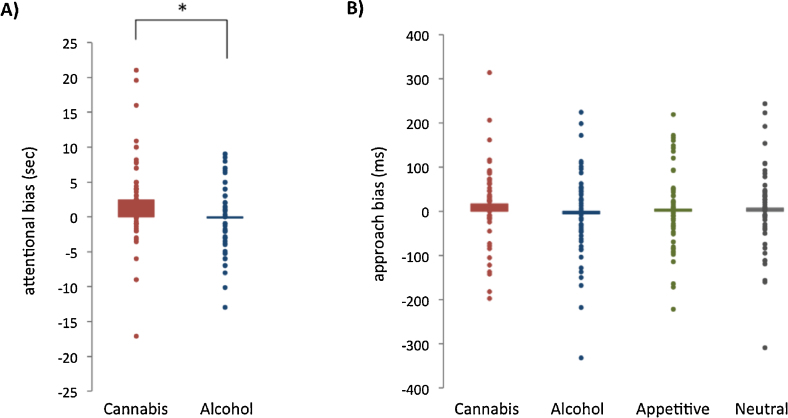
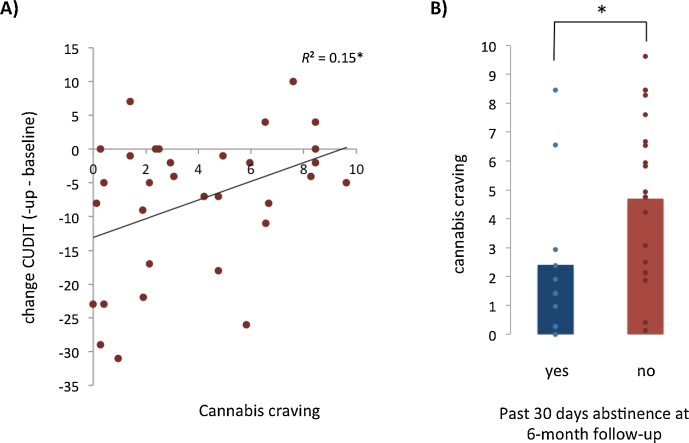
Cannabis use disorders (CUDs) are the most prevalent substance use disorders among adolescents in treatment. Yet, little is known about the neuropsychological mechanisms underlying adolescent CUDs. Studies in adult cannabis users suggest a significant role for cognitive control and cannabis-oriented motivational processes, such as attentional bias, approach bias, and craving in CUDs. The current 6-month prospective study investigated the relationships between attentional bias, approach bias, craving, cognitive control, and cannabis use in adolescent patients in treatment for a primary or secondary CUD. Moreover, we investigated if these motivational processes and cognitive control could predict treatment progression after 6 months. Adolescents with a CUD had an attentional but no approach bias towards cannabis. In contrast to adult findings on the role of attentional bias, approach bias and cognitive control, only cannabis craving significantly correlated with current cannabis use and predicted cannabis use-related problems and abstinence from cannabis 6 months later. These findings identify craving as a predictor of treatment outcome, thereby supporting an important role for craving in the course of adolescent cannabis use and dependence. This prospective study is among the first to investigate neuropsychological mechanisms underlying adolescent CUDs, warranting future longitudinal studies.
大麻使用障碍(CUDs)是接受治疗的青少年中最普遍的物质使用障碍。然而,对于青少年CUDs背后的神经心理学机制知之甚少。对成年大麻使用者的研究表明,认知控制和以大麻为导向的动机过程在CUDs中发挥着重要作用,如注意偏向、趋近偏向和渴望。当前这项为期6个月的前瞻性研究调查了接受原发性或继发性CUD治疗的青少年患者的注意偏向、趋近偏向、渴望、认知控制与大麻使用之间的关系。此外,我们还研究了这些动机过程和认知控制是否能够预测6个月后的治疗进展。患有CUD的青少年对大麻存在注意偏向,但不存在趋近偏向。与关于注意偏向、趋近偏向和认知控制作用的成年研究结果不同,只有大麻渴望与当前的大麻使用显著相关,并预测了6个月后与大麻使用相关的问题及大麻戒断情况。这些发现将渴望确定为治疗结果的一个预测指标,从而支持了渴望在青少年大麻使用和依赖过程中的重要作用。这项前瞻性研究是最早调查青少年CUDs背后神经心理学机制的研究之一,值得未来开展纵向研究。