Department of Food Science and Technology, UC Davis, 1 Shields Avenue, Davis, CA 95616 USA ; Foods For Health Institute, UC Davis, 1 Peter J Shields Avenue, Davis, CA 95616 USA.
Department of Chemistry, UC Davis, 1 Shields Avenue, Davis, CA 95616 USA ; Foods For Health Institute, UC Davis, 1 Peter J Shields Avenue, Davis, CA 95616 USA.
Microbiome. 2015 Apr 10;3:13. doi: 10.1186/s40168-015-0071-z. eCollection 2015.
Individuals with inactive alleles of the fucosyltransferase 2 gene (FUT2; termed the 'secretor' gene) are common in many populations. Some members of the genus Bifidobacterium, common infant gut commensals, are known to consume 2'-fucosylated glycans found in the breast milk of secretor mothers. We investigated the effects of maternal secretor status on the developing infant microbiota with a special emphasis on bifidobacterial species abundance.
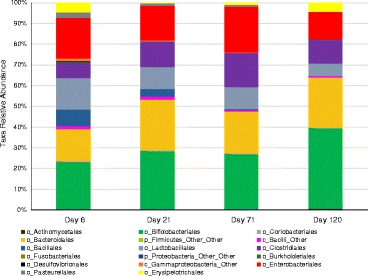
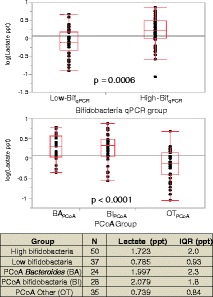
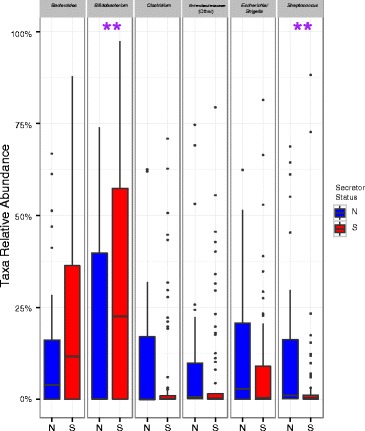
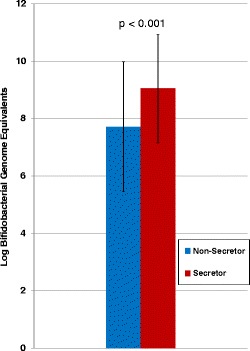
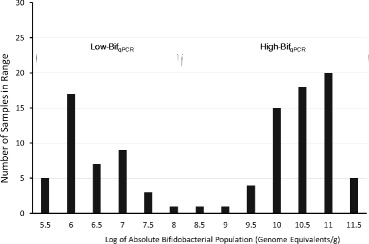
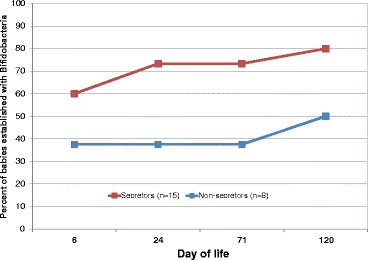
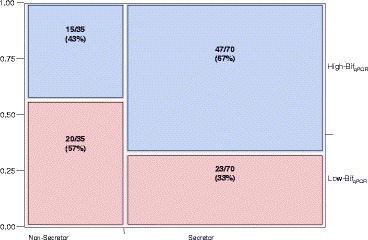
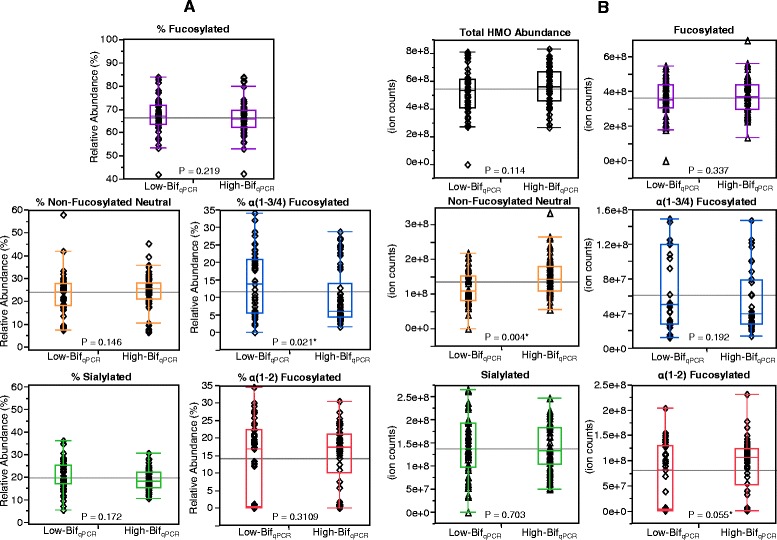
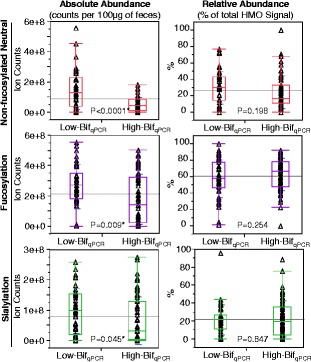
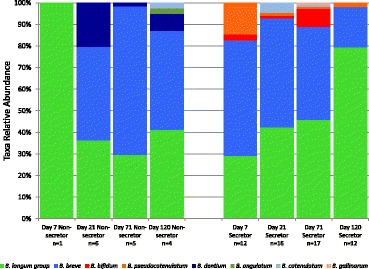
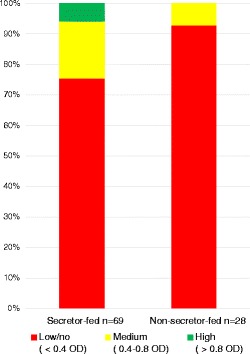
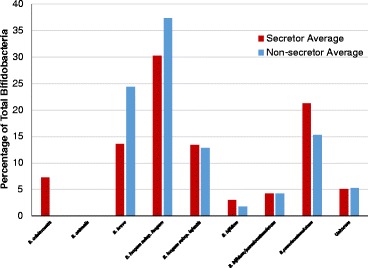
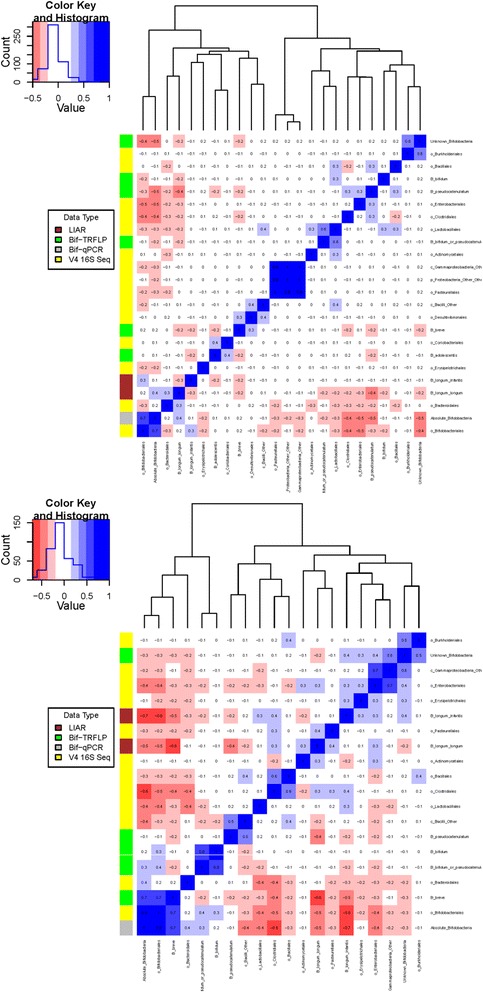
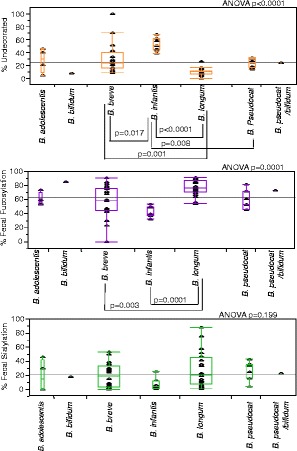
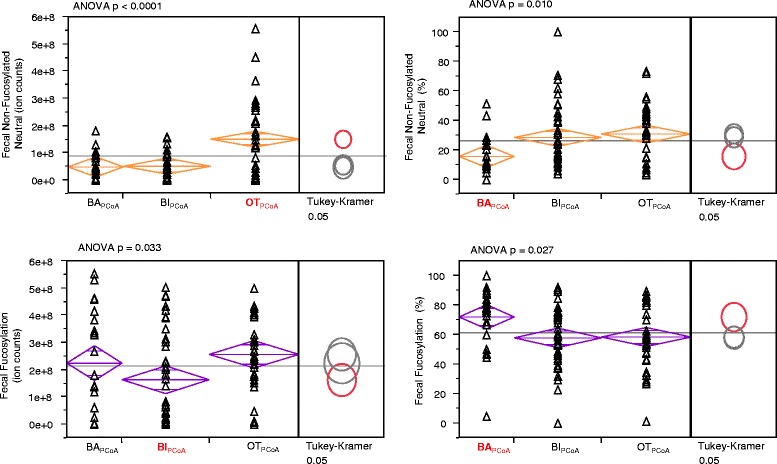
On average, bifidobacteria were established earlier and more often in infants fed by secretor mothers than in infants fed by non-secretor mothers. In secretor-fed infants, the relative abundance of the Bifidobacterium longum group was most strongly correlated with high percentages of the order Bifidobacteriales. Conversely, in non-secretor-fed infants, Bifidobacterium breve was positively correlated with Bifidobacteriales, while the B. longum group was negatively correlated. A higher percentage of bifidobacteria isolated from secretor-fed infants consumed 2'-fucosyllactose. Infant feces with high levels of bifidobacteria had lower milk oligosaccharide levels in the feces and higher amounts of lactate. Furthermore, feces containing different bifidobacterial species possessed differing amounts of oligosaccharides, suggesting differential consumption in situ.
Infants fed by non-secretor mothers are delayed in the establishment of a bifidobacteria-laden microbiota. This delay may be due to difficulties in the infant acquiring a species of bifidobacteria able to consume the specific milk oligosaccharides delivered by the mother. This work provides mechanistic insight into how milk glycans enrich specific beneficial bacterial populations in infants and reveals clues for enhancing enrichment of bifidobacterial populations in at risk populations - such as premature infants.
无活性等位基因的岩藻糖基转移酶 2 基因(FUT2;称为“分泌者”基因)个体在许多人群中很常见。双歧杆菌属的一些成员是常见的婴儿肠道共生菌,已知它们可以消耗分泌型母亲母乳中发现的 2'-岩藻糖基化糖。我们研究了母体分泌状态对发育中婴儿微生物群的影响,特别强调双歧杆菌属物种丰度。
平均而言,分泌型母亲喂养的婴儿中双歧杆菌的定植时间更早,频率更高。在分泌型喂养的婴儿中,Bifidobacterium longum 组的相对丰度与双歧杆菌目比例的相关性最强。相反,在非分泌型喂养的婴儿中,Bifidobacterium breve 与双歧杆菌目呈正相关,而 B. longum 组呈负相关。从分泌型喂养的婴儿中分离出的双歧杆菌具有更高的 2'-岩藻糖基乳糖消耗率。双歧杆菌丰度高的婴儿粪便中乳寡糖水平较低,乳酸盐含量较高。此外,含有不同双歧杆菌属物种的粪便含有不同量的寡糖,表明在原位存在差异消耗。
非分泌型母亲喂养的婴儿双歧杆菌定植延迟。这种延迟可能是由于婴儿难以获得能够消耗母亲提供的特定乳寡糖的双歧杆菌物种。这项工作提供了关于乳聚糖如何在婴儿中富集特定有益细菌种群的机制见解,并为增强高危人群(如早产儿)中双歧杆菌种群的富集提供了线索。