Biochemical Technologies, Science and Technology Division, Corning Incorporated, Corning, NY 14831, USA.
Biosensors (Basel). 2015 Apr 27;5(2):223-40. doi: 10.3390/bios5020223.
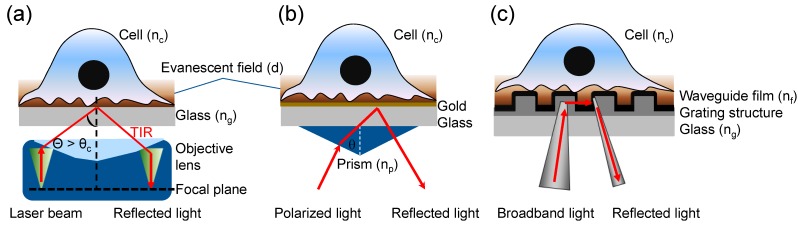
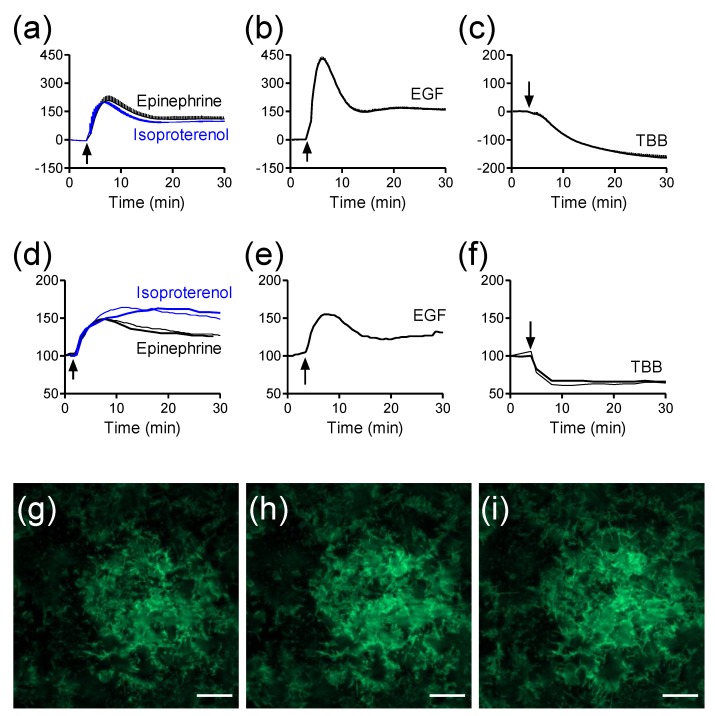
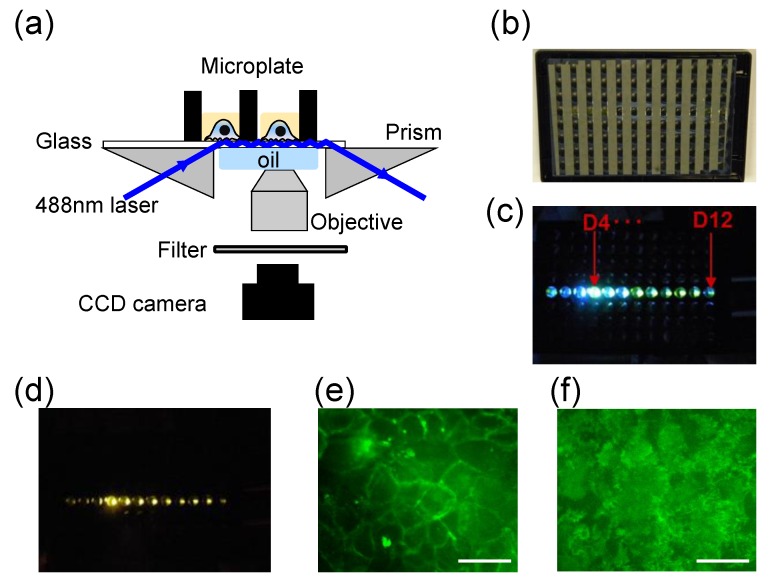
Total internal reflection fluorescence (TIRF) microscopy has been widely used as a single molecule imaging technique to study various fundamental aspects of cell biology, owing to its ability to selectively excite a very thin fluorescent volume immediately above the substrate on which the cells are grown. However, TIRF microscopy has found little use in high content screening due to its complexity in instrumental setup and experimental procedures. Inspired by the recent demonstration of label-free evanescent wave biosensors for cell phenotypic profiling and drug screening with high throughput, we had hypothesized and demonstrated that TIRF imaging is also amenable to receptor pharmacology profiling. This paper reviews key considerations and recent applications of TIRF imaging for pharmacology profiling.
全内反射荧光(TIRF)显微镜已被广泛用作一种单分子成像技术,用于研究细胞生物学的各个基本方面,这要归功于它能够选择性地激发细胞生长的基底上方非常薄的荧光体积。然而,由于仪器设置和实验程序复杂,TIRF 显微镜在高通量筛选中应用较少。受最近关于无标记消逝波生物传感器用于细胞表型分析和药物筛选的高吞吐量的演示的启发,我们假设并证明了 TIRF 成像也适用于受体药理学分析。本文综述了 TIRF 成像在药理学分析中的关键考虑因素和最新应用。