Jeong Joon Taek, Seo Min, Hong Sung-Tae, Kim Young Keun
Department of Internal Medicine, Yonsei University Wonju College of Medicine, Wonju 220-701, Korea.
Department of Parasitology, Dankook University College of Medicine, Cheonan 330-714, Korea.
Korean J Parasitol. 2015 Apr;53(2):219-22. doi: 10.3347/kjp.2015.53.2.219. Epub 2015 Apr 22.
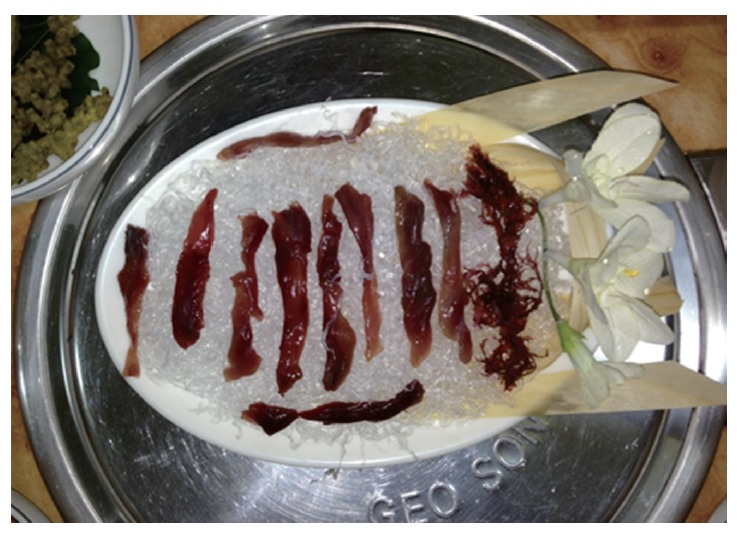
Trichinellosis transmission to humans via the consumption of reptile meat is rare worldwide. In Korea, however, 2 such outbreaks, possibly via consumption of soft-shelled turtle meat, have occurred in 2 successive years. In 17 August 2014, 6 patients were admitted to Wonju Severance Christian Hospital complaining of myalgia, fever, and headache. Eosinophilia was the indication of the initial laboratory results, and they were eventually diagnosed as trichinellosis by ELISA. All of the patients worked at the same company and had eaten raw soft-shelled turtle meat at a company dinner 10 days prior to their admission. They were treated with albendazole for 2 weeks, upon which all of their symptoms disappeared. This is the 8th report on human trichinellosis in Korea, and the second implicating raw soft-shelled turtle meat.
在全球范围内,通过食用爬行动物肉将旋毛虫病传播给人类的情况较为罕见。然而,在韩国,连续两年发生了两起此类疫情,可能是通过食用甲鱼所致。2014年8月17日,6名患者因肌肉疼痛、发热和头痛入住原州Severance基督教医院。嗜酸性粒细胞增多是最初实验室检查结果的指征,最终通过酶联免疫吸附测定法(ELISA)诊断为旋毛虫病。所有患者都在同一家公司工作,入院前10天在公司聚餐时食用了生甲鱼。他们接受了阿苯达唑治疗两周,之后所有症状均消失。这是韩国关于人类旋毛虫病的第8份报告,也是第二份涉及生甲鱼的报告。