Sosale Aravind, Saboo Banshi, Sosale Bhavana
Diacon Hospital, Bangalore, India.
Dia Care (Diabetes Care and Hormone Clinic), Ahmedabad, India.
Diabetes Metab Syndr Obes. 2015 Apr 15;8:189-96. doi: 10.2147/DMSO.S49592. eCollection 2015.
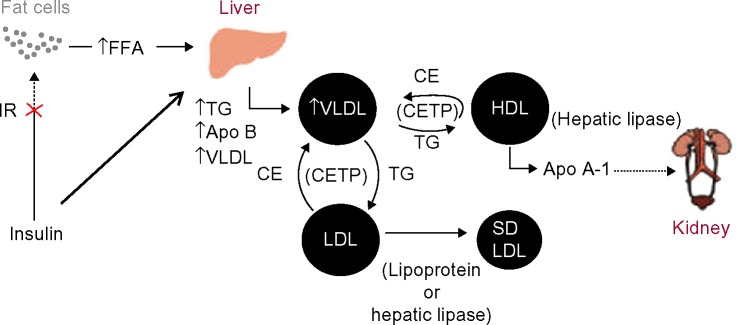
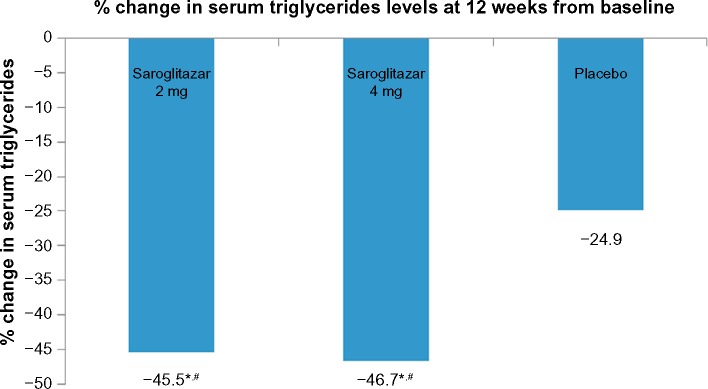
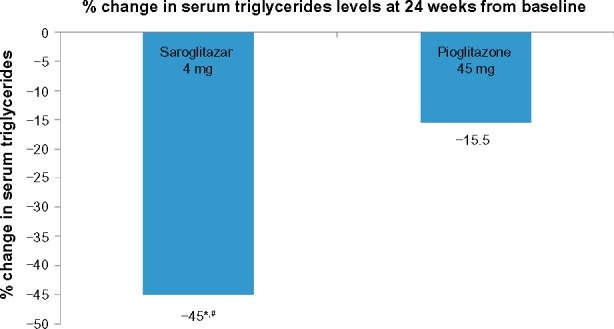
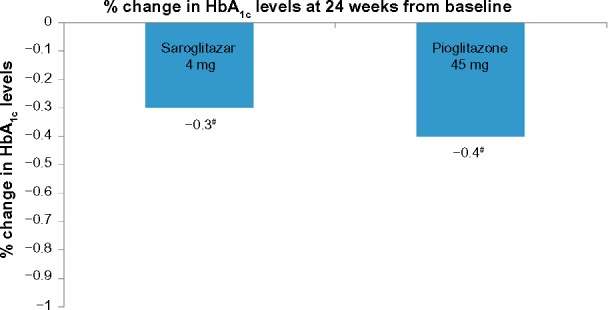
Diabetes mellitus (DM) is one of the most dreaded metabolic disorders in the world today. It is the leading cause of morbidity and mortality, and plays a cardinal role in quality of life and health economics. DM is associated with a high prevalence of microvascular and macrovascular complications. DM is a very important cardiovascular (CV) risk factor. Cardiovascular disease (CVD) has been implicated as the prime cause of mortality and morbidity in patients with DM. Hence, treatment of DM goes beyond glycemic control, and demands a multidisciplinary approach that comprehensively targets risk factors inherent in CV events. Lipid abnormalities are undoubtedly common in patients with DM, and they contribute to an increased risk of CVD. A high-risk lipid profile, termed atherogenic dyslipidemia of diabetes (ADD), is known to occur in patients with DM. The use of lipid-lowering agents, a quintessential part of the multifactorial risk factor approach, is a crucial intervention to minimize diabetes-related complications. In this article, we discuss the role of peroxisome proliferator activator receptor (PPAR) alpha/gamma (α/γ) agonist, saroglitazar, in the management of ADD. While statins are irrefutably the first line of drugs for dyslipidemia management in patients with residual CV risk while on a statin, PPAR α/γ agonists have been found to be of substantial benefit. Data from the PRESS I-VI clinical trials testify to the fact that saroglitazar and fibrates have similar efficacy in reducing triglycerides and improving high-density lipoprotein. The ancillary benefit of improved glycemic control, without the weight gain of PPAR γ agonists, is an added advantage. Reduction in ADD, improved glycemic control, efficacy at par with fibrates, and an acceptable safety profile form the grounds on which this group of PPAR α/γ agonists, with their novel mechanism, holds a promising future in the management of diabetic dyslipidemia.
糖尿病(DM)是当今世界最可怕的代谢紊乱疾病之一。它是发病和死亡的主要原因,在生活质量和健康经济学中起着关键作用。DM与微血管和大血管并发症的高患病率相关。DM是一个非常重要的心血管(CV)危险因素。心血管疾病(CVD)被认为是DM患者死亡和发病的主要原因。因此,DM的治疗不仅仅是血糖控制,还需要一种多学科方法,全面针对CV事件中固有的危险因素。脂质异常在DM患者中无疑很常见,它们会增加CVD的风险。一种被称为糖尿病致动脉粥样硬化性血脂异常(ADD)的高危脂质谱在DM患者中很常见。使用降脂药物作为多因素危险因素方法的一个重要组成部分,是减少糖尿病相关并发症的关键干预措施。在本文中,我们讨论过氧化物酶体增殖物激活受体(PPAR)α/γ激动剂沙罗格列扎在ADD管理中的作用。虽然他汀类药物无疑是有残留CV风险的患者血脂异常管理的一线药物,但已发现PPARα/γ激动剂有很大益处。PRESS I-VI临床试验的数据证明,沙罗格列扎和贝特类药物在降低甘油三酯和提高高密度脂蛋白方面具有相似的疗效。改善血糖控制的附加益处,且没有PPARγ激动剂导致体重增加的问题,是一个额外的优势。降低ADD、改善血糖控制、与贝特类药物相当的疗效以及可接受的安全性构成了这组具有新机制的PPARα/γ激动剂在糖尿病血脂异常管理中拥有光明未来的基础。