Sathyavathi R, Saha Anushree, Soares Jaqueline S, Spegazzini Nicolas, McGee Sasha, Rao Dasari Ramachandra, Fitzmaurice Maryann, Barman Ishan
1] Department of Pathology, School of Medicine, Case Western Reserve University, 10900 Euclid Avenue, Cleveland, OH 44106, USA [2] Current Address: Sandor Lifesciences Pvt. Ltd, 8-2-326/5, Road No 3, Banjara Hills, Hyderabad-500034, India.
Department of Pathology, School of Medicine, Case Western Reserve University, 10900 Euclid Avenue, Cleveland, OH 44106, USA.
Sci Rep. 2015 Apr 30;5:9907. doi: 10.1038/srep09907.
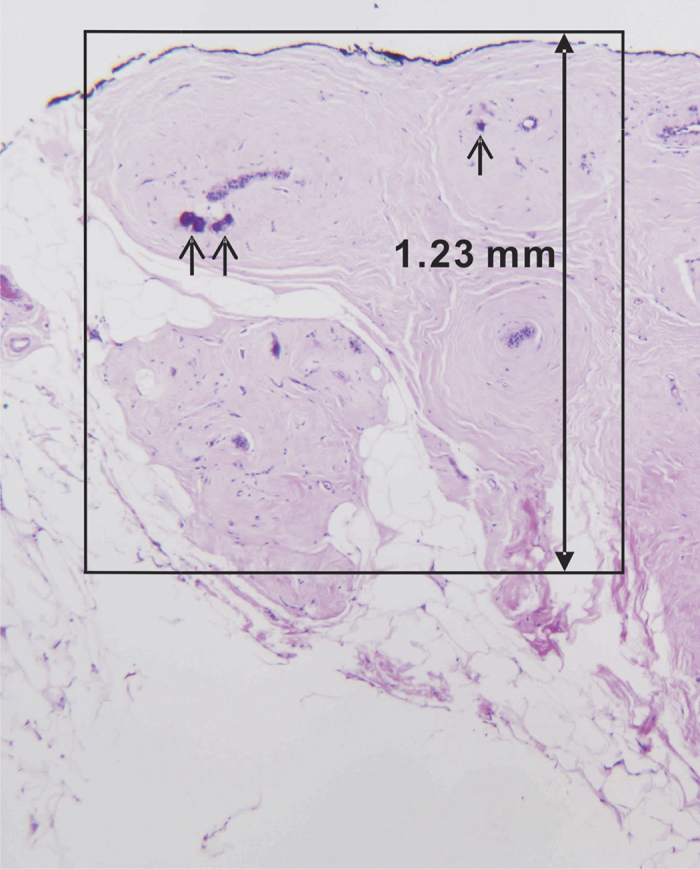
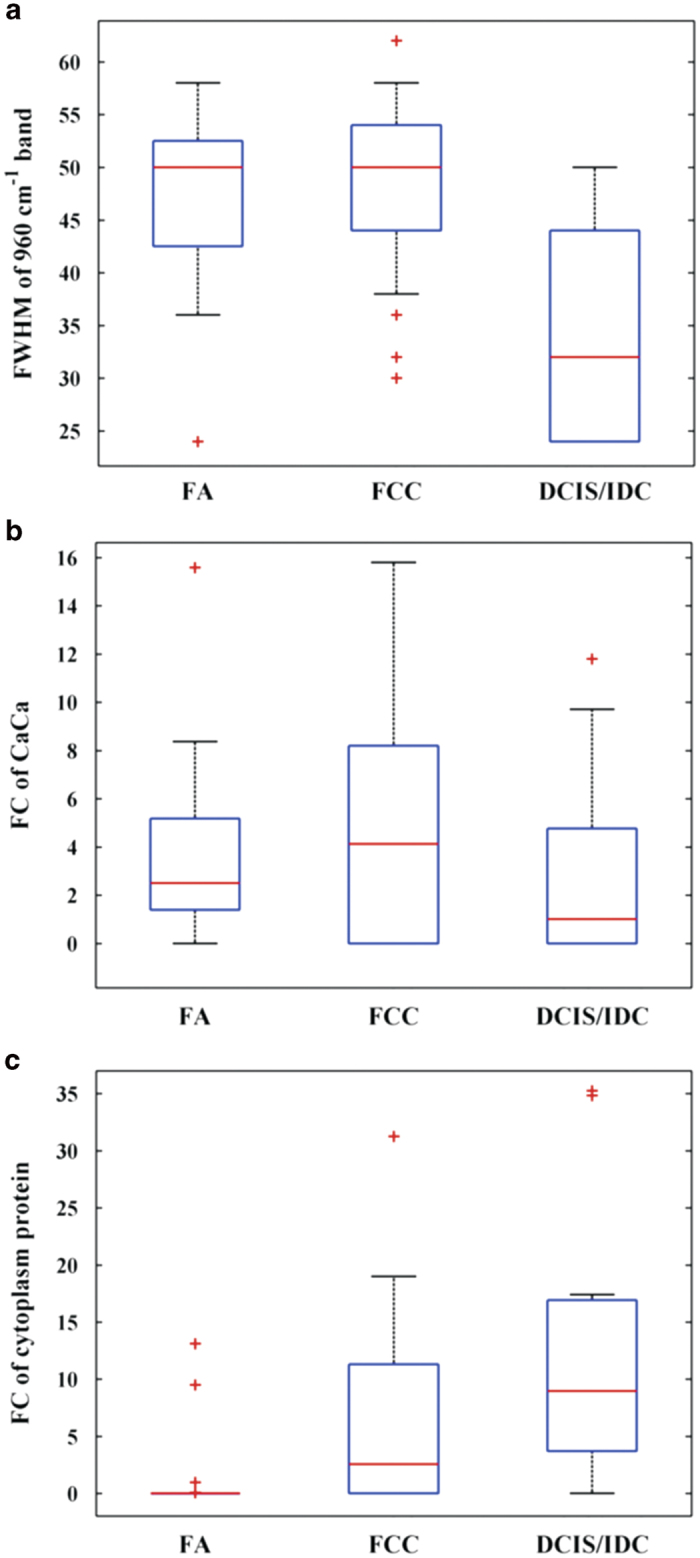
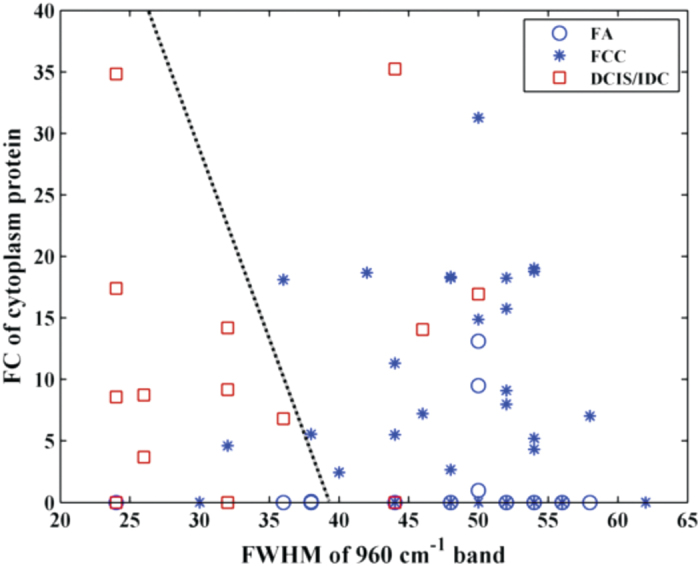
Microcalcifications are an early mammographic sign of breast cancer and frequent target for stereotactic biopsy. Despite their indisputable value, microcalcifications, particularly of the type II variety that are comprised of calcium hydroxyapatite deposits, remain one of the least understood disease markers. Here we employed Raman spectroscopy to elucidate the relationship between pathogenicity of breast lesions in fresh biopsy cores and composition of type II microcalcifications. Using a chemometric model of chemical-morphological constituents, acquired Raman spectra were translated to characterize chemical makeup of the lesions. We find that increase in carbonate intercalation in the hydroxyapatite lattice can be reliably employed to differentiate benign from malignant lesions, with algorithms based only on carbonate and cytoplasmic protein content exhibiting excellent negative predictive value (93-98%). Our findings highlight the importance of calcium carbonate, an underrated constituent of microcalcifications, as a spectroscopic marker in breast pathology evaluation and pave the way for improved biopsy guidance.
微钙化是乳腺癌的早期乳腺X线征象,也是立体定向活检的常见靶点。尽管微钙化具有无可争议的价值,但微钙化,尤其是由羟基磷灰石钙沉积物组成的II型微钙化,仍然是人们了解最少的疾病标志物之一。在此,我们采用拉曼光谱法来阐明新鲜活检组织芯中乳腺病变的致病性与II型微钙化组成之间的关系。利用化学形态成分的化学计量学模型,将获取的拉曼光谱转化以表征病变的化学组成。我们发现,羟基磷灰石晶格中碳酸盐嵌入量的增加可可靠地用于区分良性病变与恶性病变,仅基于碳酸盐和细胞质蛋白含量的算法显示出优异的阴性预测值(93-98%)。我们的研究结果突出了碳酸钙(微钙化中一种被低估的成分)作为乳腺病理学评估中的光谱标志物的重要性,并为改进活检引导铺平了道路。