Wójcik Michał, Lewandowski Wiktor, Król Magdalena, Pawłowski Karol, Mieczkowski Józef, Lechowski Roman, Zabielska Katarzyna
Faculty of Chemistry, University of Warsaw, Warsaw, Poland.
Faculty of Veterinary Medicine, Warsaw University of Life Sciences, Warsaw, Poland.
PLoS One. 2015 Apr 30;10(4):e0124955. doi: 10.1371/journal.pone.0124955. eCollection 2015.
Feline injection-site sarcomas are malignant skin tumors of mesenchymal origin, the treatment of which is a challenge for veterinary practitioners. Methods of treatment include radical surgery, radiotherapy and chemotherapy. The most commonly used cytostatic drugs are cyclophosphamide, doxorubicin and vincristine. However, the use of cytostatics as adjunctive treatment is limited due to their adverse side-effects, low biodistribution after intravenous administration and multidrug resistance. Colloid gold nanoparticles are promising drug delivery systems to overcome multidrug resistance, which is a main cause of ineffective chemotherapy treatment. The use of colloid gold nanoparticles as building blocks for drug delivery systems is preferred due to ease of surface functionalization with various molecules, chemical stability and their low toxicity.
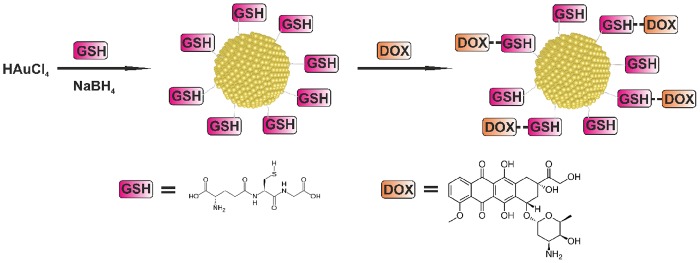
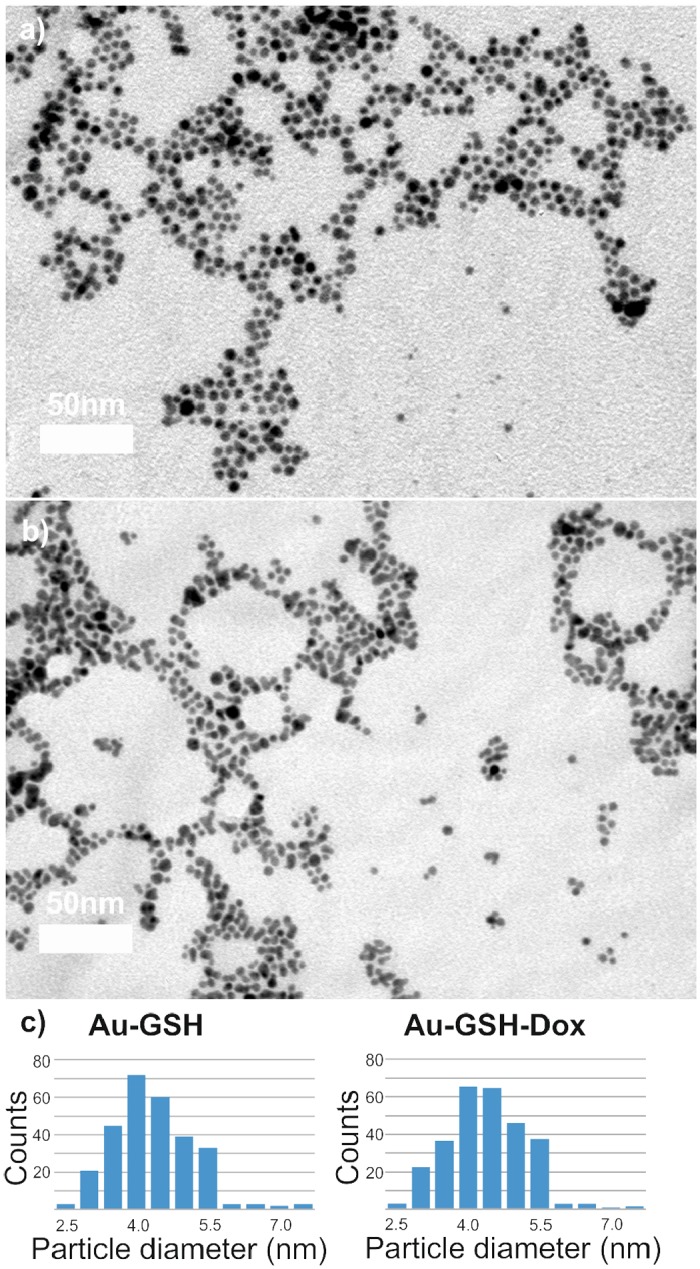
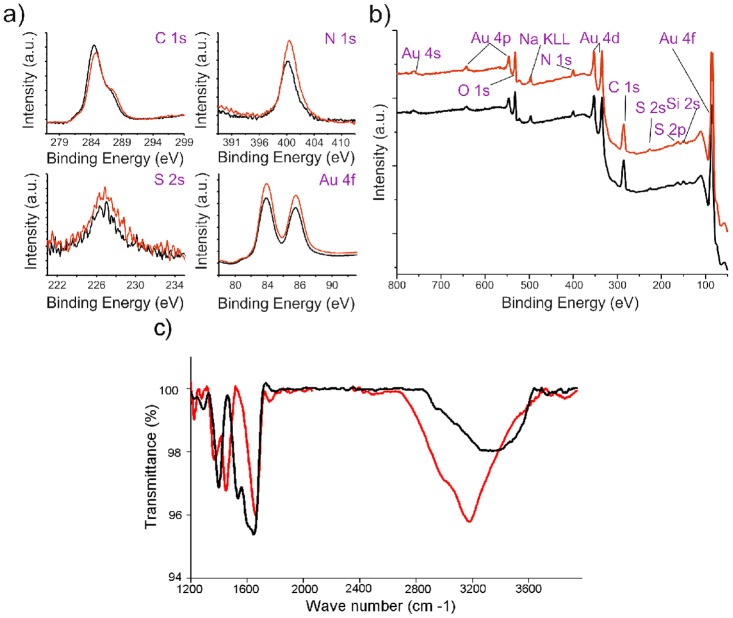
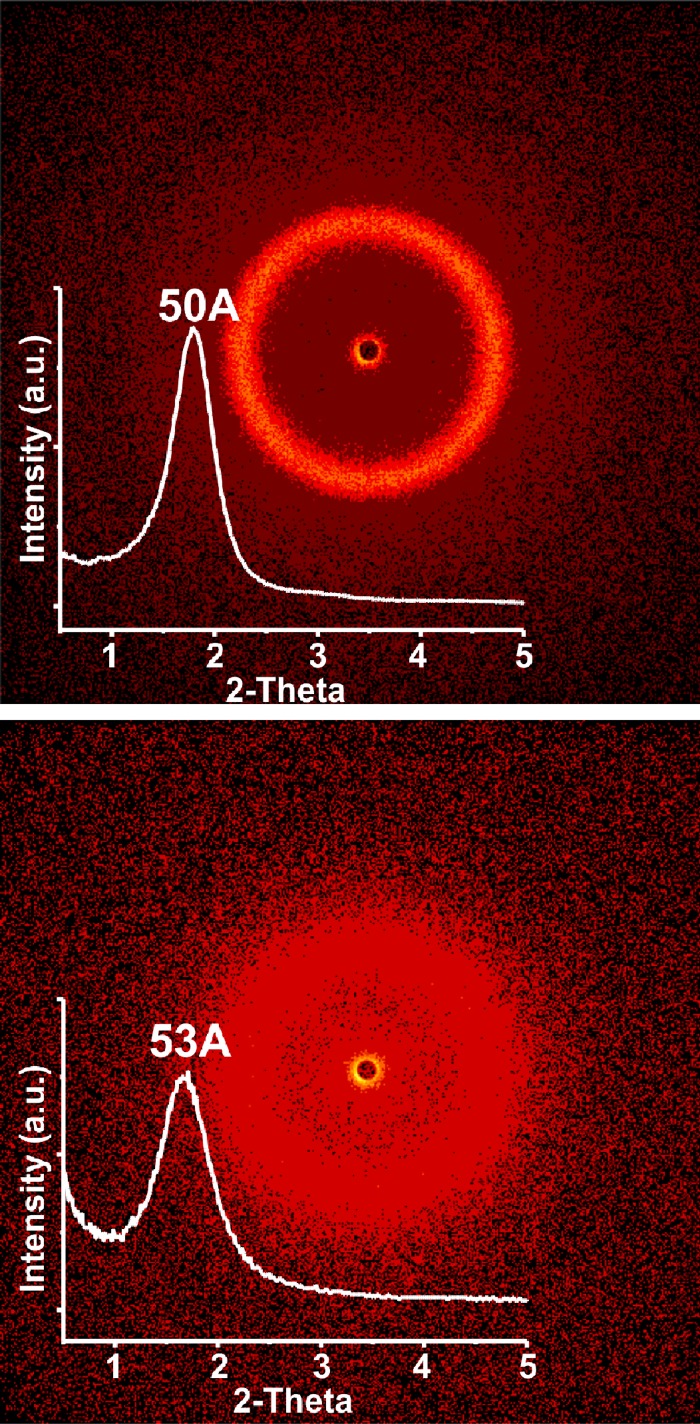
Stability and structure of the glutathione-stabilized gold nanoparticles non-covalently modified with doxorubicin (Au-GSH-Dox) was confirmed using XPS, TEM, FT-IR, SAXRD and SAXS analyses. MTT assay, Annexin V and Propidium Iodide Apoptosis assay and Rhodamine 123 and Verapamil assay were performed on 4 feline fibrosarcoma cell lines (FFS1WAW, FFS1, FFS3, FFS5). Statistical analyses were performed using Graph Pad Prism 5.0 (USA).
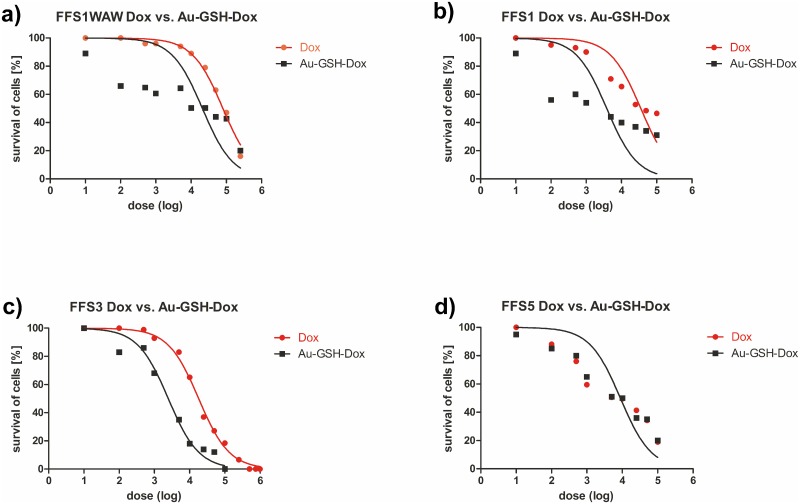
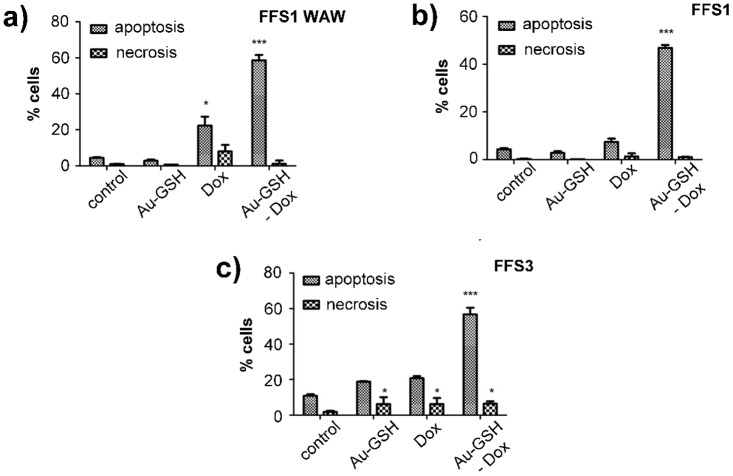
A novel approach, glutathione-stabilized gold nanoparticles (4.3 +/- 1.1 nm in diameter) non-covalently modified with doxorubicin (Au-GSH-Dox) was designed and synthesized. A higher cytotoxic effect (p<0.01) of Au-GSH-Dox than that of free doxorubicin has been observed in 3 (FFS1, FFS3, FFS1WAW) out of 4 feline fibrosarcoma cell lines. The effect has been correlated to the activity of glycoprotein P (main efflux pump responsible for multidrug resistance).
The results indicate that Au-GSH-Dox may be a potent new therapeutic agent to increase the efficacy of the drug by overcoming the resistance to doxorubicin in feline fibrosarcoma cell lines. Moreover, as doxorubicin is non-covalently attached to glutathione coated nanoparticles the synthesized system is potentially suitable to a wealth of different drug molecules.
猫注射部位肉瘤是间充质起源的恶性皮肤肿瘤,其治疗对兽医从业者来说是一项挑战。治疗方法包括根治性手术、放疗和化疗。最常用的细胞毒性药物是环磷酰胺、阿霉素和长春新碱。然而,由于其副作用、静脉给药后生物分布低和多药耐药性,细胞毒性药物作为辅助治疗的应用受到限制。胶体金纳米颗粒是克服多药耐药性的有前途的药物递送系统,多药耐药性是化疗治疗无效的主要原因。由于易于用各种分子进行表面功能化、化学稳定性及其低毒性,使用胶体金纳米颗粒作为药物递送系统的构建块是首选。
使用XPS、TEM、FT-IR、SAXRD和SAXS分析确认了用阿霉素非共价修饰的谷胱甘肽稳定的金纳米颗粒(Au-GSH-Dox)的稳定性和结构。对4种猫纤维肉瘤细胞系(FFS1WAW、FFS1、FFS3、FFS5)进行了MTT试验、膜联蛋白V和碘化丙啶凋亡试验以及罗丹明123和维拉帕米试验。使用Graph Pad Prism 5.0(美国)进行统计分析。
设计并合成了一种新方法,即用阿霉素非共价修饰的谷胱甘肽稳定的金纳米颗粒(直径4.3±1.1 nm)(Au-GSH-Dox)。在4种猫纤维肉瘤细胞系中的3种(FFS1、FFS3、FFS1WAW)中观察到Au-GSH-Dox比游离阿霉素具有更高的细胞毒性作用(p<0.01)。该作用与糖蛋白P(负责多药耐药性的主要外排泵)的活性相关。
结果表明,Au-GSH-Dox可能是一种有效的新型治疗剂,通过克服猫纤维肉瘤细胞系对阿霉素的耐药性来提高药物疗效。此外,由于阿霉素非共价连接到谷胱甘肽包被的纳米颗粒上,合成的系统可能适用于大量不同的药物分子。