Mace Emma, Tai Shuaishuai, Innes David, Godwin Ian, Hu Wushu, Campbell Bradley, Gilding Edward, Cruickshank Alan, Prentis Peter, Wang Jun, Jordan David
Department of Agriculture, Fisheries & Forestry (DAFF), Warwick, QLD, Australia.
BGI-Shenzhen, Shenzhen, China.
BMC Plant Biol. 2014 Sep 26;14:253. doi: 10.1186/s12870-014-0253-z.
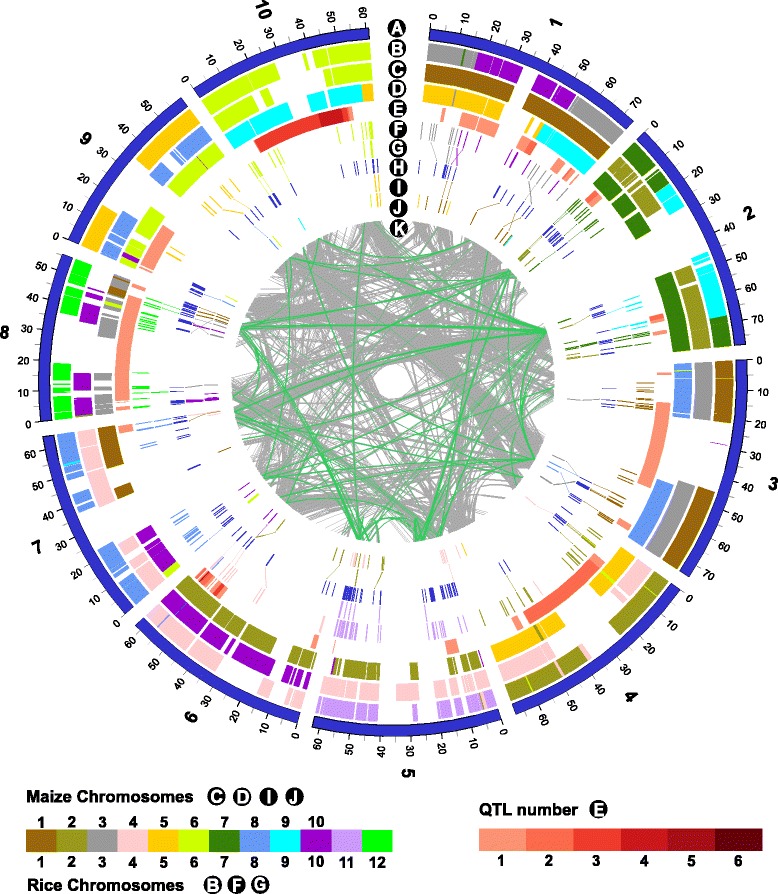
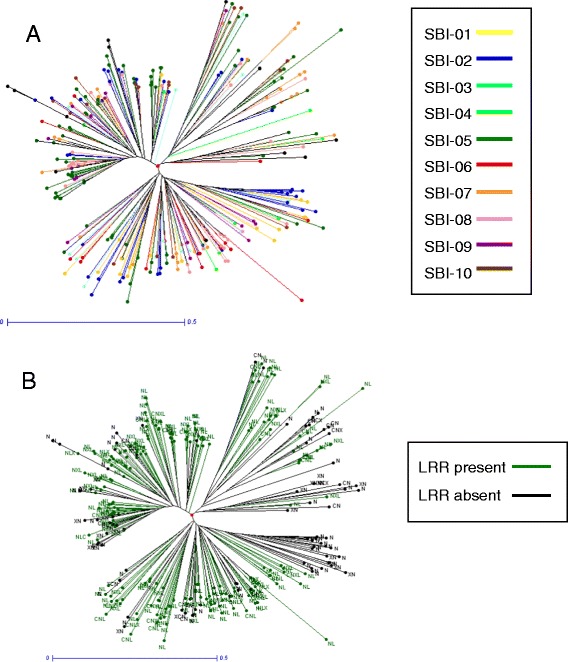
Increased disease resistance is a key target of cereal breeding programs, with disease outbreaks continuing to threaten global food production, particularly in Africa. Of the disease resistance gene families, the nucleotide-binding site plus leucine-rich repeat (NBS-LRR) family is the most prevalent and ancient and is also one of the largest gene families known in plants. The sequence diversity in NBS-encoding genes was explored in sorghum, a critical food staple in Africa, with comparisons to rice and maize and with comparisons to fungal pathogen resistance QTL.
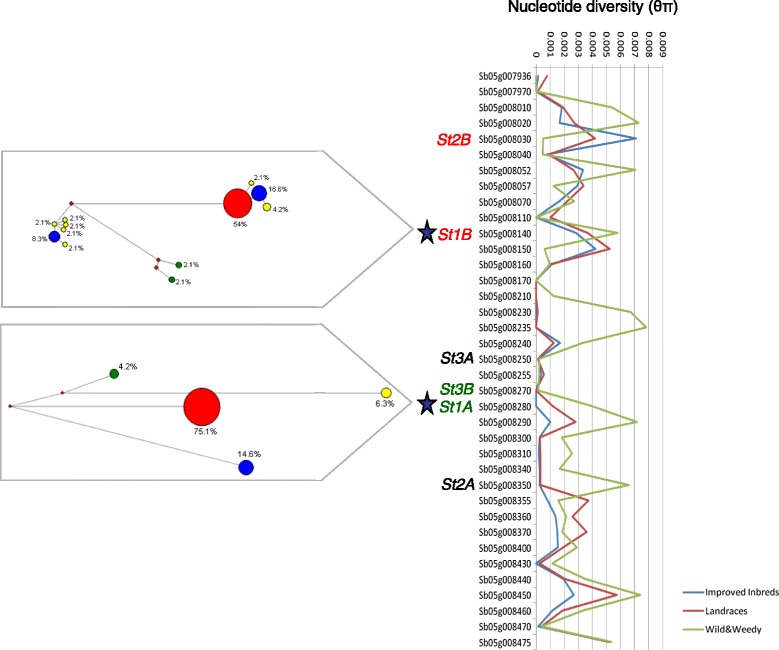
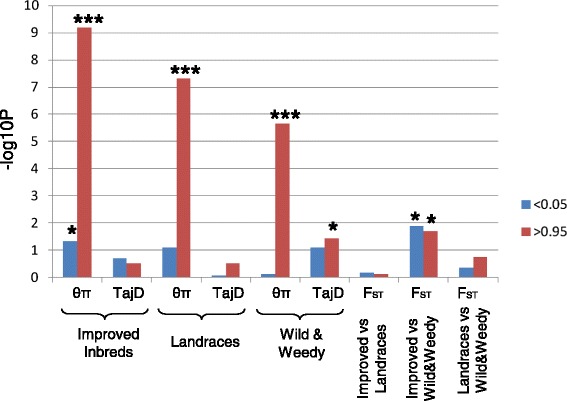
In sorghum, NBS-encoding genes had significantly higher diversity in comparison to non NBS-encoding genes and were significantly enriched in regions of the genome under purifying and balancing selection, both through domestication and improvement. Ancestral genes, pre-dating species divergence, were more abundant in regions with signatures of selection than in regions not under selection. Sorghum NBS-encoding genes were also significantly enriched in the regions of the genome containing fungal pathogen disease resistance QTL; with the diversity of the NBS-encoding genes influenced by the type of co-locating biotic stress resistance QTL.
NBS-encoding genes are under strong selection pressure in sorghum, through the contrasting evolutionary processes of purifying and balancing selection. Such contrasting evolutionary processes have impacted ancestral genes more than species-specific genes. Fungal disease resistance hot-spots in the genome, with resistance against multiple pathogens, provides further insight into the mechanisms that cereals use in the "arms race" with rapidly evolving pathogens in addition to providing plant breeders with selection targets for fast-tracking the development of high performing varieties with more durable pathogen resistance.
提高抗病性是谷类作物育种计划的关键目标,疾病爆发持续威胁全球粮食生产,尤其是在非洲。在抗病基因家族中,核苷酸结合位点加富含亮氨酸重复序列(NBS-LRR)家族最为普遍和古老,也是植物中已知的最大基因家族之一。本研究在非洲重要主食作物高粱中探索了NBS编码基因的序列多样性,并与水稻和玉米进行比较,同时与真菌病原体抗性QTL进行比较。
在高粱中,与非NBS编码基因相比,NBS编码基因具有显著更高的多样性,并且在驯化和改良过程中,在纯化和平衡选择下的基因组区域中显著富集。早于物种分化的祖先基因在有选择特征的区域比在未受选择的区域更丰富。高粱NBS编码基因在含有真菌病原体抗病性QTL的基因组区域中也显著富集;NBS编码基因的多样性受共定位生物胁迫抗性QTL类型的影响。
通过纯化和平衡选择这两种相反的进化过程,高粱中的NBS编码基因处于强大的选择压力之下。这种相反的进化过程对祖先基因的影响大于物种特异性基因。基因组中的真菌抗病热点具有对多种病原体的抗性,这不仅为植物育种者提供了快速培育具有更持久病原体抗性的高性能品种选择目标,还为谷类作物在与快速进化病原体的“军备竞赛”中使用的机制提供了进一步的见解。