Berry Michael, Fielding Burtram, Gamieldien Junaid
South African National Bioinformatics Institute/ MRC Unit for Bioinformatics Capacity Development, University of the Western Cape, Bellville, South Africa.
Molecular Biology and Virology Laboratory, Department of Medical Biosciences, University of the Western Cape, Bellville, South Africa.
BMC Struct Biol. 2015 Apr 28;15:8. doi: 10.1186/s12900-015-0035-3.
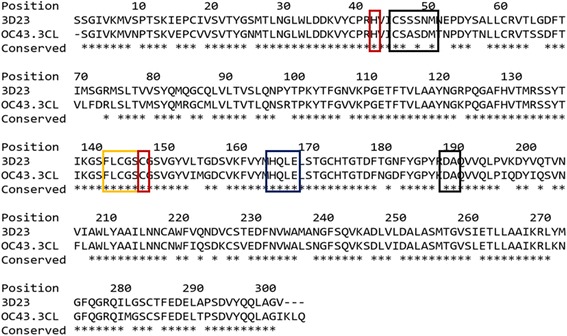
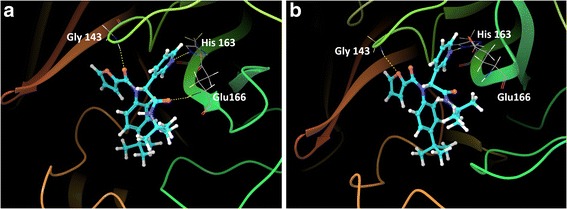
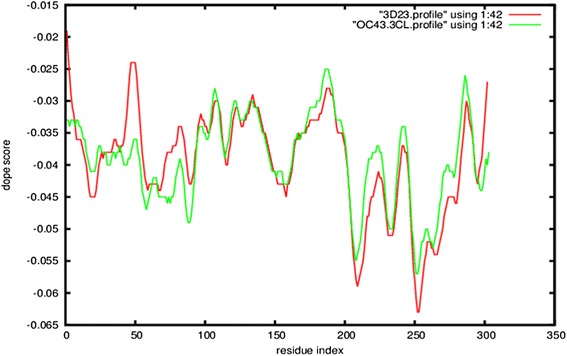
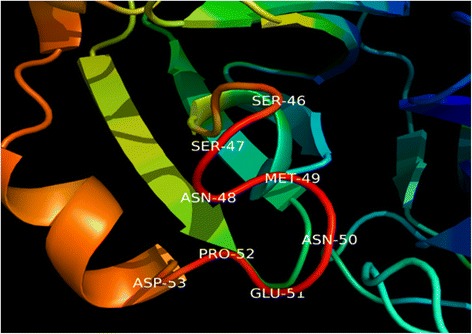
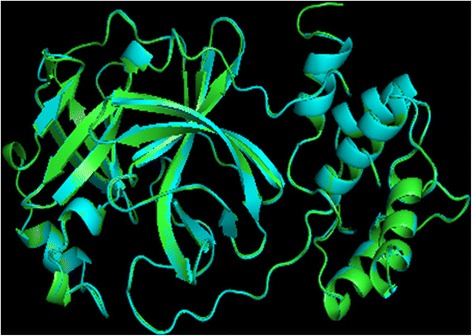
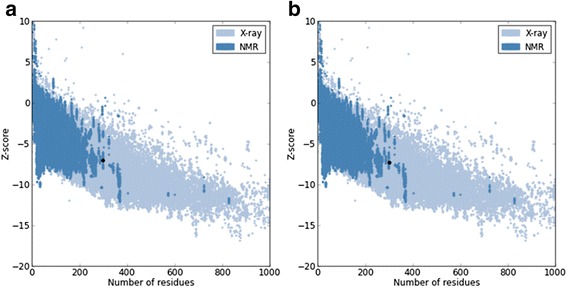
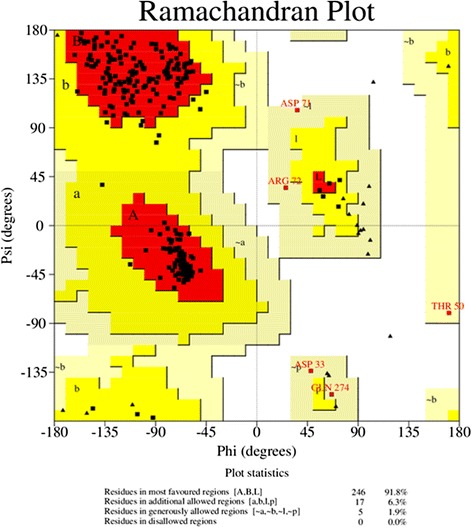
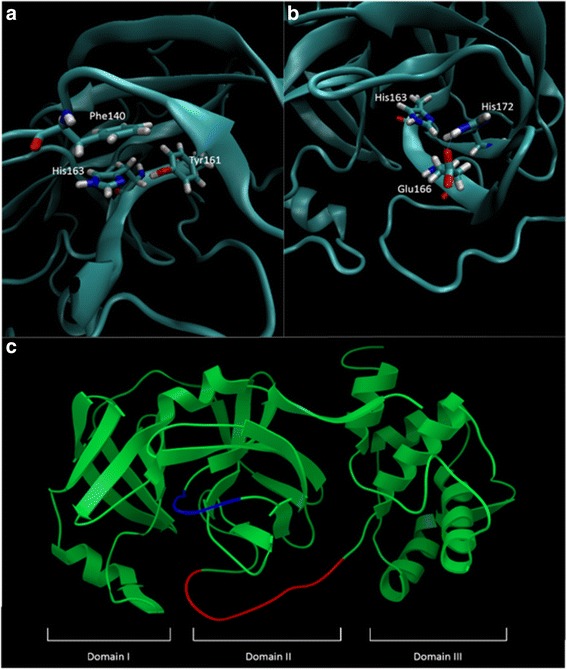
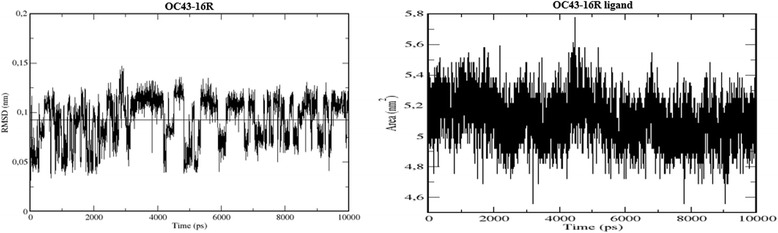
The coronavirus 3 chymotrypsin-like protease (3CL(pro)) is a validated target in the design of potential anticoronavirus inhibitors. The high degree of homology within the protease's active site and substrate conservation supports the identification of broad spectrum lead compounds. A previous study identified the compound ML188, also termed 16R, as an inhibitor of the Severe Acute Respiratory Syndrome coronavirus (SARS-CoV) 3CL(pro). This study will detail the generation of a homology model of the 3CL(pro) of the human coronavirus OC43 and determine the potential of 16R to form a broad-spectrum lead compound. MODELLER was used to generate a suitable three-dimensional model of the OC43 3CL(pro) and the Prime module of Schrӧdinger predicted the binding conformation and free energy of binding of 16R within the 3CL(pro) active site. Molecular dynamics further confirmed ligand stability and hydrogen bonding networks.
A high quality homology model of the OC43 3CL(pro) was successfully generated in an active conformation. Further studies reproduced the binding pose of 16R within the active site of the generated model, where its free energy of binding was shown to equal that of the 3CL(pro) of SARS-CoV, a receptor it is experimentally proven to inhibit. The stability of the ligand was subsequently confirmed by molecular dynamics.
The lead compound 16R may represent a broad-spectrum inhibitor of the 3CL(pro) of OC43 and potentially other coronaviruses. This study provides an atomistic structure of the 3CL(pro) of OC43 and supports further experimental validation of the inhibitory effects of 16R. These findings further confirm that the 3CL(pro) of coronaviruses can be inhibited by broad spectrum lead compounds.
冠状病毒3型类胰凝乳蛋白酶(3CL蛋白酶)是设计潜在抗冠状病毒抑制剂的有效靶点。蛋白酶活性位点内的高度同源性和底物保守性有助于鉴定广谱先导化合物。先前的一项研究确定化合物ML188(也称为16R)是严重急性呼吸综合征冠状病毒(SARS-CoV)3CL蛋白酶的抑制剂。本研究将详细阐述人冠状病毒OC43的3CL蛋白酶同源模型的构建,并确定16R形成广谱先导化合物的潜力。使用MODELLER生成合适的OC43 3CL蛋白酶三维模型,Schrödinger的Prime模块预测了16R在3CL蛋白酶活性位点内的结合构象和结合自由能。分子动力学进一步证实了配体的稳定性和氢键网络。
成功构建了处于活性构象的高质量OC43 3CL蛋白酶同源模型。进一步研究重现了16R在生成模型活性位点内的结合姿势,其结合自由能与SARS-CoV的3CL蛋白酶相同,实验证明16R可抑制该受体。随后通过分子动力学证实了配体的稳定性。
先导化合物16R可能是OC43的3CL蛋白酶以及其他冠状病毒的广谱抑制剂。本研究提供了OC43的3CL蛋白酶的原子结构,并支持对16R抑制作用的进一步实验验证。这些发现进一步证实冠状病毒的3CL蛋白酶可被广谱先导化合物抑制。