Chu Ling-Hon Matthew, Choy Wai-Yan, Tsai Sau-Na, Rao Zihe, Ngai Sai-Ming
Molecular Biotechnology Program, The Chinese University of Hong Kong, Shatin, Hong Kong.
Protein Sci. 2006 Apr;15(4):699-709. doi: 10.1110/ps.052007306.
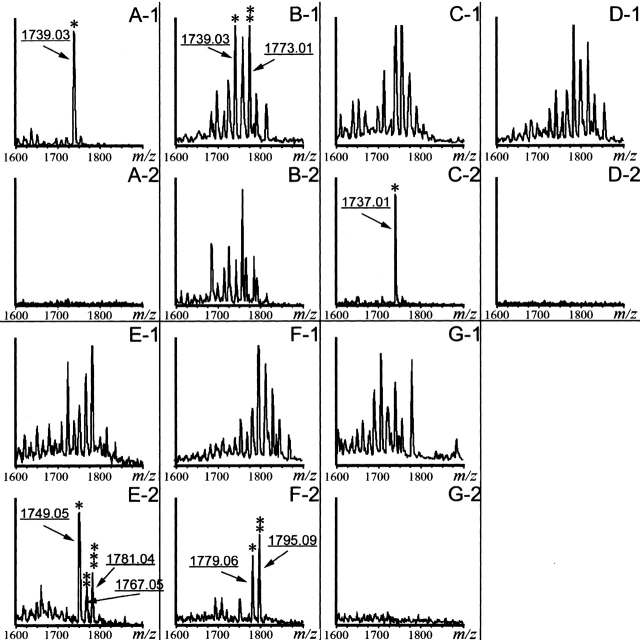
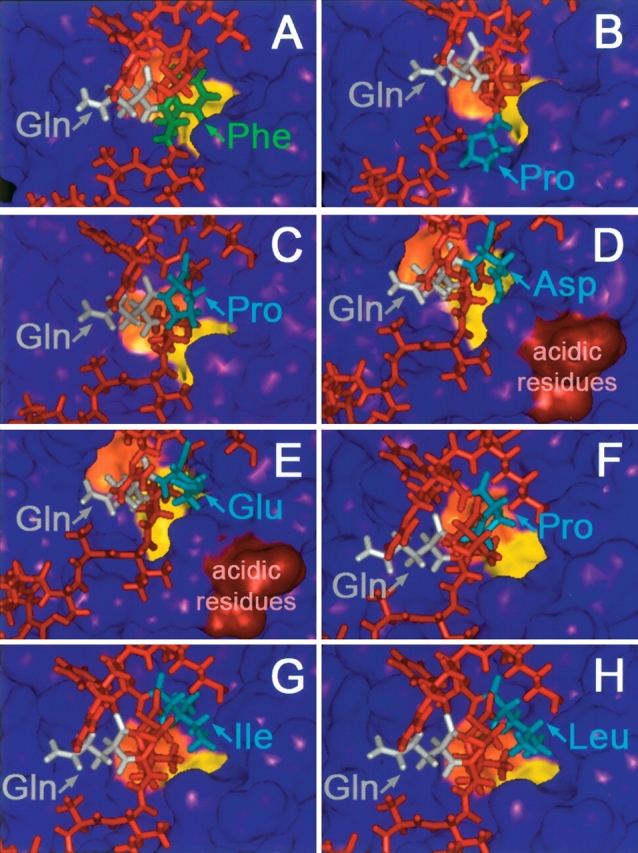
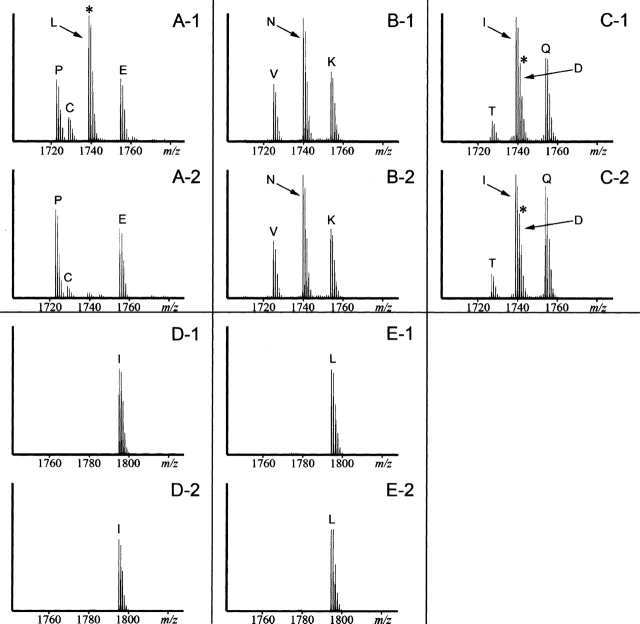
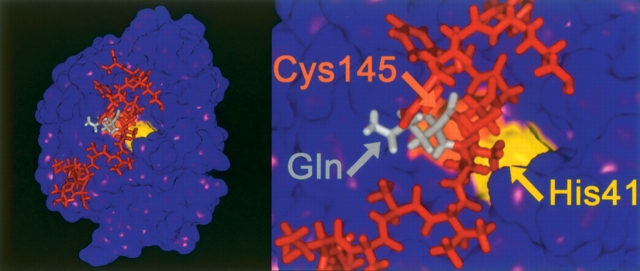
Severe acute respiratory syndrome coronavirus (SARS-CoV) 3C-like protease (3CL(pro)) mediates extensive proteolytic processing of replicase polyproteins, and is considered a promising target for anti-SARS drug development. Here we present a rapid and high-throughput screening method to study the substrate specificity of SARS-CoV 3CL(pro). Six target amino acid positions flanking the SARS-CoV 3CL(pro) cleavage site were investigated. Each batch of mixed peptide substrates with defined amino acid substitutions at the target amino acid position was synthesized via the "cartridge replacement" approach and was subjected to enzymatic cleavage by recombinant SARS-CoV 3CL(pro). Susceptibility of each peptide substrate to SARS-CoV 3CL(pro) cleavage was monitored simultaneously by matrix-assisted laser desorption/ionization time-of-flight mass spectrometry (MALDI-TOF MS). The hydrophobic pocket in the P2 position at the protease cleavage site is crucial to SARS-CoV 3CL(pro)-specific binding, which is limited to substitution by hydrophobic residue. The binding interface of SARS-CoV 3CL(pro) that is facing the P1' position is suggested to be occupied by acidic amino acids, thus the P1' position is intolerant to acidic residue substitution, owing to electrostatic repulsion. Steric hindrance caused by some bulky or beta-branching amino acids in P3 and P2' positions may also hinder the binding of SARS-CoV 3CL(pro). This study generates a comprehensive overview of SARS-CoV 3CL(pro) substrate specificity, which serves as the design basis of synthetic peptide-based SARS-CoV 3CL(pro) inhibitors. Our experimental approach is believed to be widely applicable for investigating the substrate specificity of other proteases in a rapid and high-throughput manner that is compatible for future automated analysis.
严重急性呼吸综合征冠状病毒(SARS-CoV)的3C样蛋白酶(3CL(pro))介导复制酶多聚蛋白的广泛蛋白水解加工,被认为是抗SARS药物开发的一个有前景的靶点。在此,我们提出一种快速且高通量的筛选方法来研究SARS-CoV 3CL(pro)的底物特异性。研究了SARS-CoV 3CL(pro)切割位点两侧的六个目标氨基酸位置。通过“柱更换”方法合成了每批在目标氨基酸位置具有特定氨基酸取代的混合肽底物,并使其接受重组SARS-CoV 3CL(pro)的酶切。通过基质辅助激光解吸/电离飞行时间质谱(MALDI-TOF MS)同时监测每个肽底物对SARS-CoV 3CL(pro)切割的敏感性。蛋白酶切割位点P2位置的疏水口袋对于SARS-CoV 3CL(pro)特异性结合至关重要,这种结合仅限于被疏水残基取代。SARS-CoV 3CL(pro)面向P1'位置的结合界面被认为被酸性氨基酸占据,因此由于静电排斥,P1'位置不耐受酸性残基取代。P3和P2'位置一些大体积或β分支氨基酸引起的空间位阻也可能阻碍SARS-CoV 3CL(pro)的结合。本研究全面概述了SARS-CoV 3CL(pro)的底物特异性,为基于合成肽的SARS-CoV 3CL(pro)抑制剂的设计提供了基础。我们的实验方法被认为可广泛应用于以快速且高通量的方式研究其他蛋白酶的底物特异性,这种方式适用于未来的自动化分析。