Grissett G P, White B J, Larson R L
Department of Clinical Sciences, College of Veterinary Medicine, Kansas State University, Manhattan, KS.
J Vet Intern Med. 2015 May-Jun;29(3):770-80. doi: 10.1111/jvim.12597. Epub 2015 Apr 30.
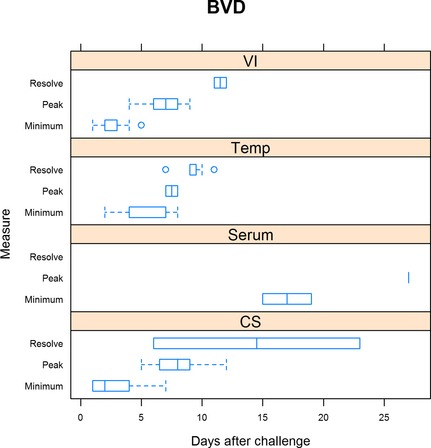
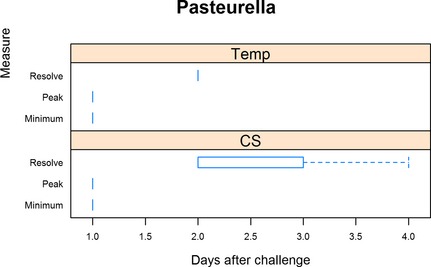
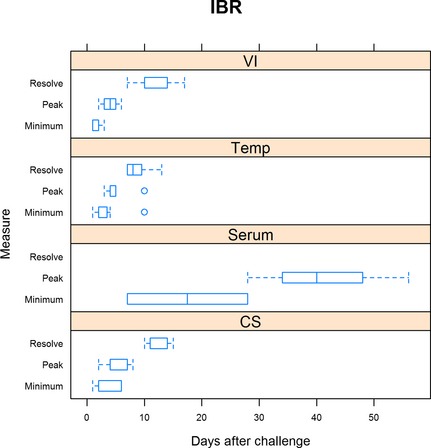
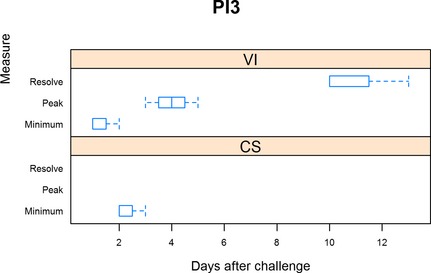
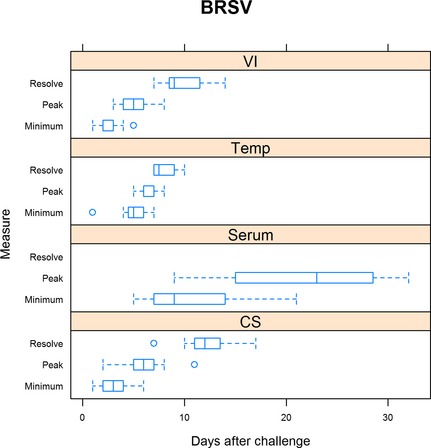
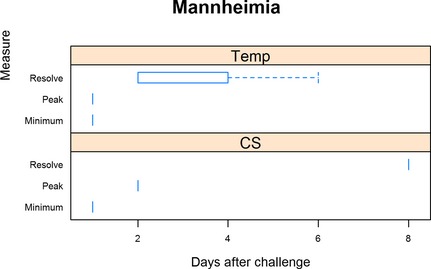
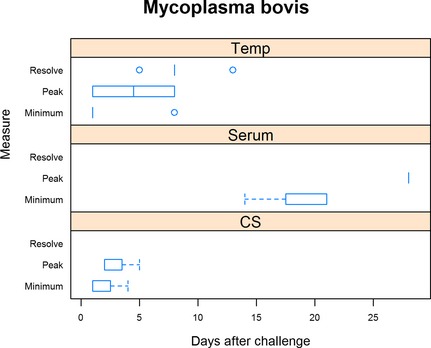
Bovine respiratory disease (BRD) is an economically important disease of cattle and continues to be an intensely studied topic. However, literature summarizing the time between pathogen exposure and clinical signs, shedding, and seroconversion is minimal. A structured literature review of the published literature was performed to determine cattle responses (time from pathogen exposure to clinical signs, shedding, and seroconversion) in challenge models using common BRD viral and bacterial pathogens. After review a descriptive analysis of published studies using common BRD pathogen challenge studies was performed. Inclusion criteria were single pathogen challenge studies with no treatment or vaccination evaluating outcomes of interest: clinical signs, shedding, and seroconversion. Pathogens of interest included: bovine viral diarrhea virus (BVDV), bovine herpesvirus type 1 (BHV-1), parainfluenza-3 virus, bovine respiratory syncytial virus, Mannheimia haemolytica, Mycoplasma bovis, Pastuerella multocida, and Histophilus somni. Thirty-five studies and 64 trials were included for analysis. The median days to the resolution of clinical signs after BVDV challenge was 15 and shedding was not detected on day 12 postchallenge. Resolution of BHV-1 shedding resolved on day 12 and clinical signs on day 12 postchallenge. Bovine respiratory syncytial virus ceased shedding on day 9 and median time to resolution of clinical signs was on day 12 postchallenge. M. haemolytica resolved clinical signs 8 days postchallenge. This literature review and descriptive analysis can serve as a resource to assist in designing challenge model studies and potentially aid in estimation of duration of clinical disease and shedding after natural pathogen exposure.
牛呼吸道疾病(BRD)是一种对养牛业具有重要经济影响的疾病,一直是深入研究的课题。然而,总结病原体暴露与临床症状、排毒及血清转化之间时间间隔的文献却很少。我们对已发表的文献进行了结构化综述,以确定在使用常见BRD病毒和细菌病原体的攻毒模型中牛的反应(从病原体暴露到出现临床症状、排毒及血清转化的时间)。综述之后,我们对使用常见BRD病原体攻毒研究的已发表研究进行了描述性分析。纳入标准为单病原体攻毒研究,且未进行治疗或接种疫苗,评估感兴趣的结果:临床症状、排毒及血清转化。感兴趣的病原体包括:牛病毒性腹泻病毒(BVDV)、牛疱疹病毒1型(BHV-1)、副流感3病毒、牛呼吸道合胞病毒、溶血曼氏杆菌、牛支原体、多杀性巴氏杆菌和睡眠嗜组织菌。共纳入35项研究和64项试验进行分析。BVDV攻毒后临床症状消退的中位天数为15天,攻毒后第12天未检测到排毒。BHV-1排毒在攻毒后第12天消退,临床症状在攻毒后第12天出现。牛呼吸道合胞病毒在攻毒后第9天停止排毒,临床症状消退的中位时间为攻毒后第12天。溶血曼氏杆菌在攻毒后第8天临床症状消退。这篇文献综述和描述性分析可作为一种资源,有助于设计攻毒模型研究,并可能有助于估计自然病原体暴露后临床疾病和排毒的持续时间。