Besoain Felipe, Perez-Navarro Antoni, Caylà Joan A, Aviñó Constanza Jacques, de Olalla Patricia García
Estudis d'Informàtica, Multimèdia i Telecomunicació, Universitat Oberta de Catalunya, Rambla Poblenou 156, Barcelona, Spain.
Escuela de Ingeniería en Bioinformática, Universidad de Talca, Avenida Lircay s/n, Talca, Chile.
Int J Health Geogr. 2015 May 3;14:18. doi: 10.1186/s12942-015-0010-z.
Advances in the development of information and communication technologies have facilitated social interrelationships, but also sexual contacts without appropriate preventive measures. In this paper, we will focus on situations in which people use applications to meet sexual partners nearby, which could increase their chance of exposure to sexually transmitted infections (STI). How can we encourage users to adopt preventive measures without violating their privacy or infringing on the character of the application?
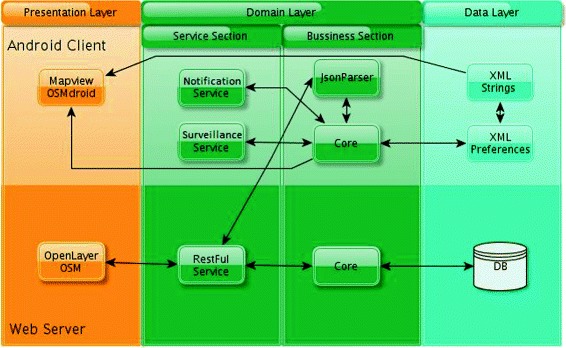
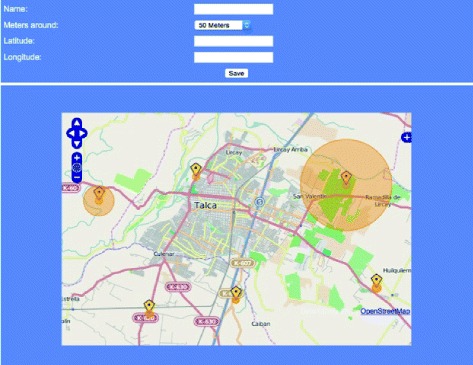
To achieve the goal of preventing STI, we have used the design and creation methodology and have developed a prototype software package. This prototype follows the RESTful services principles and has two parts: an Android OS application with emphasis on ubiquitous computing and designed according to General Responsibility Assignment Software Patterns (GRASP), and a server with a web page. To choose the preventive messages, we performed a test in 17 men who have sex with men (MSM).
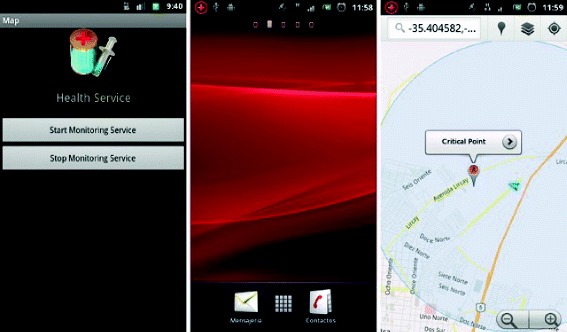
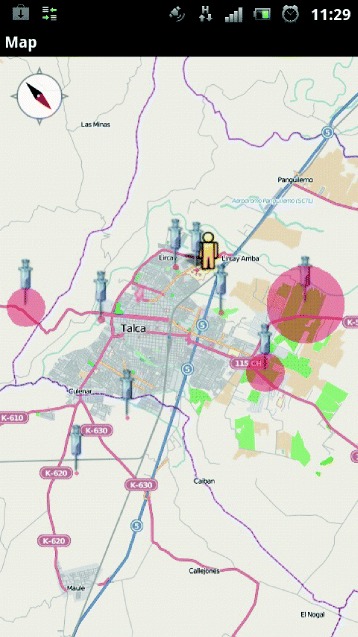
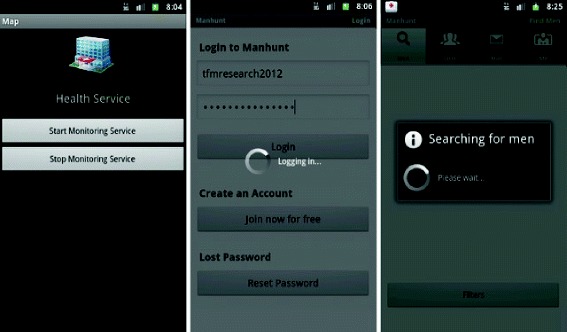
Our software sends preventive notifications to users when it detects situations such as the activation of particular applications on their smartphones, or their proximity to areas with a high probability of intercourse (hot zones). The underlying idea is the same as that for warning messages on cigarette packets, since users read the message just when they are going to smoke. The messages used have been selected from a list that has been rated by the users themselves. The most popular message is "Enjoy sex and enjoy life. Do not expose yourself to HIV". The user is unaware of the software, which runs in the background.
Ubiquitous computing may be useful for alerting users with preventive and educational messages. The proposed application is non-intrusive because: 1) the users themselves decide to install it and, therefore, users' privacy rights are preserved; 2) it sends a message that helps users think about taking appropriate preventive measures; and 3) it works in the background without interfering with users unless a trigger situation is detected. Thus, this type of application could become an important tool in the complex task of STI prevention.
信息与通信技术的发展推动了社会人际关系的发展,但也使得在没有适当预防措施的情况下发生性接触成为可能。在本文中,我们将聚焦于人们使用应用程序在附近寻找性伴侣的情况,这可能会增加他们感染性传播感染(STI)的几率。我们如何鼓励用户采取预防措施,同时又不侵犯他们的隐私或影响应用程序的性质呢?
为实现预防性传播感染的目标,我们采用了设计与创建方法,并开发了一个原型软件包。该原型遵循RESTful服务原则,有两个部分:一个侧重于普适计算且根据通用责任分配软件模式(GRASP)设计的安卓操作系统应用程序,以及一个带有网页的服务器。为选择预防信息,我们对17名男男性行为者(MSM)进行了测试。
当我们的软件检测到诸如智能手机上特定应用程序的激活,或者用户接近高性交概率区域(热点区域)等情况时,会向用户发送预防通知。其基本理念与香烟包装上的警示信息相同,因为用户恰好在准备进行性行为时读取该信息。所使用的信息是从用户自己评级的列表中挑选出来的。最受欢迎的信息是“享受性爱,享受生活。不要让自己暴露于艾滋病毒”。用户并不知道该软件在后台运行。
普适计算可能有助于用预防和教育信息提醒用户。所提议的应用程序是非侵入性的,原因如下:1)用户自己决定安装它,因此用户的隐私权得到了保护;2)它发送的信息有助于用户思考采取适当的预防措施;3)它在后台运行,除非检测到触发情况,否则不会干扰用户。因此,这类应用程序可能会成为预防性传播感染这项复杂任务中的一个重要工具。