Teixeira Manoel Jacobsen, da Paz Matheus Gomes da S, Bina Mauro Tupiniquim, Santos Scheila Nogueira, Raicher Irina, Galhardoni Ricardo, Fernandes Diego Toledo, Yeng Lin T, Baptista Abrahão F, de Andrade Daniel Ciampi
Pain Center, Department of Neurology, University of São Paulo, São Paulo, Brazil.
Pain Center, Instituto do Câncer de São Paulo, São Paulo, Brazil.
BMC Neurol. 2015 May 4;15:73. doi: 10.1186/s12883-015-0329-x.
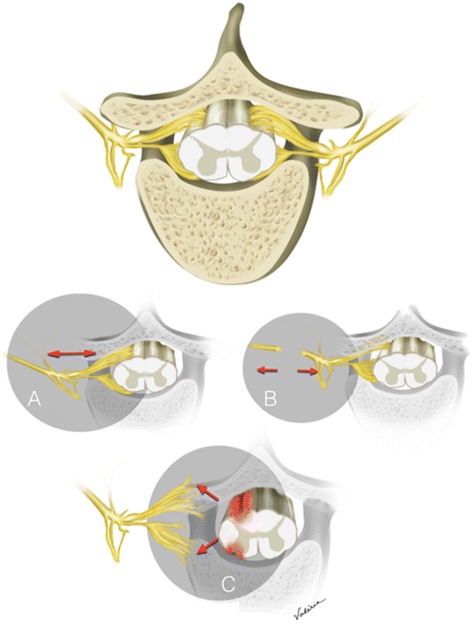
The pain that commonly occurs after brachial plexus avulsion poses an additional burden on the quality of life of patients already impaired by motor, sensory and autonomic deficits. Evidence-based treatments for the pain associated with brachial plexus avulsion are scarce, thus frequently leaving the condition refractory to treatment with the standard methods used to manage neuropathic pain. Unfortunately, little is known about the pathophysiology of brachial plexus avulsion. Available evidence indicates that besides primary nerve root injury, central lesions related to the abrupt disconnection of nerve roots from the spinal cord may play an important role in the genesis of neuropathic pain in these patients and may explain in part its refractoriness to treatment.
The understanding of both central and peripheral mechanisms that contribute to the development of pain is of major importance in order to propose more effective treatments for brachial plexus avulsion-related pain. This review focuses on the current understanding about the occurrence of neuropathic pain in these patients and the role played by peripheral and central mechanisms that provides insights into its treatment. Pain after brachial plexus avulsion involves both peripheral and central components; thereby it is characterized as a mixed (central and peripheral) neuropathic pain syndrome.
臂丛神经撕脱伤后常出现的疼痛,给已经因运动、感觉和自主神经功能障碍而生活质量受损的患者带来了额外负担。针对臂丛神经撕脱伤相关疼痛的循证治疗方法稀缺,因此,对于用于治疗神经性疼痛的标准方法,这种病症常常难以治愈。不幸的是,人们对臂丛神经撕脱伤的病理生理学知之甚少。现有证据表明,除了原发性神经根损伤外,与神经根从脊髓突然断开相关的中枢性病变,可能在这些患者神经性疼痛的发生中起重要作用,并且可能部分解释了其对治疗的难治性。
为了提出更有效的治疗臂丛神经撕脱伤相关疼痛的方法,了解导致疼痛发生的中枢和外周机制至关重要。本综述聚焦于目前对这些患者神经性疼痛发生情况的理解,以及外周和中枢机制所起的作用,这些为其治疗提供了思路。臂丛神经撕脱伤后的疼痛涉及外周和中枢成分;因此,它被归类为一种混合性(中枢性和外周性)神经性疼痛综合征。