Yang Ning, Yao Zhi, Miao Li, Liu Jia, Gao Xia, Fan Hui, Hu Yanjin, Zhang Heng, Xu Yuan, Qu Aijuan, Wang Guang
Department of Endocrinology, Beijing Chaoyang Hospital, Capital Medical University, Beijing, People's Republic of China.
Department of Physiology and Pathophysiology, School of Basic Medical Science, Capital Medical University, Beijing, People's Republic of China.
PLoS One. 2015 May 4;10(5):e0125922. doi: 10.1371/journal.pone.0125922. eCollection 2015.
Hypothyroidism (HO) can induce significant metabolic dysfunction and increase cardiovascular disease risk. In the present study, we investigated the relationship between homocysteine (Hcy) and insulin resistance (IR) in patients with HO or subclinical hypothyroidism (SHO).
A total of 270 subjects were enrolled. All subjects were divided into the following three groups: HO, SHO and control. Plasma levels of Hcy were measured, and each patient's homeostatic index of insulin resistance (HOMA-IR) was calculated. Statistical analyses were carried out to evaluate the correlations among groups and to determine the predictors of IR in patients with HO or SHO.
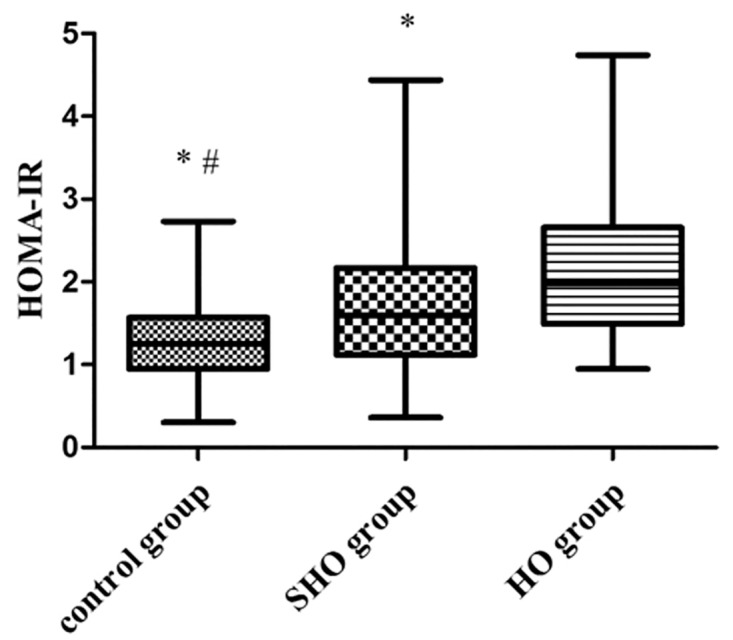
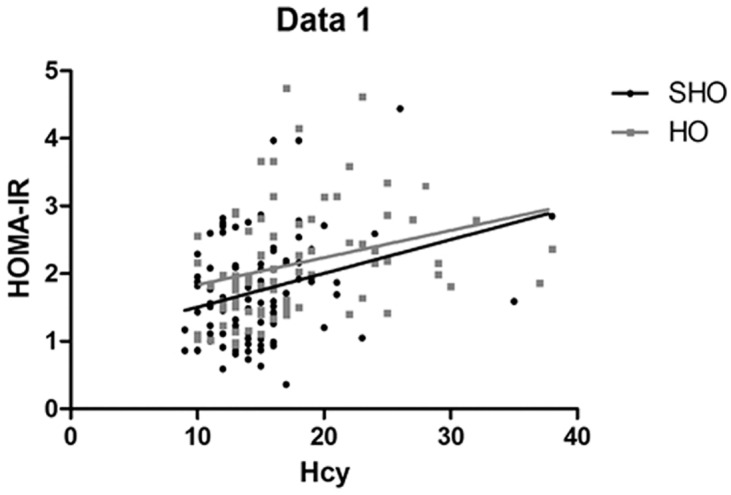
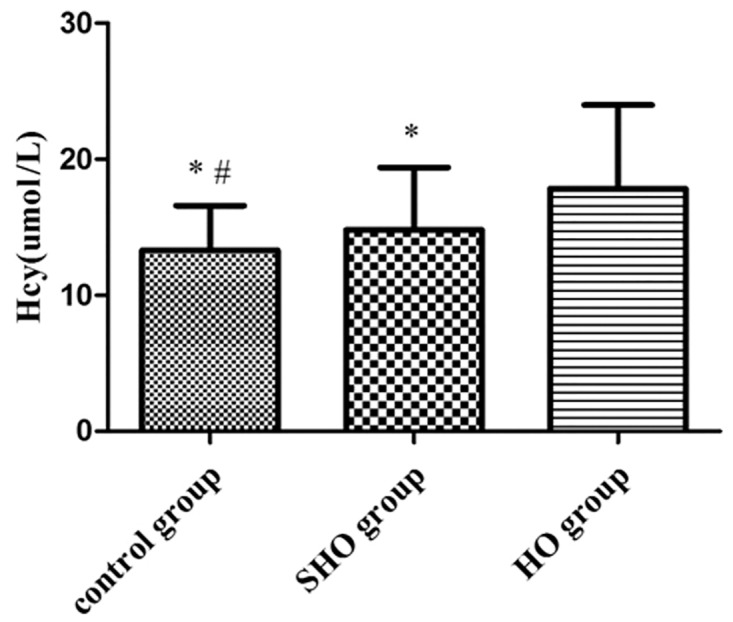
The HOMA-IR value was significantly higher in the HO group than in the SHO and control groups. Plasma levels of Hcy were markedly increased in the HO group compared with those of the SHO group and controls. In addition, plasma levels of Hcy were positively correlated with the HOMA-IR values in both the HO and SHO groups. Multiple linear regression models showed that plasma levels of Hcy and free thyroxine (FT4) were the only predictors of HOMA-IR in patients with HO or SHO.
Plasma levels of Hcy and HOMA-IR were increased in patients with HO or SHO. Our results suggest that HO and SHO may increase the risk for atherogenesis and cardiovascular disease by increased IR. The increased IR induced by hyperhomocysteinemia in patients with HO or SHO may partially explain this adverse effect.
甲状腺功能减退症(HO)可导致显著的代谢功能障碍并增加心血管疾病风险。在本研究中,我们调查了HO或亚临床甲状腺功能减退症(SHO)患者中同型半胱氨酸(Hcy)与胰岛素抵抗(IR)之间的关系。
共纳入270名受试者。所有受试者被分为以下三组:HO组、SHO组和对照组。测量血浆Hcy水平,并计算每位患者的胰岛素抵抗稳态指数(HOMA-IR)。进行统计分析以评估各组之间的相关性,并确定HO或SHO患者中IR的预测因素。
HO组的HOMA-IR值显著高于SHO组和对照组。与SHO组和对照组相比,HO组的血浆Hcy水平明显升高。此外,HO组和SHO组的血浆Hcy水平均与HOMA-IR值呈正相关。多元线性回归模型显示,血浆Hcy水平和游离甲状腺素(FT4)是HO或SHO患者HOMA-IR的唯一预测因素。
HO或SHO患者的血浆Hcy水平和HOMA-IR升高。我们的结果表明,HO和SHO可能通过增加IR来增加动脉粥样硬化和心血管疾病的风险。HO或SHO患者高同型半胱氨酸血症诱导的IR增加可能部分解释了这种不良反应。