Bishop Peter J, Walmsley Christopher W, Phillips Matthew J, Quayle Michelle R, Boisvert Catherine A, McHenry Colin R
Ancient Environments Program, Queensland Museum, 122 Gerler Rd, Hendra, Queensland, 4011, Australia; School of Earth, Environmental and Biological Sciences, Queensland University of Technology, Brisbane, Queensland, 4000, Australia; Centre for Musculoskeletal Research, Griffith University, Southport, Queensland, 4222, Australia.
Department of Anatomy and Developmental Biology, Monash University, Clayton, Victoria, 3800, Australia.
PLoS One. 2015 May 4;10(5):e0125723. doi: 10.1371/journal.pone.0125723. eCollection 2015.
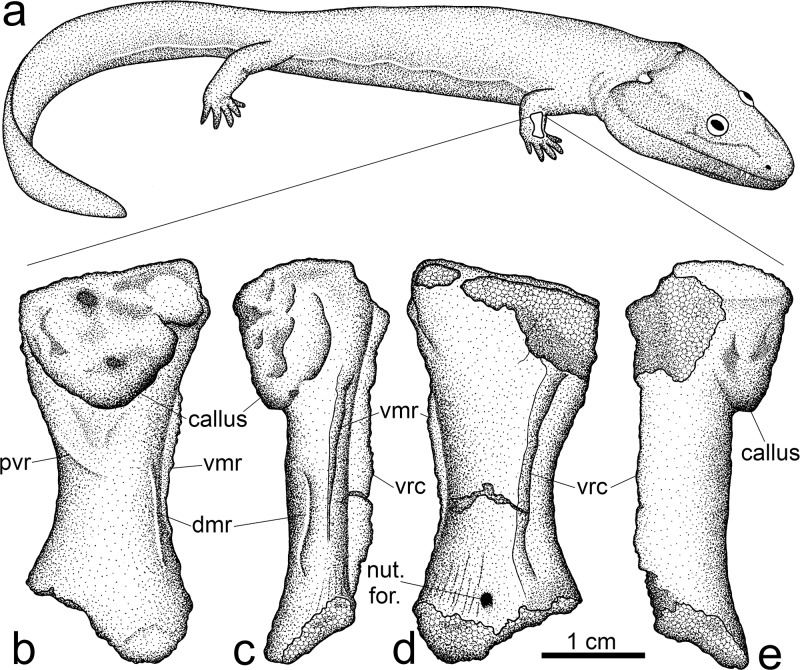
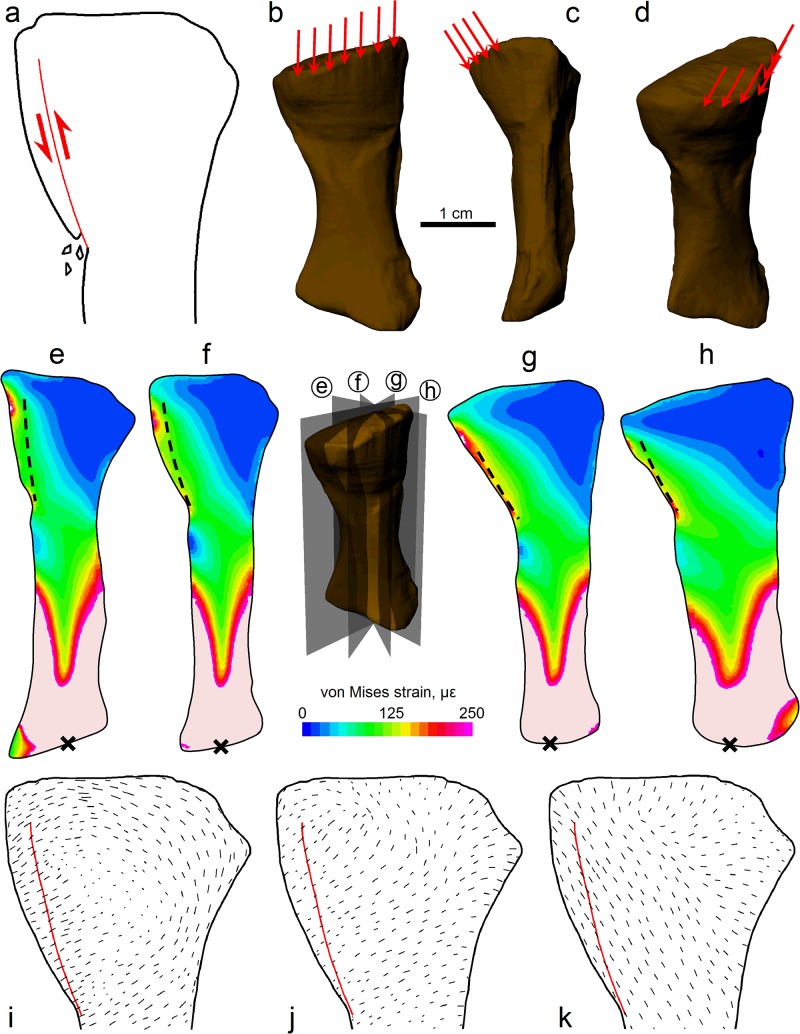
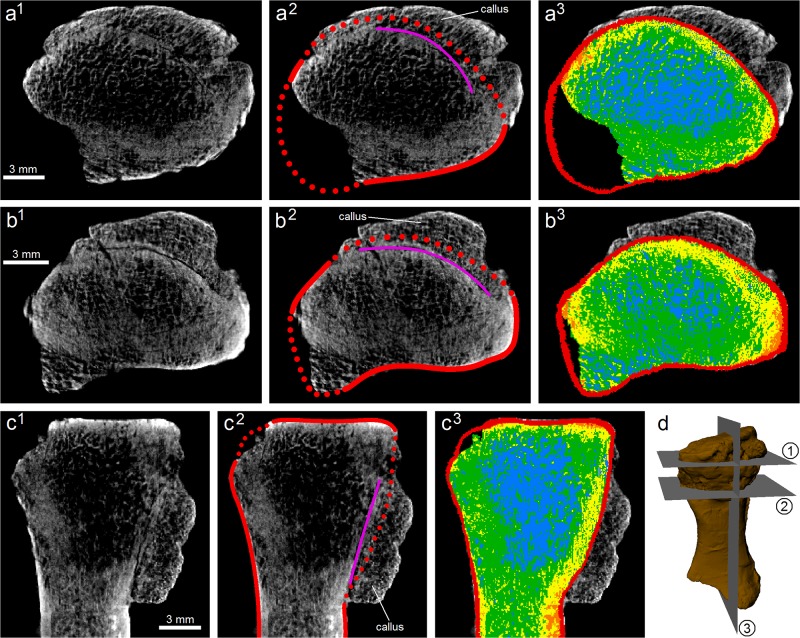
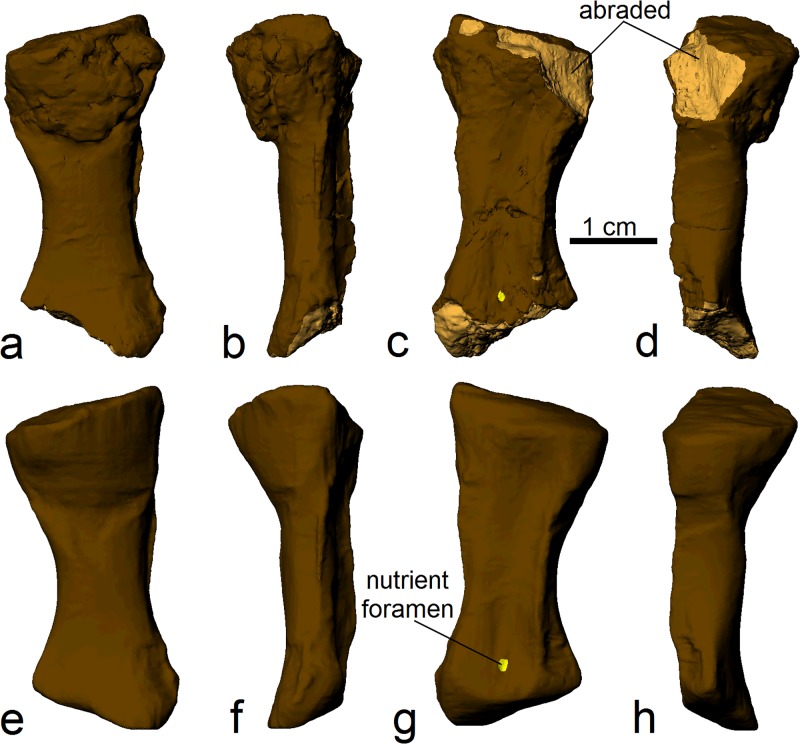
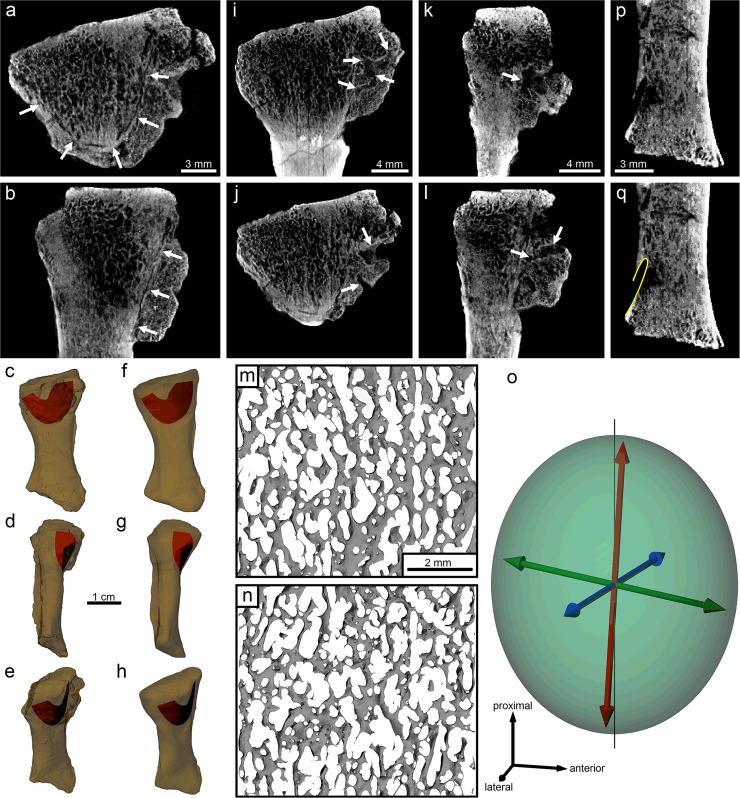
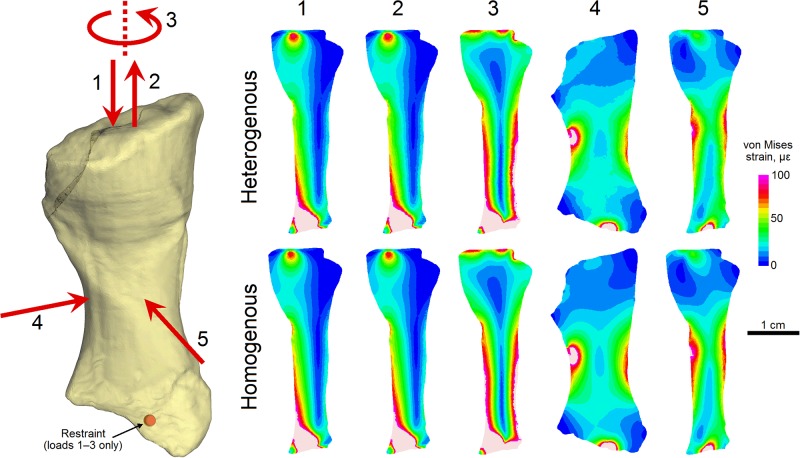
The origin of terrestrial tetrapods was a key event in vertebrate evolution, yet how and when it occurred remains obscure, due to scarce fossil evidence. Here, we show that the study of palaeopathologies, such as broken and healed bones, can help elucidate poorly understood behavioural transitions such as this. Using high-resolution finite element analysis, we demonstrate that the oldest known broken tetrapod bone, a radius of the primitive stem tetrapod Ossinodus pueri from the mid-Viséan (333 million years ago) of Australia, fractured under a high-force, impact-type loading scenario. The nature of the fracture suggests that it most plausibly occurred during a fall on land. Augmenting this are new osteological observations, including a preferred directionality to the trabecular architecture of cancellous bone. Together, these results suggest that Ossinodus, one of the first large (>2m length) tetrapods, spent a significant proportion of its life on land. Our findings have important implications for understanding the temporal, biogeographical and physiological contexts under which terrestriality in vertebrates evolved. They push the date for the origin of terrestrial tetrapods further back into the Carboniferous by at least two million years. Moreover, they raise the possibility that terrestriality in vertebrates first evolved in large tetrapods in Gondwana rather than in small European forms, warranting a re-evaluation of this important evolutionary event.
陆生四足动物的起源是脊椎动物进化中的关键事件,但由于化石证据稀少,其发生方式和时间仍不清楚。在这里,我们表明,对古病理学的研究,如骨折和愈合的骨骼,可以帮助阐明诸如此类理解不足的行为转变。通过高分辨率有限元分析,我们证明了已知最古老的骨折四足动物骨骼,即来自澳大利亚维宪中期(3.33亿年前)的原始四足动物始祖鄂氏螈的一根桡骨,是在高力冲击型加载情况下骨折的。骨折的性质表明它最有可能发生在陆地坠落期间。新的骨学观察结果进一步支持了这一点,包括松质骨小梁结构具有优先方向性。这些结果共同表明,最早的大型(体长>2米)四足动物之一鄂氏螈,其生命的很大一部分时间是在陆地上度过的。我们的发现对于理解脊椎动物陆地生活习性进化的时间、生物地理和生理背景具有重要意义。它们将陆生四足动物的起源时间至少向前推到石炭纪两百万年。此外,它们还提出了一种可能性,即脊椎动物的陆地生活习性最初是在冈瓦纳大陆的大型四足动物中进化而来,而不是在欧洲的小型四足动物中,这需要对这一重要的进化事件进行重新评估。