Departamento de Microbiologia, Centro de Ciências Biológicas, Universidade Estadual de Londrina, Rodovia Celso Garcia Cid, PR 445, Km 380, 86057-970 Londrina, PR, Brazil.
Programa Nacional de Pós Doutorado (PNPD/CAPES), Departamento de Microbiologia, Centro de Ciências Biológicas, Universidade Estadual de Londrina, Rodovia Celso Garcia Cid, PR 445, Km 380, 86057-970 Londrina, PR, Brazil.
Evid Based Complement Alternat Med. 2015;2015:861497. doi: 10.1155/2015/861497. Epub 2015 Apr 7.
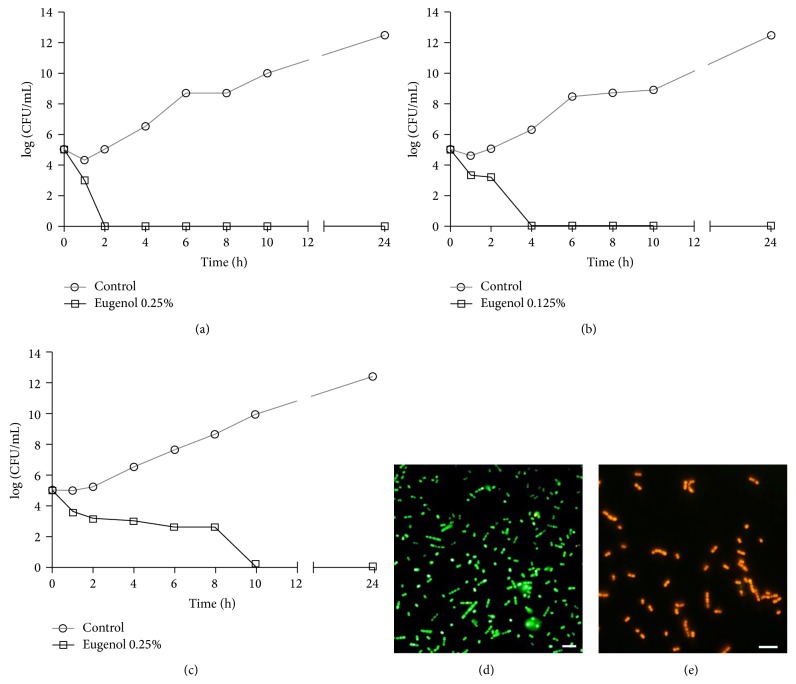
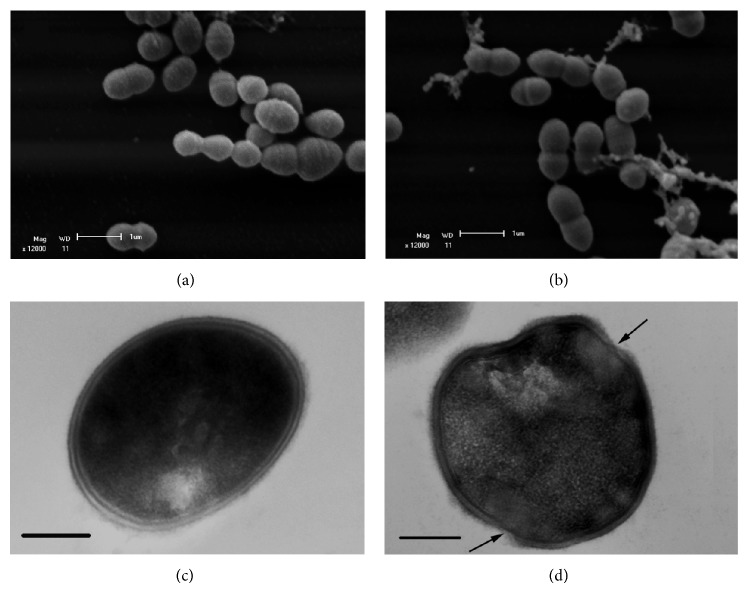
Streptococcus agalactiae (group B streptococci (GBS)) is an important infections agent in newborns associated with maternal vaginal colonization. Intrapartum antibiotic prophylaxis in GBS-colonized pregnant women has led to a significant reduction in the incidence of early neonatal infection in various geographic regions. However, this strategy may lead to resistance selecting among GBS, indicating the need for new alternatives to prevent bacterial transmission and even to treat GBS infections. This study reported for the first time the effect of eugenol on GBS isolated from colonized women, alone and in combination with silver nanoparticles produced by Fusarium oxysporum (AgNPbio). Eugenol showed a bactericidal effect against planktonic cells of all GBS strains, and this effect appeared to be time-dependent as judged by the time-kill curves and viability analysis. Combination of eugenol with AgNPbio resulted in a strong synergistic activity, significantly reducing the minimum inhibitory concentration values of both compounds. Scanning and transmission electron microscopy revealed fragmented cells and changes in bacterial morphology after incubation with eugenol. In addition, eugenol inhibited the viability of sessile cells during biofilm formation and in mature biofilms. These results indicate the potential of eugenol as an alternative for controlling GBS infections.
无乳链球菌(B 群链球菌(GBS))是一种与母体阴道定植相关的新生儿重要感染因子。在 GBS 定植的孕妇中进行产时抗生素预防已导致在不同地理区域中新生儿早期感染的发生率显著降低。然而,该策略可能导致 GBS 中的耐药性选择,表明需要新的替代方案来预防细菌传播甚至治疗 GBS 感染。本研究首次报道了丁香酚对定植于女性的 GBS 的作用,单独使用和与木霉(AgNPbio)产生的银纳米颗粒(AgNPbio)联合使用。丁香酚对所有 GBS 菌株的浮游细胞表现出杀菌作用,并且通过时间杀伤曲线和活力分析判断,这种作用似乎是时间依赖性的。丁香酚与 AgNPbio 的组合具有很强的协同作用,显著降低了两种化合物的最小抑菌浓度值。扫描和透射电子显微镜显示,在与丁香酚孵育后,细胞发生碎片化并出现细菌形态变化。此外,丁香酚抑制了生物膜形成过程中和成熟生物膜中的定殖细胞的活力。这些结果表明丁香酚作为控制 GBS 感染的替代方法具有潜力。