Department of Biotechnology, Indian Institute of Technology Roorkee, Roorkee, Uttarakhand, India.
Department of Biotechnology, Indian Institute of Technology Roorkee, Roorkee, Uttarakhand, India ; Center for Biodesign and Diagnostics, Translational Health Science and Technology Institute, Gurgaon Haryana, India.
Int J Nanomedicine. 2013;8:4721-31. doi: 10.2147/IJN.S49649. Epub 2013 Dec 10.
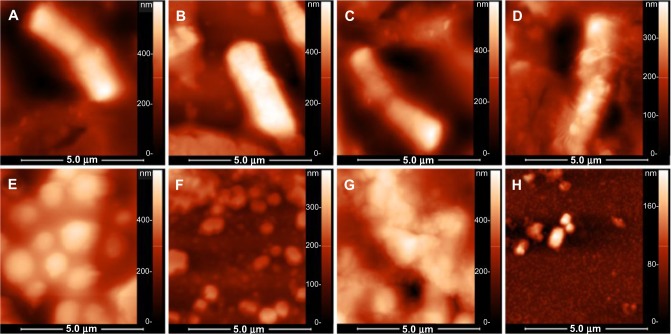
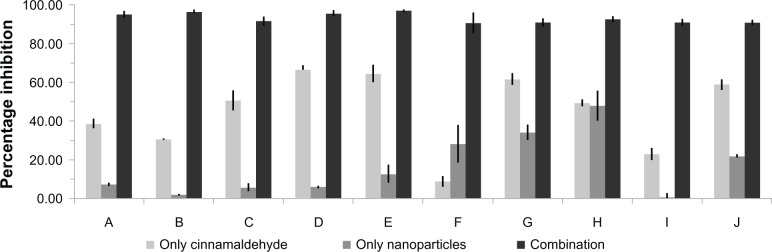
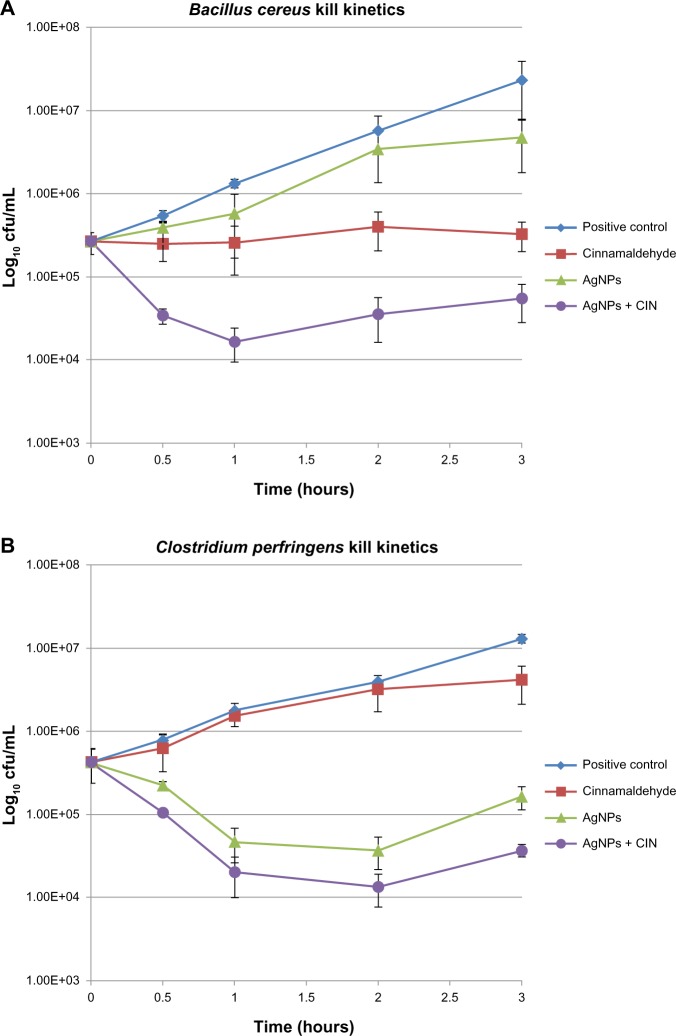
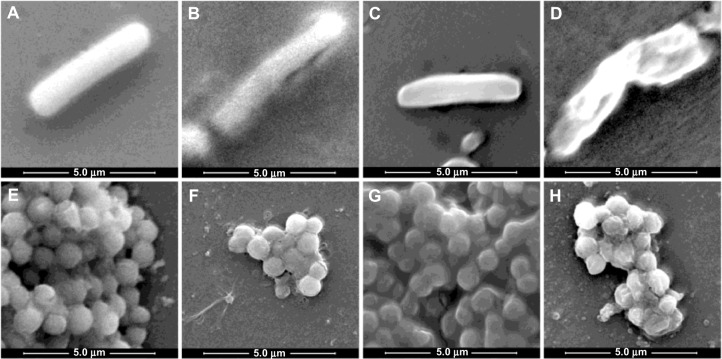
Silver has long been advocated as an effective antimicrobial. However, toxicity issues with silver have led to limited use of silver in nanoform, especially for food preservation. With the aim of exploring combinatorial options that could increase the antibacterial potency of silver nanoparticles and reduce the effective dosage of silver, we evaluated the extent of synergy that a combination of silver nanoparticles and an essential oil representative (cinnamaldehyde) could offer. A battery of gram-positive and gram-negative bacterial strains was utilized for antibacterial assays, and extents of synergism were calculated from fractional inhibitory concentration indices. The activity of nanoparticles was greatly enhanced when utilized in the presence of cinnamaldehyde. We observed combinatorial effects that were strongly additive against all the bacterial strains tested, and genuine synergy was found against spore forming Bacillus cereus and Clostridium perfringens - bacterial strains associated with release of cytotoxins in contaminated food and known for their persistence. Bacterial kill curve analysis revealed a very fast bactericidal action when a combination of two agents was used. The electron and atomic force microscopy also revealed extensive damage to the bacterial cell envelop in the presence of both agents. We also performed hemolysis assays to investigate and approximate the extent of toxicity exhibited by the two agents, and observed no adverse effect at the concentrations required for synergy. This study shows that safe levels of silver in nanoform in combination with essential oil component cinnamaldehyde can be effectively used for controlling the spore-forming bacterial species.
银一直被认为是一种有效的抗菌剂。然而,银的毒性问题导致纳米银的应用受到限制,特别是在食品保鲜方面。为了探索可以提高纳米银的抗菌效力并降低银的有效剂量的组合选择,我们评估了银纳米颗粒与代表性精油(肉桂醛)组合的协同作用程度。利用一系列革兰氏阳性和革兰氏阴性细菌菌株进行抗菌测定,并从部分抑制浓度指数计算协同作用的程度。当肉桂醛存在时,纳米颗粒的活性大大增强。我们观察到针对所有测试细菌菌株的协同作用呈强加性,并且对形成孢子的枯草芽孢杆菌和产气荚膜梭菌具有真正的协同作用,这些细菌与污染食品中细胞毒素的释放有关,并且因其持久性而闻名。细菌杀伤曲线分析显示,当两种试剂联合使用时,杀菌作用非常迅速。电子和原子力显微镜还显示,在两种试剂存在的情况下,细菌细胞膜受到广泛破坏。我们还进行了溶血测定以研究和近似两种试剂表现出的毒性程度,并且在协同作用所需的浓度下未观察到不良反应。这项研究表明,安全水平的纳米银与精油成分肉桂醛结合使用,可以有效地控制形成孢子的细菌种类。