Wang Jack T H, Daly Joshua N, Willner Dana L, Patil Jayee, Hall Roy A, Schembri Mark A, Tyson Gene W, Hugenholtz Philip
School of Chemistry and Molecular Biosciences, The University of Queensland, Brisbane, Queensland 4072, Australia.
School of Chemistry and Molecular Biosciences, The University of Queensland, Brisbane, Queensland 4072, Australia ; Australian Centre for Ecogenomics, School of Chemistry and Molecular Biosciences, The University of Queensland, Brisbane, Queensland 4072, Australia.
J Microbiol Biol Educ. 2015 May 1;16(1):50-60. doi: 10.1128/jmbe.v16i1.816. eCollection 2015 May.
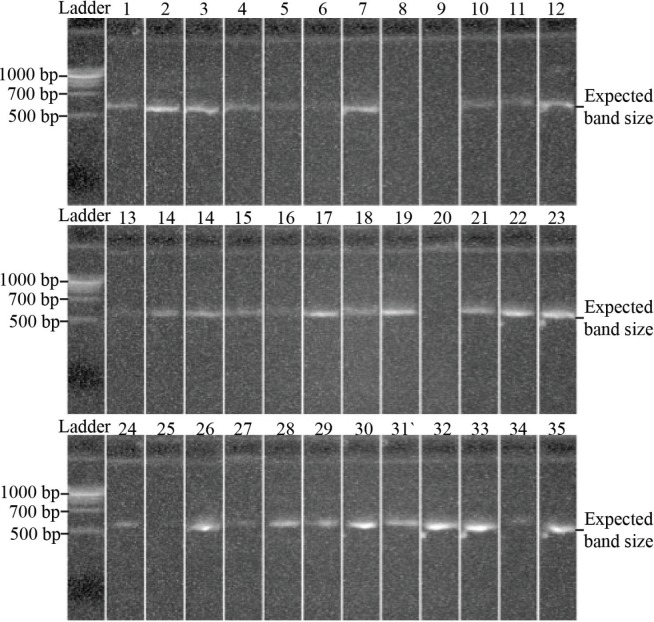
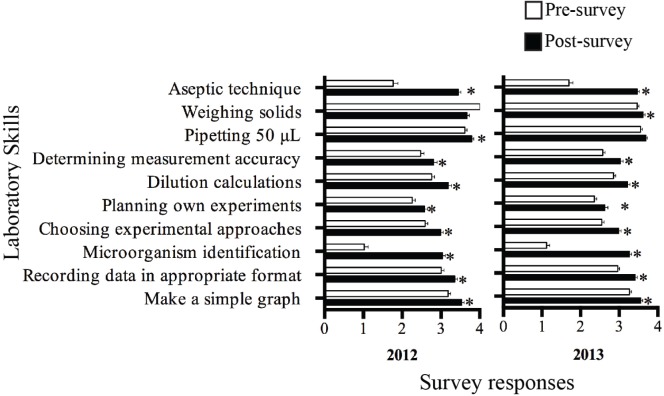
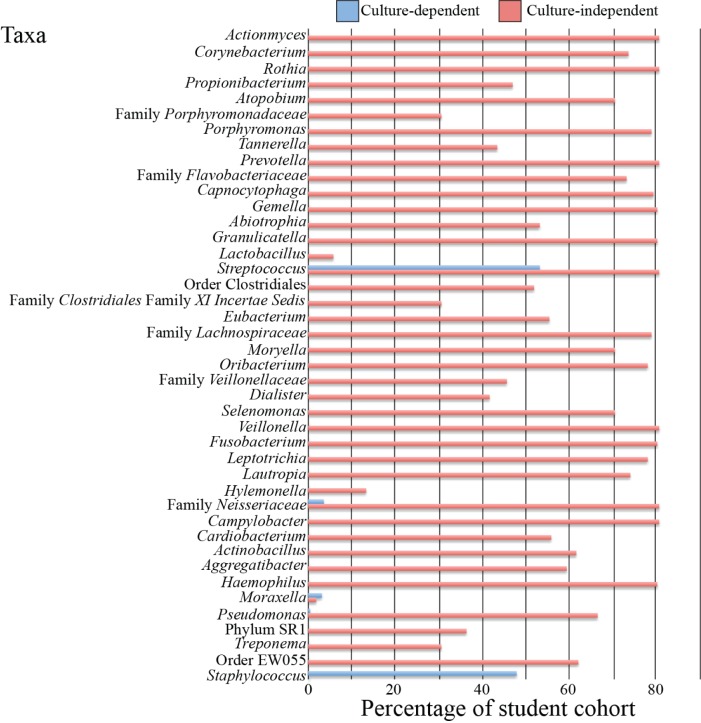
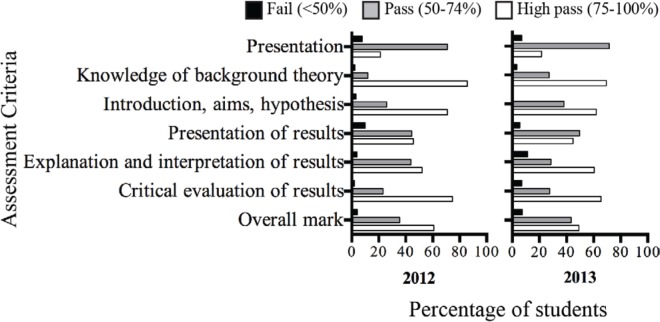
Clinical microbiology testing is crucial for the diagnosis and treatment of community and hospital-acquired infections. Laboratory scientists need to utilize technical and problem-solving skills to select from a wide array of microbial identification techniques. The inquiry-driven laboratory training required to prepare microbiology graduates for this professional environment can be difficult to replicate within undergraduate curricula, especially in courses that accommodate large student cohorts. We aimed to improve undergraduate scientific training by engaging hundreds of introductory microbiology students in an Authentic Large-Scale Undergraduate Research Experience (ALURE). The ALURE aimed to characterize the microorganisms that reside in the healthy human oral cavity-the oral microbiome-by analyzing hundreds of samples obtained from student volunteers within the course. Students were able to choose from selective and differential culture media, Gram-staining, microscopy, as well as polymerase chain reaction (PCR) and 16S rRNA gene sequencing techniques, in order to collect, analyze, and interpret novel data to determine the collective oral microbiome of the student cohort. Pre- and postsurvey analysis of student learning gains across two iterations of the course (2012-2013) revealed significantly higher student confidence in laboratory skills following the completion of the ALURE (p < 0.05 using the Mann-Whitney U-test). Learning objectives on effective scientific communication were also met through effective student performance in laboratory reports describing the research outcomes of the project. The integration of undergraduate research in clinical microbiology has the capacity to deliver authentic research experiences and improve scientific training for large cohorts of undergraduate students.
临床微生物学检测对于社区获得性感染和医院获得性感染的诊断与治疗至关重要。实验室科学家需要运用技术和解决问题的能力,从众多微生物鉴定技术中进行选择。为使微生物学专业毕业生适应这种专业环境而开展的探究式实验室培训,在本科课程中很难复制,尤其是在容纳大量学生的课程中。我们旨在通过让数百名微生物学入门课程的学生参与真实的大规模本科研究体验(ALURE)来改善本科科学培训。ALURE旨在通过分析从课程中的学生志愿者那里获得的数百个样本,来表征健康人口腔中存在的微生物——口腔微生物群。学生能够从选择性和鉴别性培养基、革兰氏染色、显微镜检查以及聚合酶链反应(PCR)和16S rRNA基因测序技术中进行选择,以便收集、分析和解释新数据,从而确定学生群体的集体口腔微生物群。对该课程两个轮次(2012 - 2013年)学生学习收获的课前和课后调查分析显示,在完成ALURE后,学生对实验室技能的信心显著提高(使用曼 - 惠特尼U检验,p < 0.05)。通过学生在描述项目研究成果的实验室报告中的有效表现,也实现了关于有效科学交流的学习目标。将本科研究融入临床微生物学有能力为大量本科生提供真实的研究体验并改善科学培训。