Mayer Catherine A, Martin Richard J, MacFarlane Peter M
Department of Pediatrics, Division of Neonatology, Rainbow Babies & Children's Hospital, Case Western Reserve University, Cleveland, Ohio.
Pediatr Res. 2015 Aug;78(2):145-51. doi: 10.1038/pr.2015.90. Epub 2015 May 7.
Continuous positive airway pressure (CPAP) is a primary form of respiratory support used in the intensive care of preterm infants, but its long-term effects on airway (AW) function are unknown.
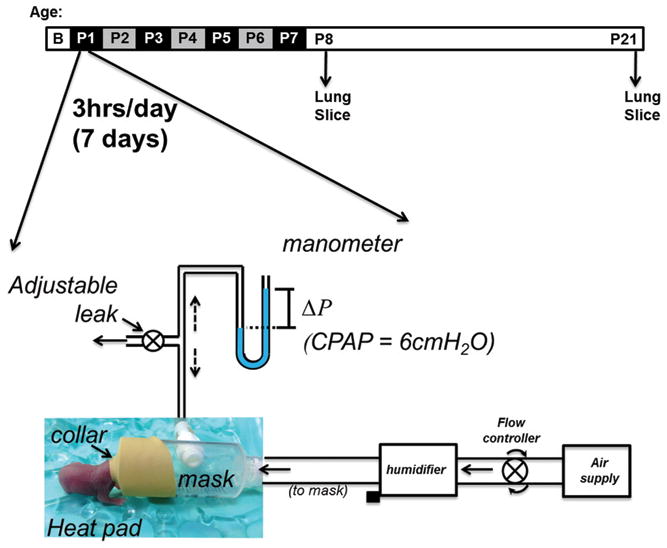
We developed a neonatal mouse model of CPAP treatment to determine whether it modifies later AW reactivity. Unanesthetized spontaneously breathing mice were fitted with a mask to deliver CPAP (6 cmH2O, 3 h/day) for 7 consecutive days starting at postnatal day 1. AW reactivity to methacholine was assessed using the in vitro living lung slice preparation.
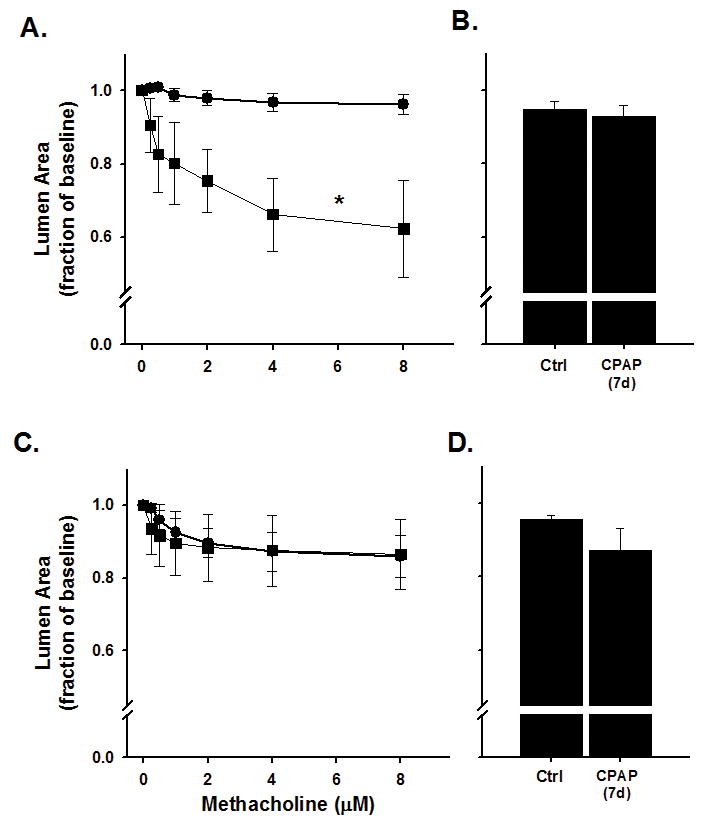
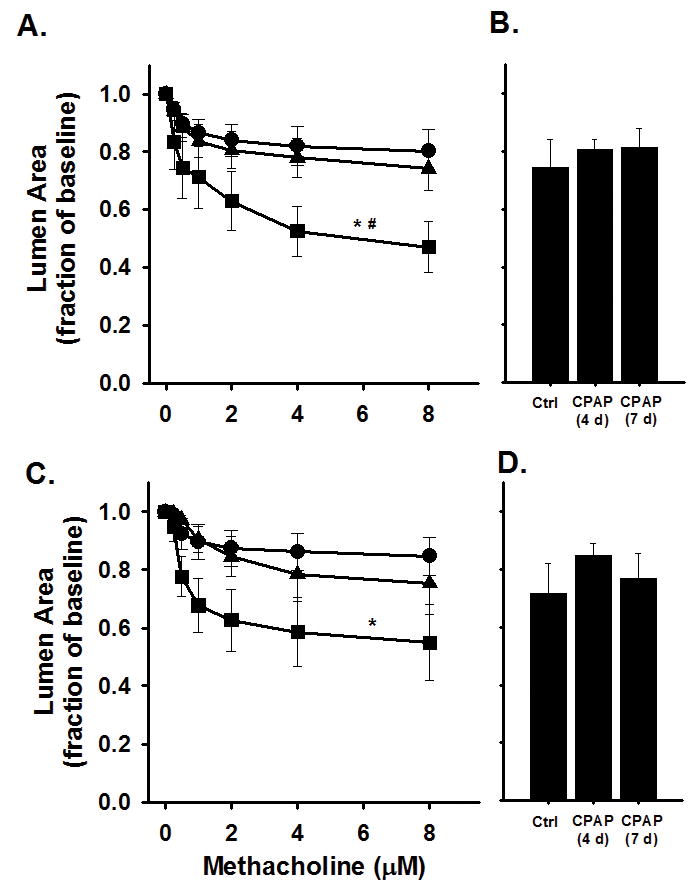
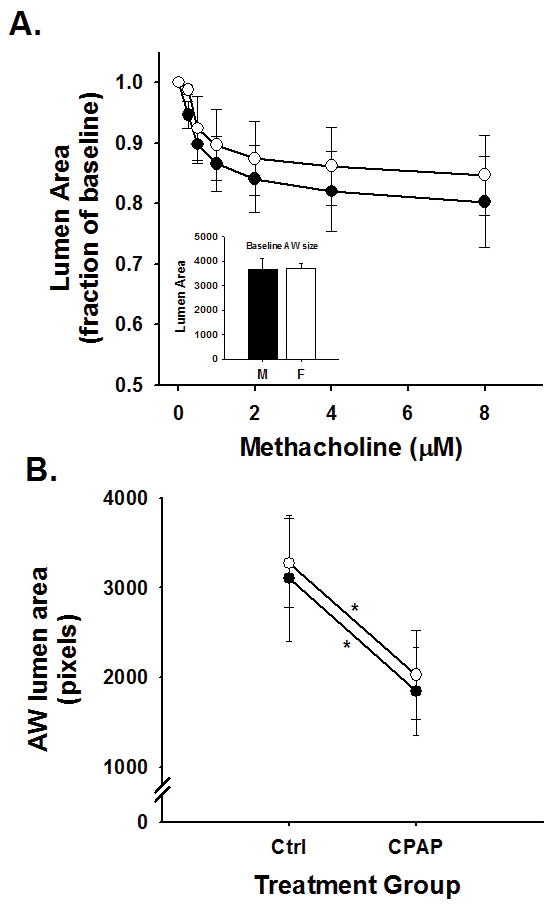
One week of CPAP increased AW responsiveness to methacholine in male, but not female mice, compared to untreated control animals. The AW hyper-reactivity of male mice persisted for 2 wk (at P21) after CPAP treatment ended. Four days of CPAP, however, did not significantly increase AW reactivity. Females also exhibited AW hyper-reactivity at P21, suggesting a delayed response to early (7 d) CPAP treatment. The effects of 7 d of CPAP on hyper-reactivity to methacholine were unique to smaller AWs whereas larger ones were relatively unaffected.
These data may be important to our understanding of the potential long-term consequences of neonatal CPAP therapy used in the intensive care of preterm infants.
持续气道正压通气(CPAP)是用于早产儿重症监护的主要呼吸支持形式,但其对气道(AW)功能的长期影响尚不清楚。
我们建立了一个CPAP治疗的新生小鼠模型,以确定它是否会改变后期的AW反应性。从出生后第1天开始,对未麻醉的自主呼吸小鼠佩戴面罩给予CPAP(6 cmH₂O,每天3小时),持续7天。使用体外活肺切片制备方法评估AW对乙酰甲胆碱的反应性。
与未治疗的对照动物相比,一周的CPAP增加了雄性小鼠而非雌性小鼠对乙酰甲胆碱的AW反应性。CPAP治疗结束后,雄性小鼠的AW高反应性持续了2周(在P21时)。然而,4天的CPAP并没有显著增加AW反应性。雌性小鼠在P21时也表现出AW高反应性,表明对早期(7天)CPAP治疗的反应延迟。7天的CPAP对乙酰甲胆碱高反应性的影响在较小的AW中是独特的,而较大的AW相对不受影响。
这些数据对于我们理解用于早产儿重症监护的新生儿CPAP治疗的潜在长期后果可能很重要。