van Asch Barbara, Pereira-Castro Isabel, Rei Fernando Trindade, da Costa Luís Teixeira
Instituto de Patologia e Imunologia Molecular da Universidade do Porto (IPATIMUP), Porto, Portugal.
Instituto de Ciências Agrárias e Ambientais Mediterrânicas (ICAAM), Universidade de Évora, Évora, Portugal.
PLoS One. 2015 May 7;10(5):e0126702. doi: 10.1371/journal.pone.0126702. eCollection 2015.
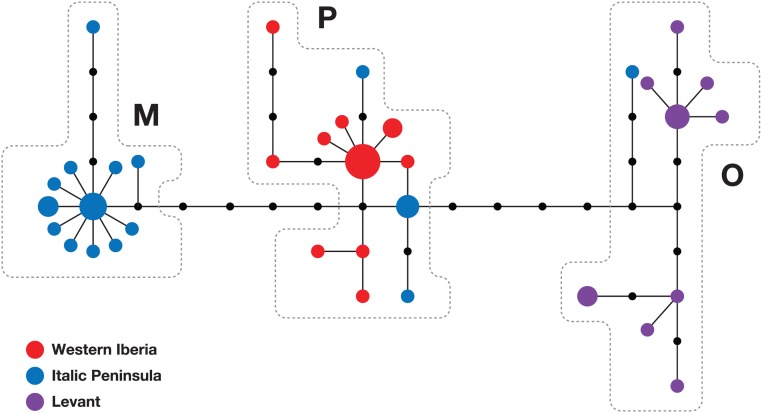
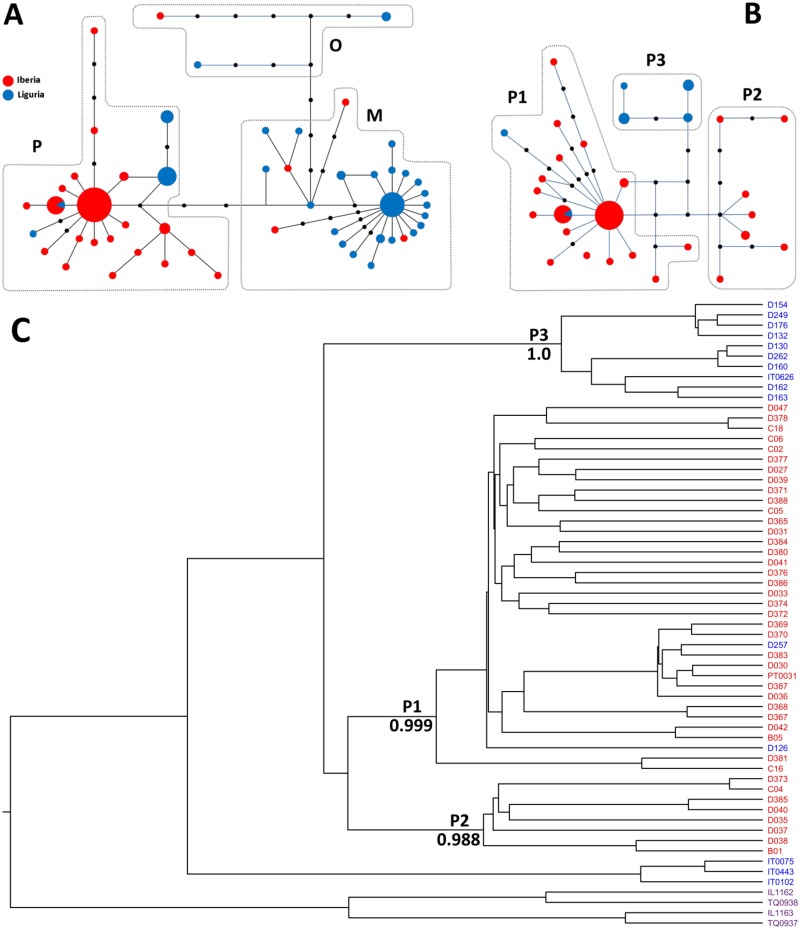
The olive fly, Bactrocera oleae, is the most important pest affecting the olive industry, to which it is estimated to cause average annual losses in excess of one billion dollars. As with other insects with a wide distribution, it is generally accepted that the understanding of B. oleae population structure and dynamics is fundamental for the design and implementation of effective monitoring and control strategies. However, and despite important advances in the past decade, a clear picture of B. oleae's population structure is still lacking. In the Mediterranean basin, where more than 95% of olive production is concentrated, evidence from several studies suggests the existence of three distinct sub-populations, but the geographical limits of their distributions, and the level of interpenetration and gene flow among them remain ill-characterized. Here we use mitochondrial haplotype analysis to show that one of the Mediterranean mitochondrial lineages displays geographically correlated substructure and demonstrate that Italic populations, though markedly distinct from their Iberian and Levantine counterparts are more diverse than previously described. Finally, we show that this distinction does not result from extant hypothetical geographic limits imposed by the Alps or the Pyrenees nor, more generally, does it result from any sharp boundary, as intermixing is observed in a broad area, albeit at variable levels. Instead, Bayesian phylogeographic analysis suggests the interplay between isolation-mediated differentiation during glacial periods and bi-directional dispersal and population intermixing in the interglacials has played a major role in shaping current olive fly population structure.
橄榄实蝇(Bactrocera oleae)是影响橄榄产业的最重要害虫,据估计,其每年造成的平均损失超过10亿美元。与其他分布广泛的昆虫一样,人们普遍认为,了解橄榄实蝇的种群结构和动态是设计和实施有效监测与控制策略的基础。然而,尽管在过去十年中取得了重要进展,但仍缺乏对橄榄实蝇种群结构的清晰认识。在地中海盆地,超过95%的橄榄产量集中于此,多项研究的证据表明存在三个不同的亚种群,但其分布的地理界限以及它们之间的渗透程度和基因流动水平仍未得到充分描述。在这里,我们使用线粒体单倍型分析表明,地中海的一个线粒体谱系显示出与地理相关的亚结构,并证明意大利种群虽然与伊比利亚和黎凡特种群明显不同,但比之前描述的更加多样化。最后,我们表明这种差异并非源于阿尔卑斯山或比利牛斯山现存的假设地理界限,更普遍地说,也不是源于任何明显的边界,因为在一个广阔的区域内观察到了混合现象,尽管程度不同。相反,贝叶斯系统发育地理学分析表明,冰川期隔离介导的分化与间冰期的双向扩散和种群混合之间的相互作用在塑造当前橄榄实蝇种群结构方面发挥了重要作用。