Yang Genhuan, Li Yanchuan, Wu Wei, Liu Bao, Ni Leng, Wang Zhanqi, Miao Shiying, Wang Linfang, Liu Changwei
Department of Vascular Surgery, Peking Union Medical College Hospital, Peking Union Medical College and Chinese Academy of Medical Sciences, Beijing 100730, P.R. China.
State Key Laboratory of Medical Molecular Biology, Institute of Basic Medical Sciences, Peking Union Medical College and Chinese Academy of Medical Sciences, Beijing 100005, P.R. China.
Mol Med Rep. 2015 Aug;12(2):2481-6. doi: 10.3892/mmr.2015.3722. Epub 2015 May 4.
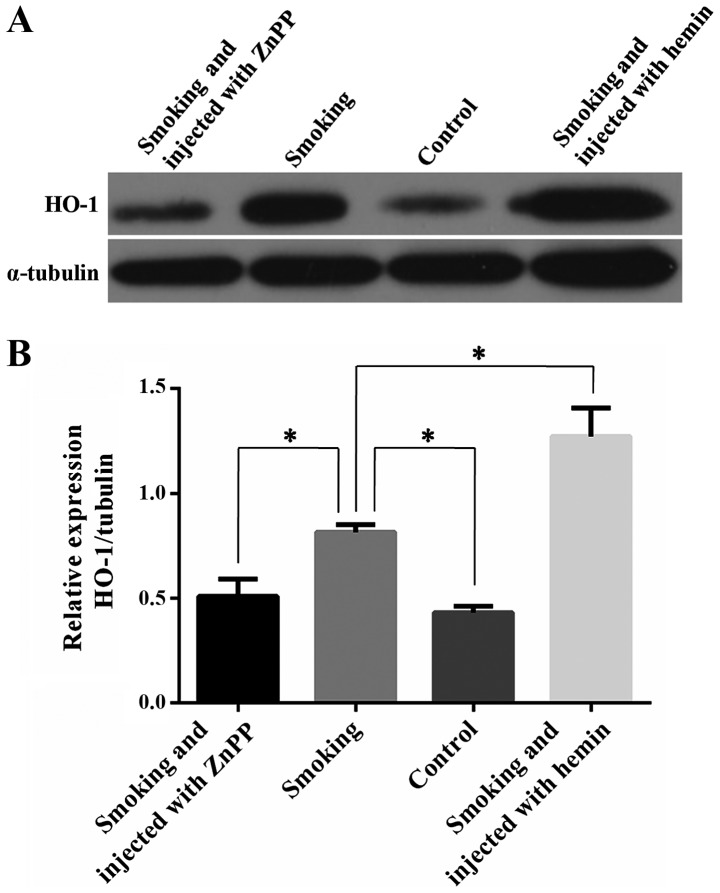
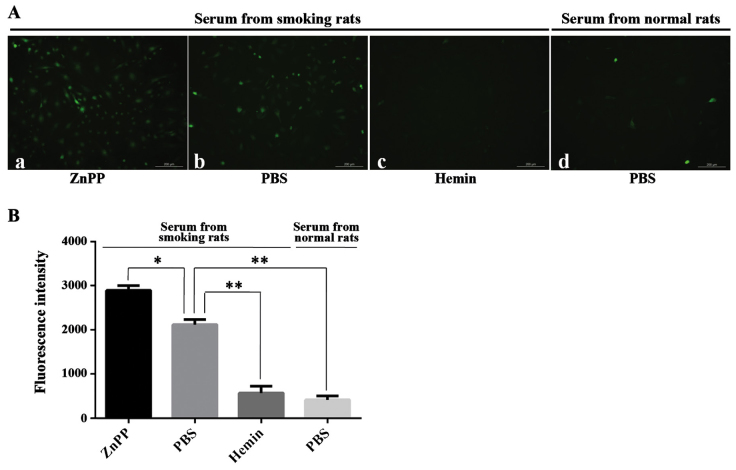
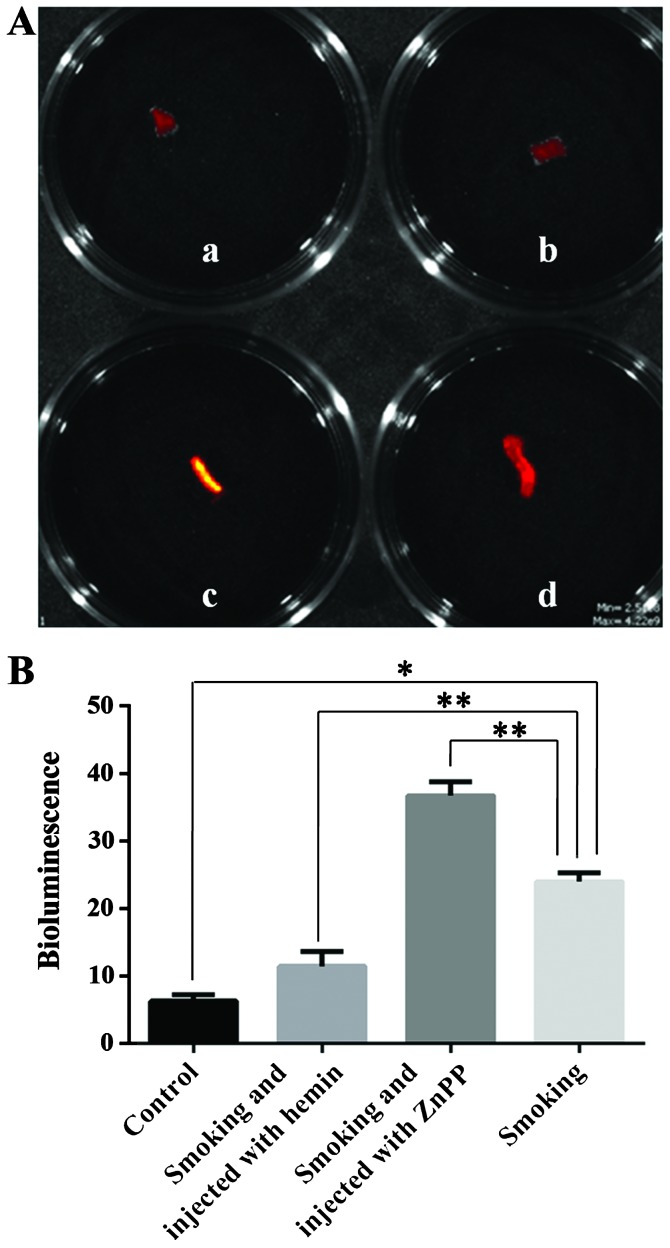
Cigarette smoking, a major independent risk factor of atherosclerosis, can cause oxidative and inflammatory damage of vascular tissue. Heme oxygenase-1 (HO-1) is an endogenous cytoprotective enzyme with an anti-oxidant role in cells. The aim of the present study was to investigate whether HO-1 was able to protect vascular and endothelial cells from the oxidative damage induced by cigarette smoking. It was observed that cigarette smoking was able to induce the generation of the reactive oxygen species (ROS) in carotid arteries of rats. Hemin, a widely used HO-1 inducer, was able to reduce the generation of ROS. In addition, when human umbilical vein endothelial cells (HUVECs) were cultured in the serum of smoking rats, this was able to increase ROS, and the protective effect of hemin was also observed in this system. In conclusion, the present study demonstrated that cigarette smoking causes oxidative damage of vascular cells and HUVECs by inducing the generation of ROS, while HO-1 has an anti-oxidant effect in this course. This also implied that hemin, an inducer of HO-1, may have potential therapeutic applicability in the prevention of vascular diseases caused by cigarette smoking.
吸烟是动脉粥样硬化的主要独立危险因素,可导致血管组织的氧化和炎症损伤。血红素加氧酶-1(HO-1)是一种内源性细胞保护酶,在细胞中具有抗氧化作用。本研究的目的是探讨HO-1是否能够保护血管和内皮细胞免受吸烟诱导的氧化损伤。据观察,吸烟能够诱导大鼠颈动脉中活性氧(ROS)的产生。血红素是一种广泛使用的HO-1诱导剂,能够减少ROS的产生。此外,当人脐静脉内皮细胞(HUVECs)在吸烟大鼠的血清中培养时,这能够增加ROS,并且在该系统中也观察到了血红素的保护作用。总之,本研究表明吸烟通过诱导ROS的产生导致血管细胞和HUVECs的氧化损伤,而HO-1在这个过程中具有抗氧化作用。这也意味着HO-1诱导剂血红素在预防吸烟引起的血管疾病方面可能具有潜在的治疗适用性。