Cheng Wei, Ainiwaer Aimudula, Xiao Lei, Cao Qian, Wu Ge, Yang Ying, Mao Rui, Bao Yongxing
Department of Oncology, The First Affiliated Hospital of Xinjiang Medical University, Urumqi 830011, P.R. China.
Mol Med Rep. 2015 Aug;12(2):2451-6. doi: 10.3892/mmr.2015.3725. Epub 2015 May 4.
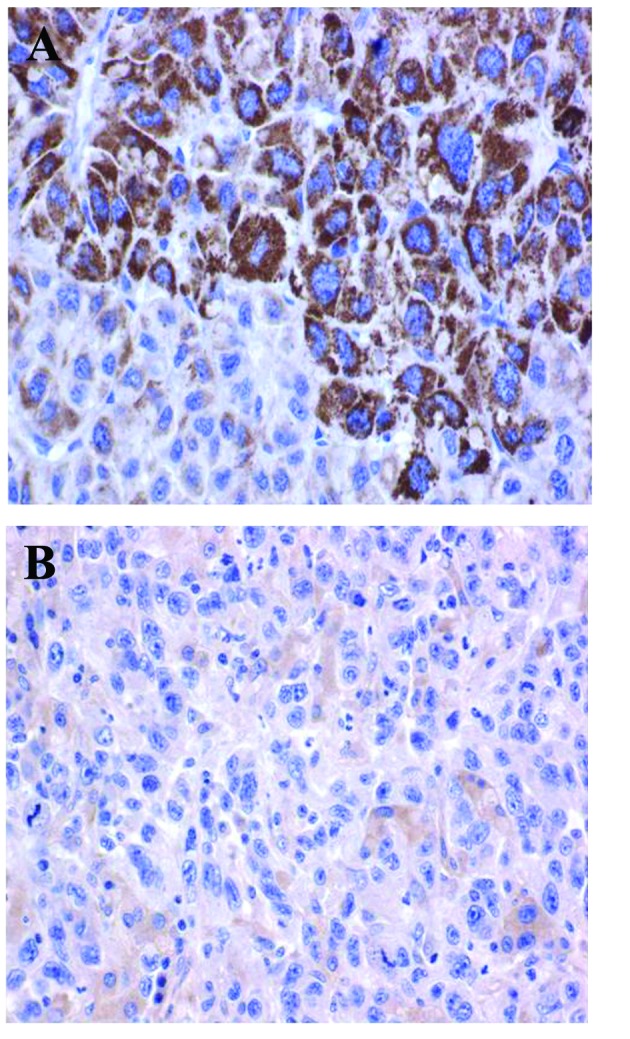
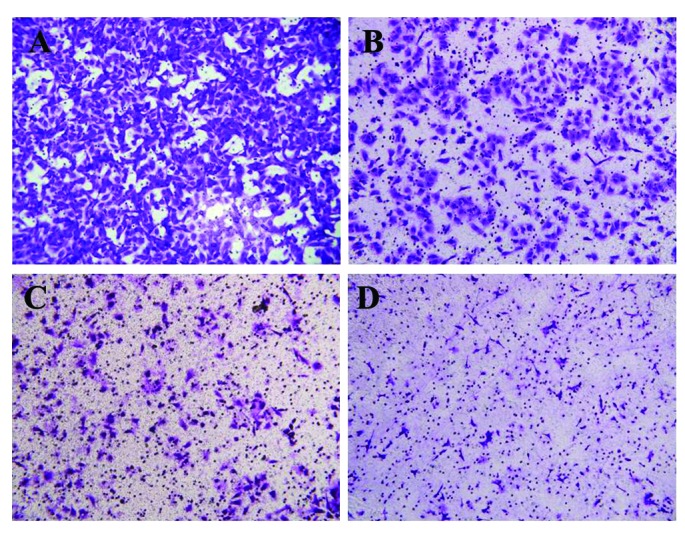
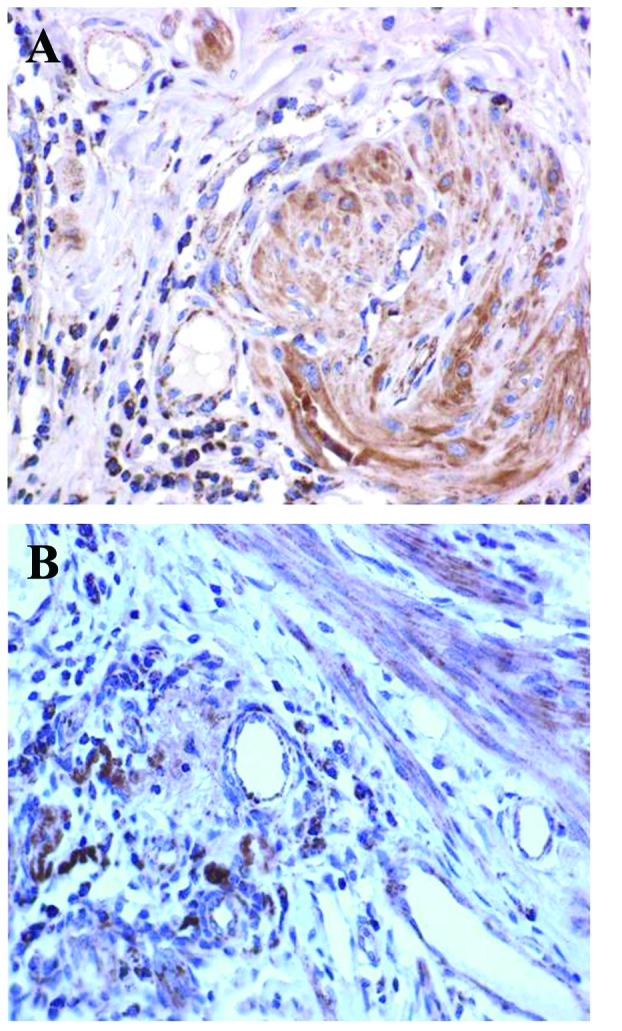
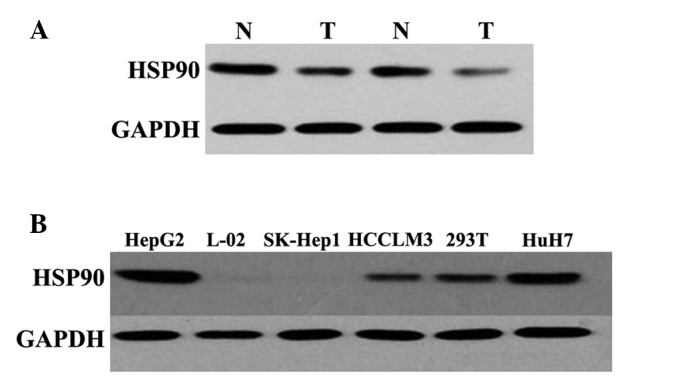
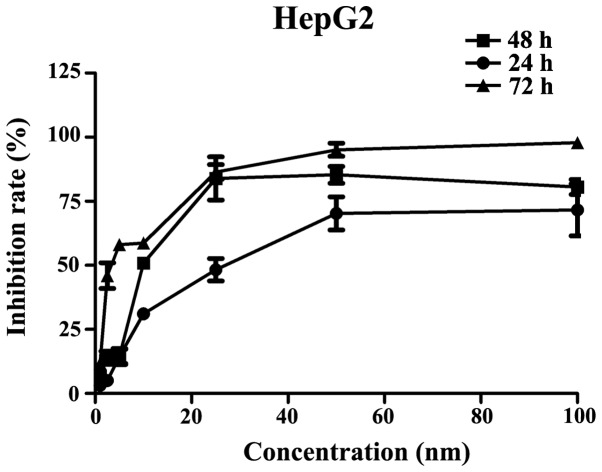
The aim of the present study was to determine the correlation between hepatocellular carcinoma (HCC) and heat shock protein 90 (HSP90), involved in tumor angiogenesis, and to evaluate the effect of AUY922, a HSP90 inhibitor, in HCC. The expression of HSP90 and microvessel density (MVD) were measured in tissue samples from 76 patients with HCC by immunohistochemistry. Western blot analysis was performed to detect the expression of HSP90 in the HCC tissues and different HCC cell lines. The effects of time and concentration treatment with the AUY922 HSP90 inhibitor were investigated in HepG2 cells. Cell proliferation was measured using an MTT assay and a Transwell assay was performed to evaluate the migration of the HepG2 cells following treatment with different concentrations of AUY922. Positive staining of HSP90 was observed in 88.16% (67/76) of the HCC tissues, compared with 16.67% (4/24) of the normal tissues. The difference in the expression of HSP90 between the HCC and normal tissues was statistically significant (P<0.001). Tumors exhibiting positive expression of HSP90 had significantly higher MVD compared with the HSP90-negative counterparts (82.8 ± 12.44 vs. 23.8 ± 8.07, respectively; P<0.001). The expression levels of HSP90 were positively correlated with MVD in all the tissue samples (r_s=0.724; P<0.001). AUY922 inhibited the proliferation of the HepG2 cells in a time-and concentration-dependent manner, and the migration of HepG2 cells was distinctly suppressed following treatment with AUY922. These data suggested that the angiogenesis of human HCC may be mediated by HSP90, and that the specific HSP90 inhibitor, AUY922, has a therapeutic role in the treatment of HCC. Therefore, HSP90 may represent a selective target in molecularly targeted treatment of HCC.
本研究旨在确定参与肿瘤血管生成的热休克蛋白90(HSP90)与肝细胞癌(HCC)之间的相关性,并评估HSP90抑制剂AUY922对HCC的影响。通过免疫组织化学方法检测了76例HCC患者组织样本中HSP90的表达和微血管密度(MVD)。采用蛋白质印迹分析检测HCC组织及不同HCC细胞系中HSP90的表达。研究了AUY922 HSP90抑制剂的时间和浓度处理对HepG2细胞的影响。采用MTT法检测细胞增殖,并进行Transwell试验以评估不同浓度AUY922处理后HepG2细胞的迁移情况。88.16%(67/76)的HCC组织中观察到HSP90阳性染色,而正常组织中为16.67%(4/24)。HCC组织与正常组织中HSP90表达的差异具有统计学意义(P<0.001)。与HSP90阴性肿瘤相比,HSP90阳性表达的肿瘤MVD显著更高(分别为82.8±12.44和23.8±8.07;P<0.001)。在所有组织样本中,HSP90的表达水平与MVD呈正相关(r_s=0.724;P<0.001)。AUY922以时间和浓度依赖性方式抑制HepG2细胞的增殖,用AUY922处理后,HepG2细胞的迁移明显受到抑制。这些数据表明,人HCC的血管生成可能由HSP90介导,特异性HSP90抑制剂AUY922在HCC治疗中具有治疗作用。因此,HSP90可能是HCC分子靶向治疗中的一个选择性靶点。