Petrongolo Michael, Zhu Lei
IEEE Trans Med Imaging. 2015 Nov;34(11):2286-97. doi: 10.1109/TMI.2015.2429000. Epub 2015 May 1.
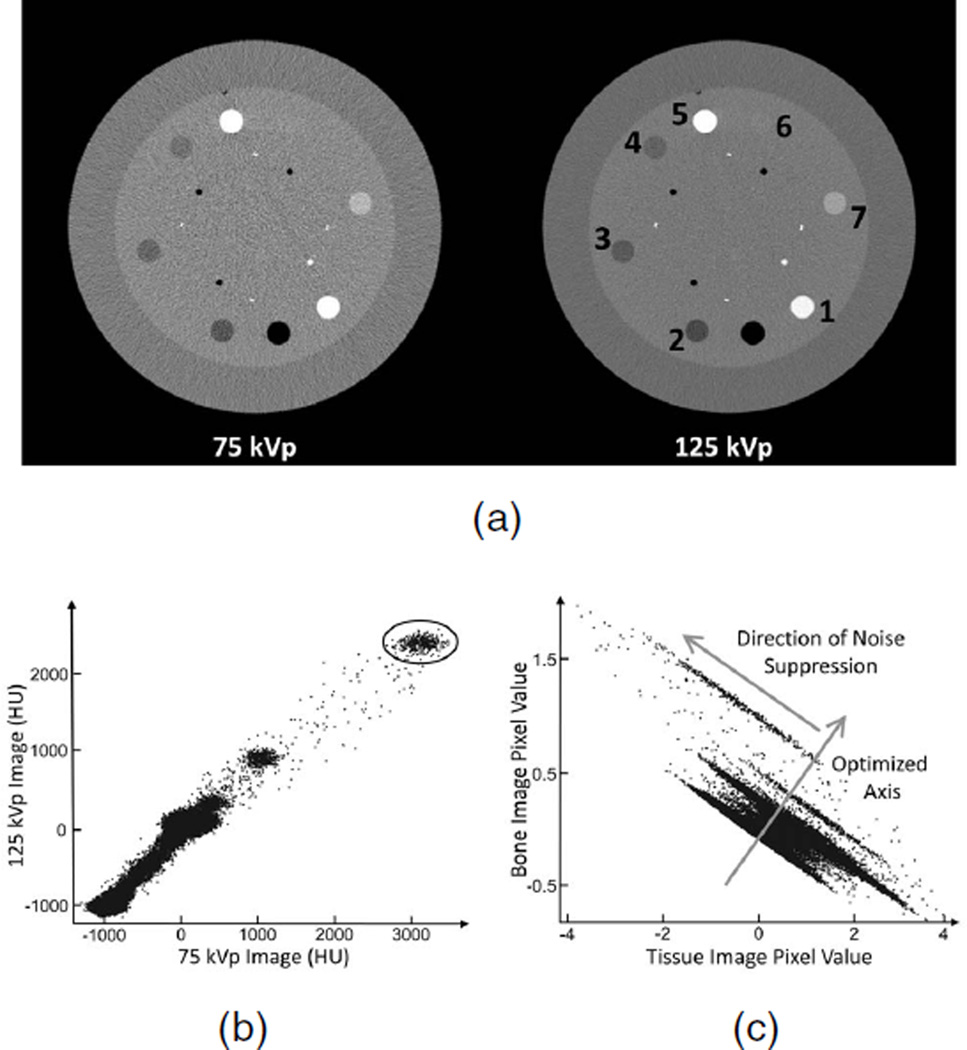
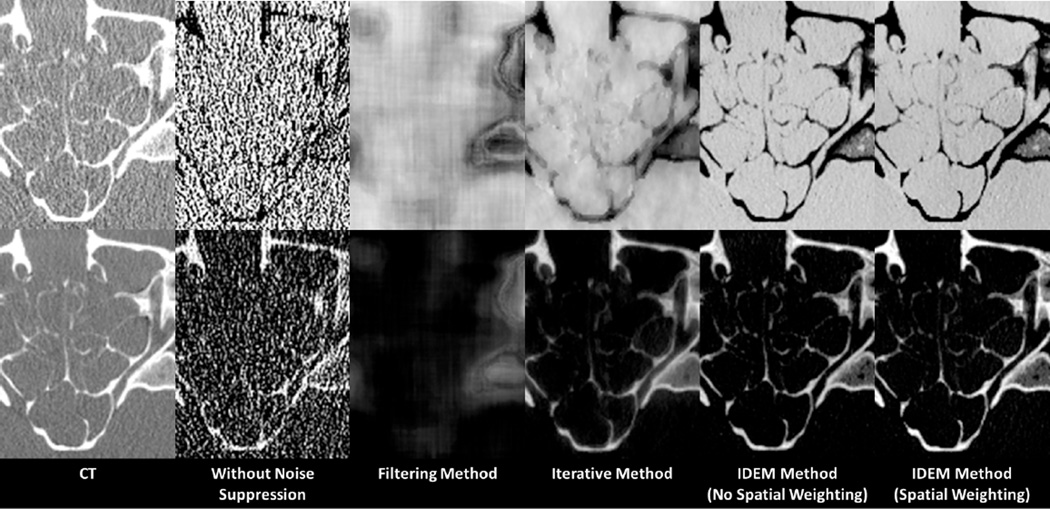
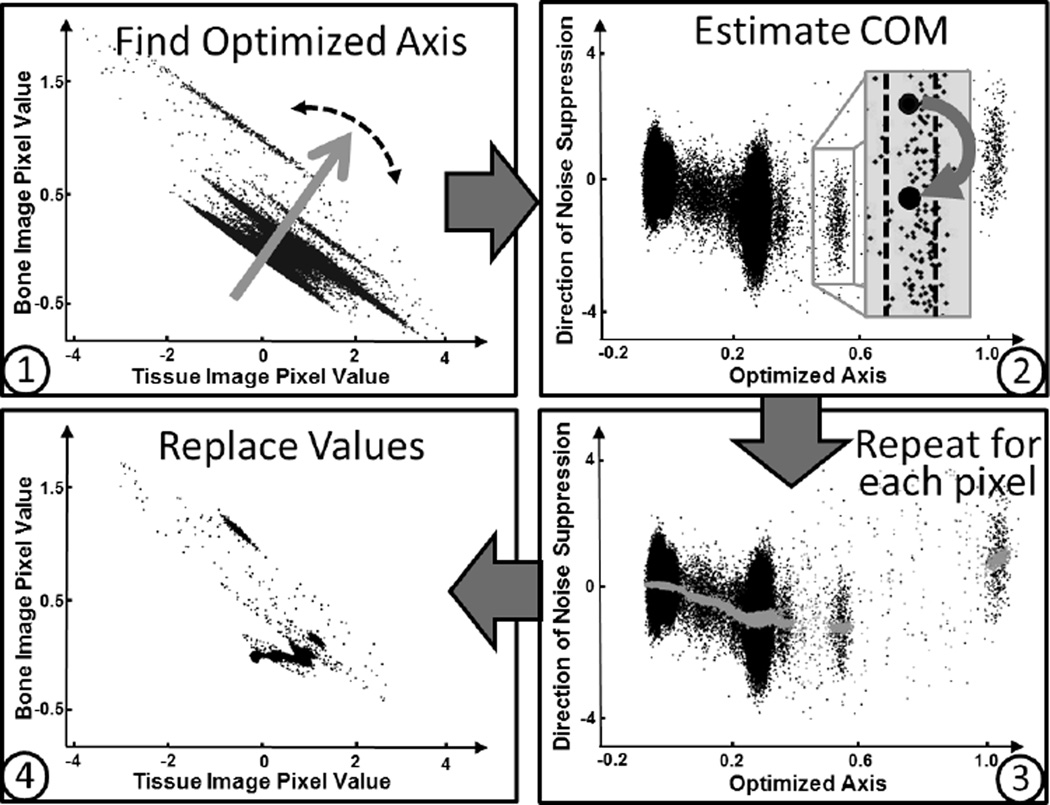
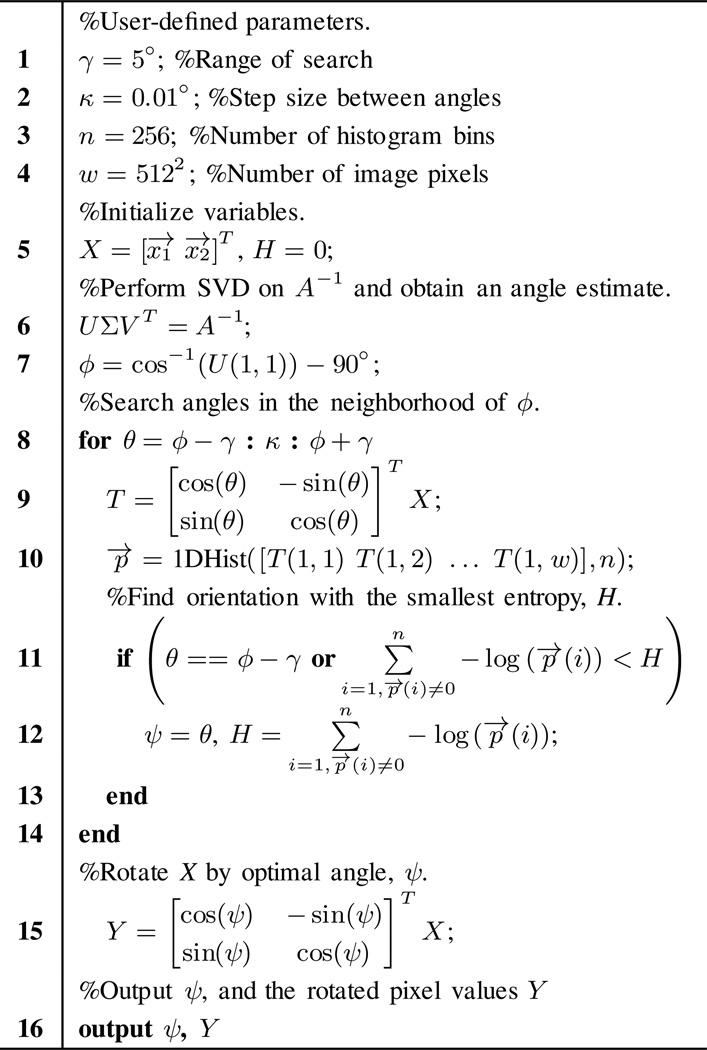
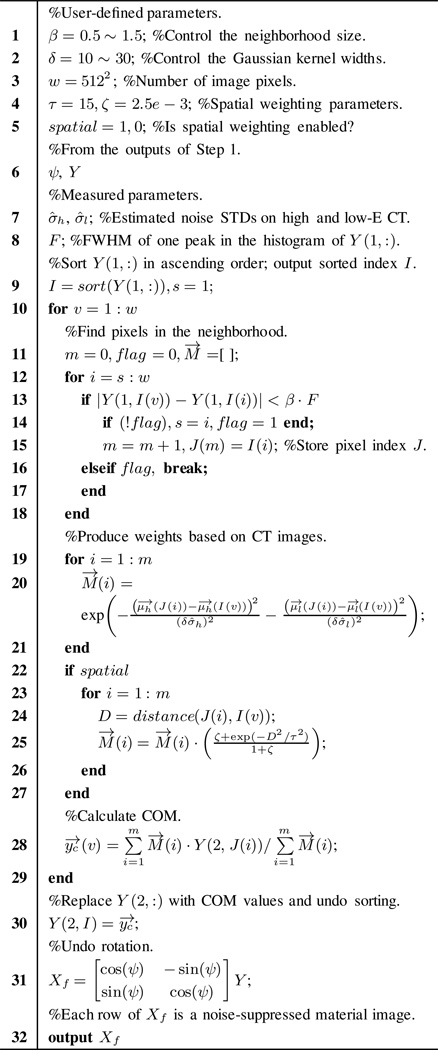
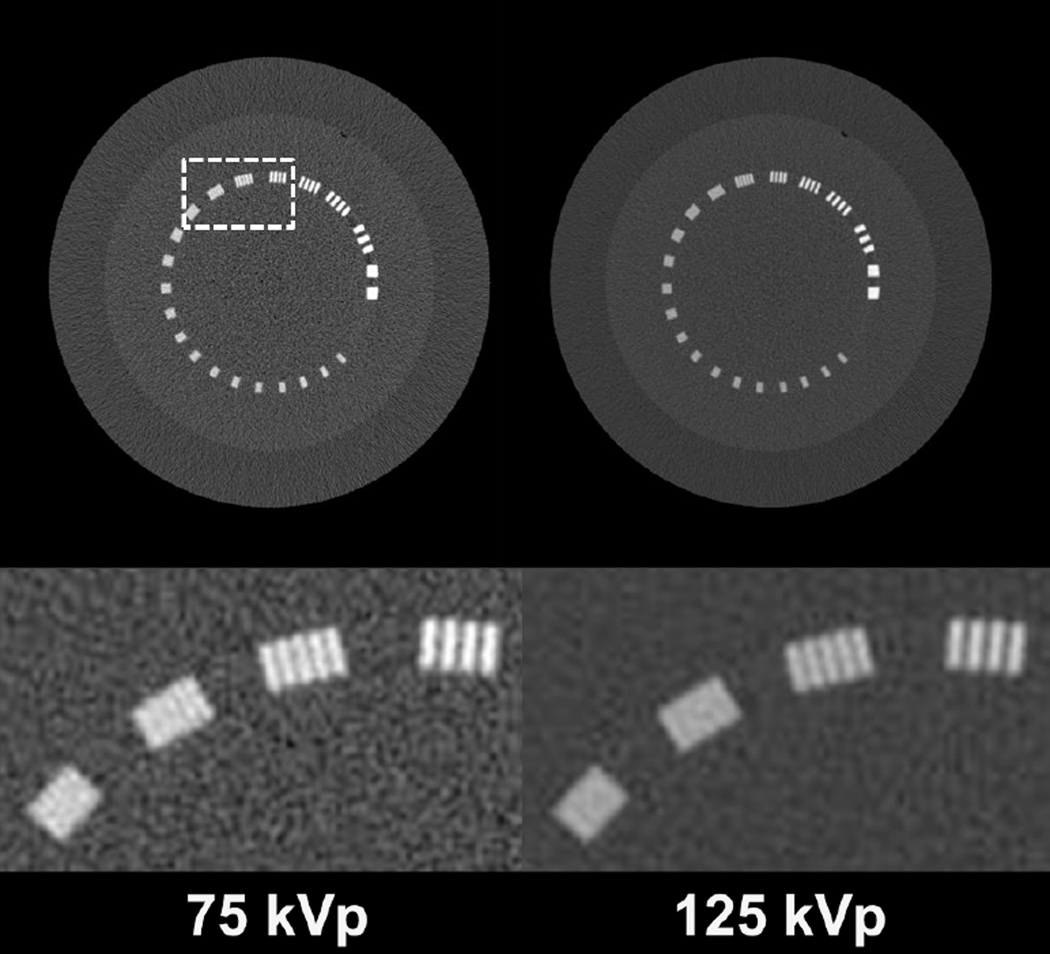
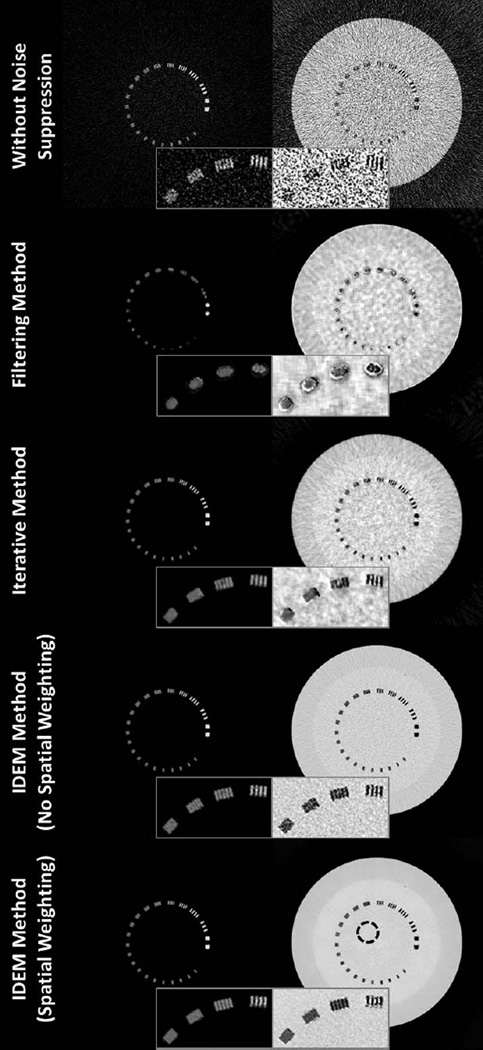
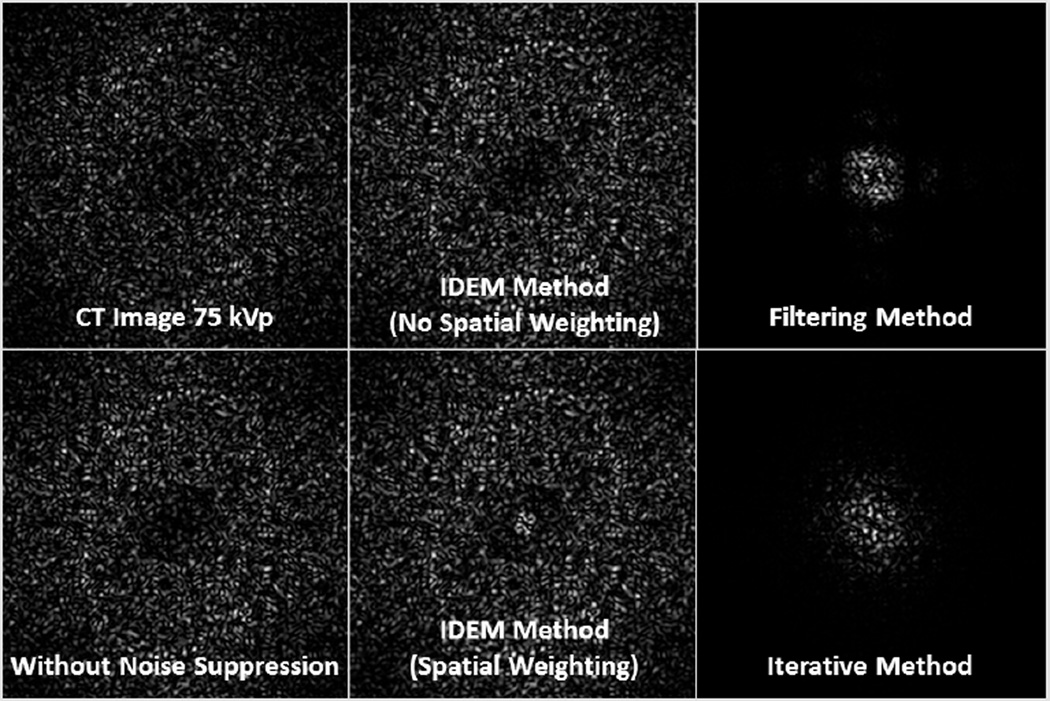
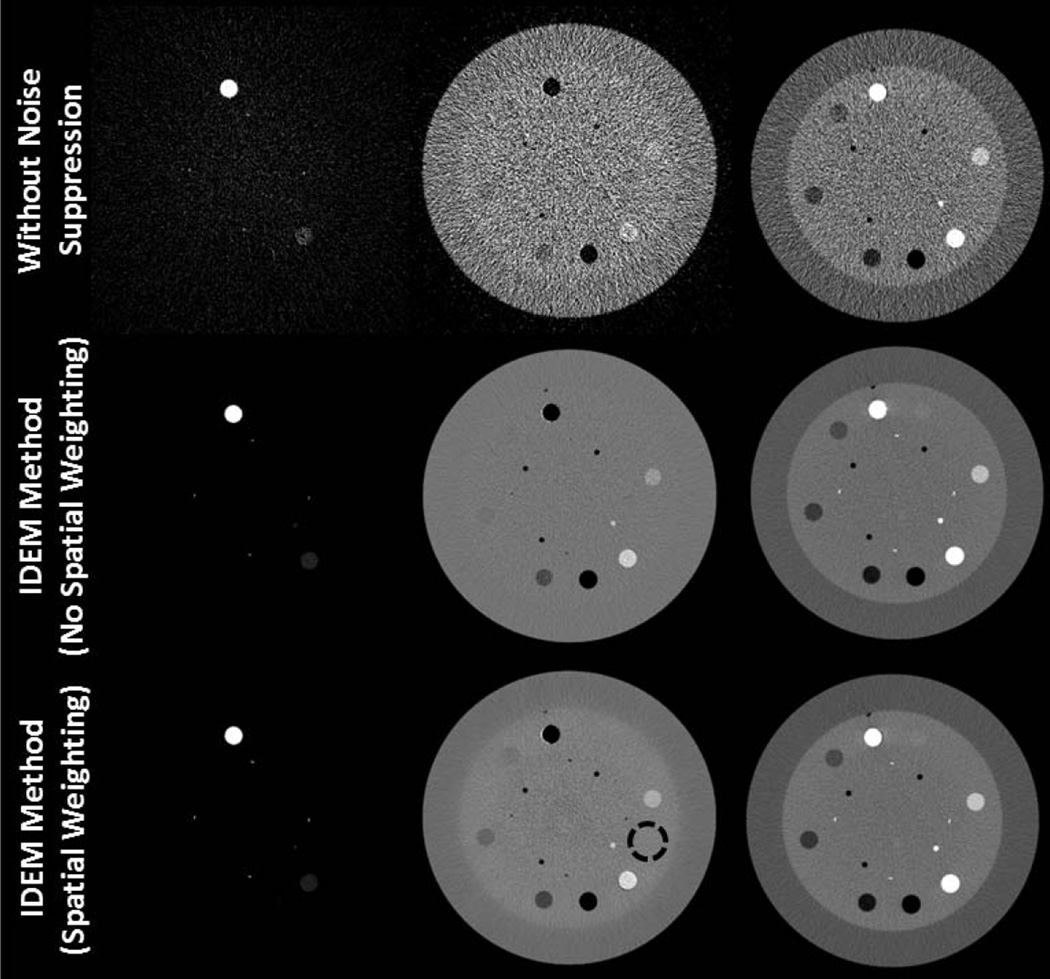
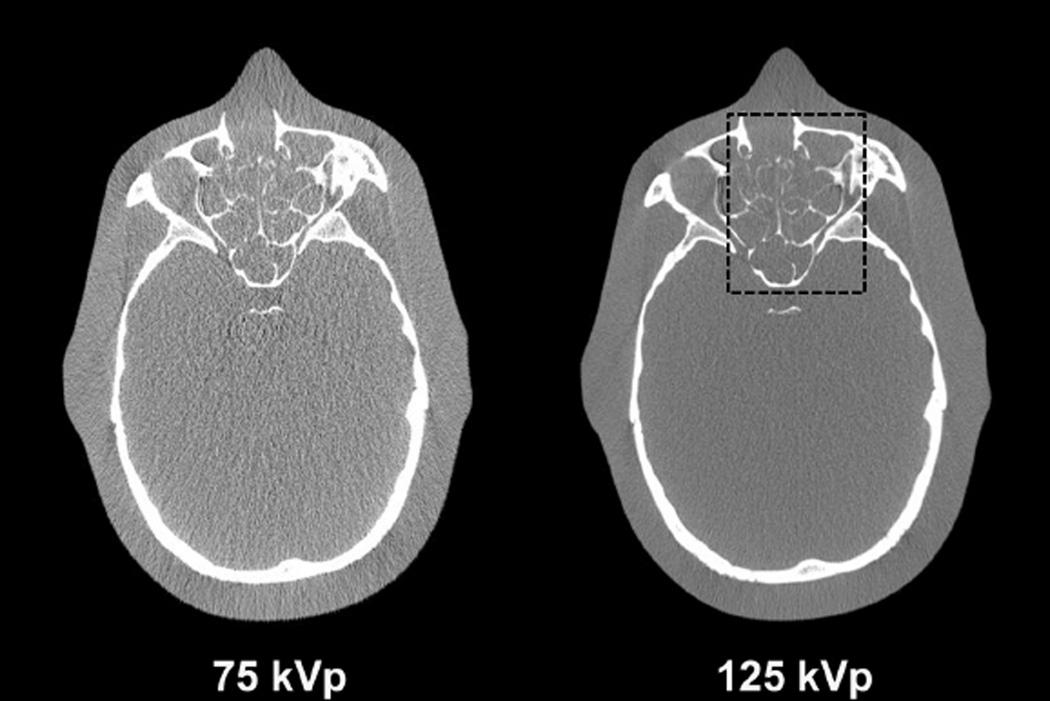
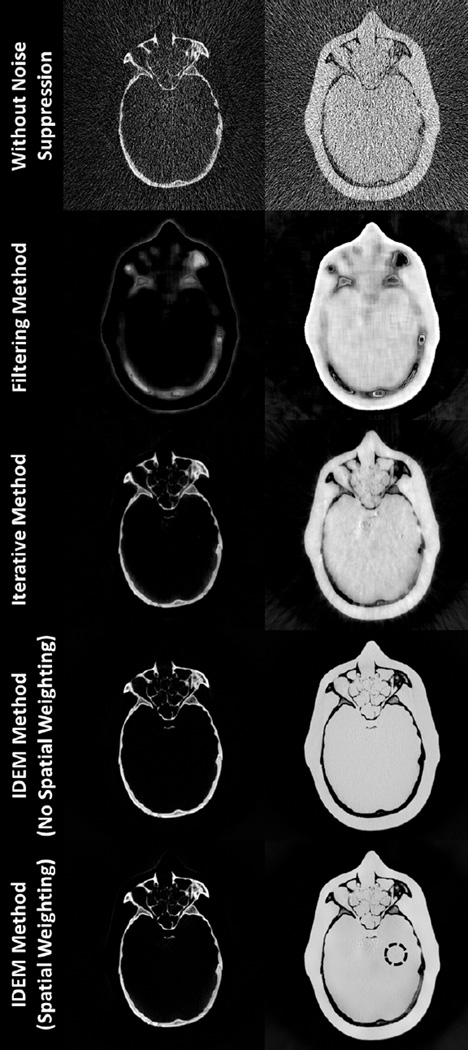
In dual energy CT (DECT), noise amplification during signal decomposition significantly limits the utility of basis material images. Since clinically relevant objects typically contain a limited number of different materials, we propose an Image-domain Decomposition method through Entropy Minimization (IDEM) for noise suppression in DECT. Pixels of decomposed images are first linearly transformed into 2D clusters of data points, which are highly asymmetric due to strong signal correlation. An optimal axis is identified in the 2D space via numerical search such that the projection of data clusters onto the axis has minimum entropy. Noise suppression is performed on each image pixel by estimating the center-of-mass value of each data cluster along the direction perpendicular to the projection axis. The IDEM method is distinct from other noise suppression techniques in that it does not suppress pixel noise by reducing spatial variation between neighboring pixels. As supported by studies on Catphan©600 and anthropomorphic head phantoms, this feature endows our algorithm with a unique capability of reducing noise standard deviation on DECT decomposed images by approximately one order of magnitude while preserving spatial resolution and image noise power spectra (NPS). Compared with a filtering method and recently developed iterative method at the same level of noise suppression, the IDEM algorithm obtains high-resolution images with less artifacts. It also maintains accuracy of electron density measurements with less than 2% bias error. The IDEM method effectively suppresses noise of DECT for quantitative use, with appealing features on preservation of image spatial resolution and NPS.
在双能CT(DECT)中,信号分解过程中的噪声放大显著限制了基物质图像的效用。由于临床上相关的物体通常包含有限数量的不同物质,我们提出了一种通过熵最小化的图像域分解方法(IDEM)来抑制DECT中的噪声。首先将分解图像的像素线性变换为二维数据点簇,由于强信号相关性,这些数据点簇高度不对称。通过数值搜索在二维空间中确定一条最优轴,使得数据簇在该轴上的投影具有最小熵。通过估计每个数据簇沿垂直于投影轴方向的质心值,对每个图像像素进行噪声抑制。IDEM方法与其他噪声抑制技术的不同之处在于,它不是通过减少相邻像素之间的空间变化来抑制像素噪声。正如对Catphan©600和仿真人体头部模型的研究所支持的那样,这一特性赋予了我们的算法一种独特的能力,即在保持空间分辨率和图像噪声功率谱(NPS)的同时,将DECT分解图像上的噪声标准差降低大约一个数量级。与在相同噪声抑制水平下的滤波方法和最近开发的迭代方法相比,IDEM算法获得的高分辨率图像伪影更少。它还能将电子密度测量的准确性保持在偏差误差小于2%的水平。IDEM方法有效地抑制了DECT用于定量分析时的噪声,在保持图像空间分辨率和NPS方面具有吸引人的特性。