Tang Hsin-Chieh, Chen Yu-Chian
Department of Biomedical Informatics, Asia University, Taichung, Taiwan.
Department of Biomedical Informatics, Asia University, Taichung, Taiwan ; Human Genetic Center, Department of Medical Research, China Medical University Hospital, Taichung, Taiwan ; Research Center for Chinese Medicine and Acupuncture, China Medical University Hospital, Taichung, Taiwan.
Int J Nanomedicine. 2015 Apr 23;10:3131-46. doi: 10.2147/IJN.S80150. eCollection 2015.
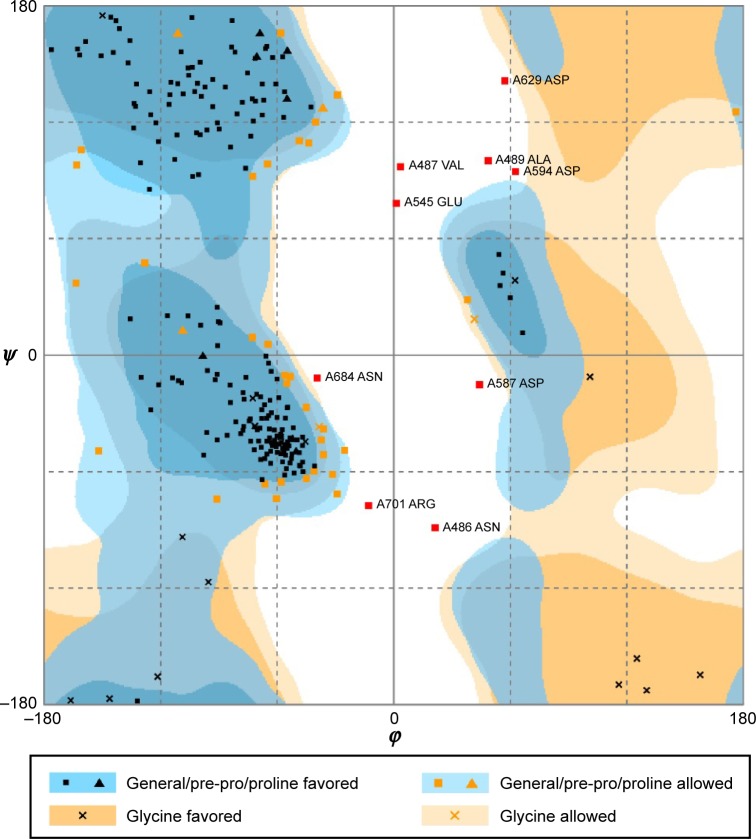
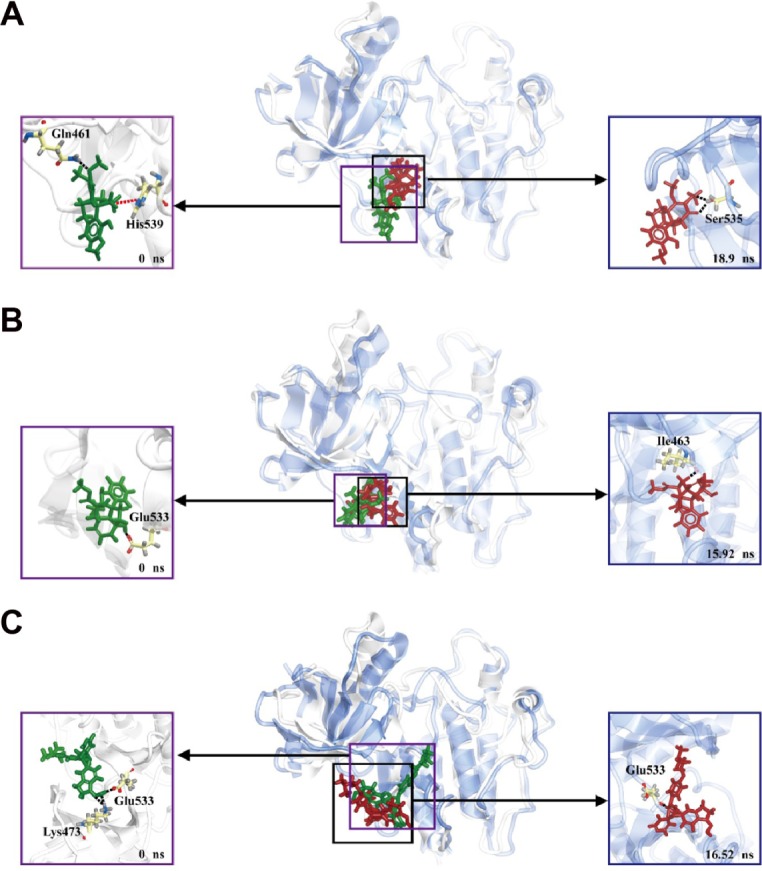
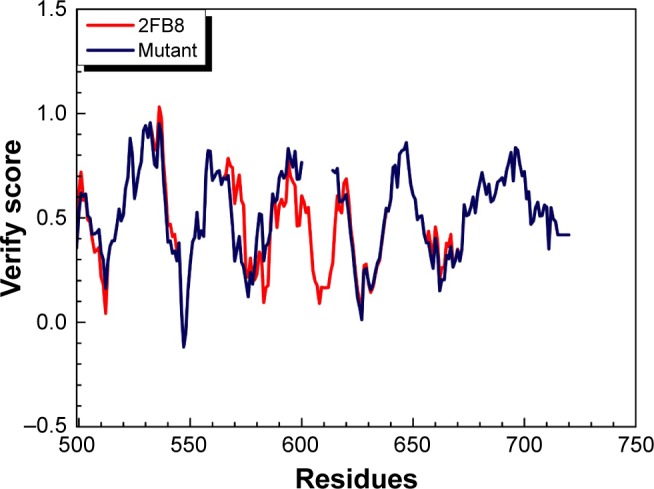
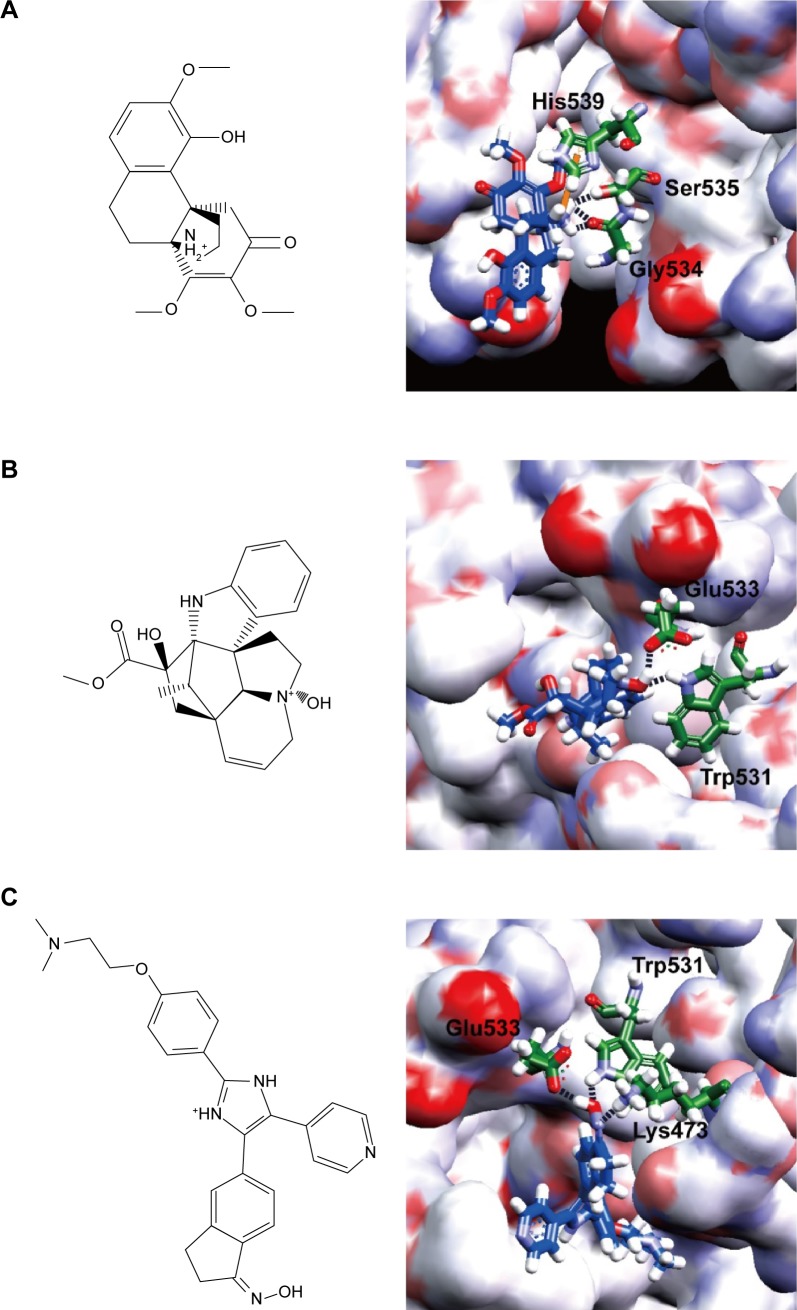
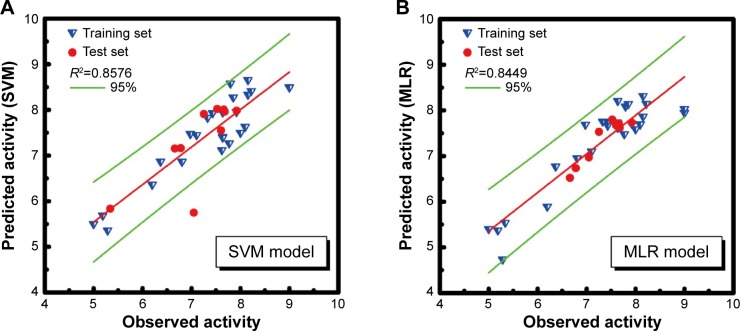
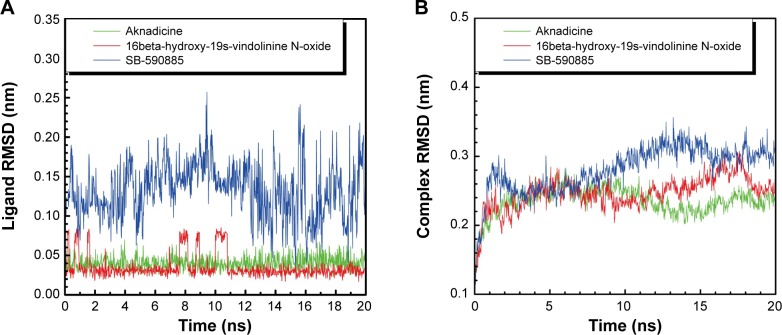
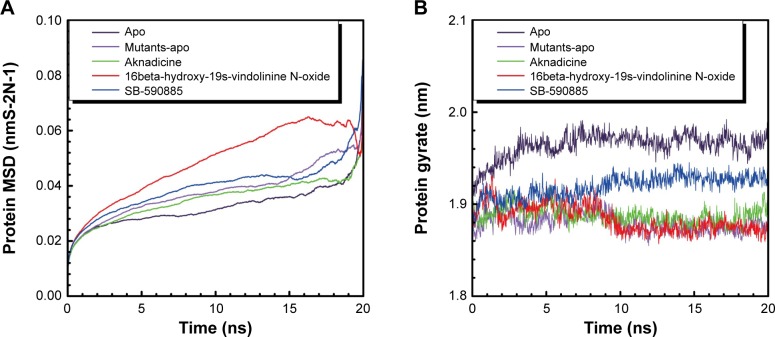
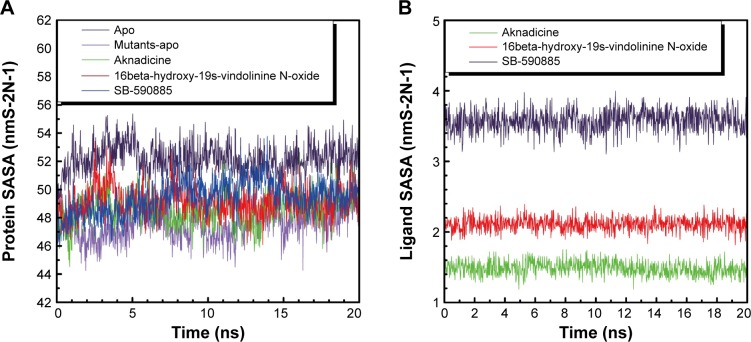
BRAF inhibitors have changed the standard therapeutic protocol for advanced or metastatic melanoma which harbored notorious BRAF(V600E) single mutation. However, drug resistance to BRAF inhibitors happens just like other cancer treatment. In this study, we constructed the ideal BRAF(V600E)-modeled structure through homology modeling and introduced the method of structure-based docking or virtual screening from the large compound database. Through certain methods of molecular dynamics simulation, we realized that BRAF(V600E) had quite prominent difference of molecular character or structural variation from the wild-type BRAF protein. It might confer the metamorphic character of advanced melanoma for the patients who harbored BRAF(V600E) mutation. By the methods of ligand-based quantitative structure-activity relationship and molecular dynamics simulation, we further recommend that aknadicine and 16beta-hydroxy-19s-vindolinine N-oxide from the traditional Chinese medicine are potent novel inhibitors for the management of malignant melanoma in the future.
BRAF抑制剂改变了晚期或转移性黑色素瘤的标准治疗方案,这类黑色素瘤存在臭名昭著的BRAF(V600E)单基因突变。然而,与其他癌症治疗一样,对BRAF抑制剂也会产生耐药性。在本研究中,我们通过同源建模构建了理想的BRAF(V600E)模拟结构,并引入了基于结构的对接方法或从大型化合物数据库中进行虚拟筛选。通过某些分子动力学模拟方法,我们认识到BRAF(V600E)与野生型BRAF蛋白在分子特征或结构变异方面存在相当显著的差异。这可能赋予携带BRAF(V600E)突变的患者晚期黑色素瘤的变质特征。通过基于配体的定量构效关系和分子动力学模拟方法,我们进一步推荐来自中药的阿克那定和16β-羟基-19s-长春多灵N-氧化物作为未来治疗恶性黑色素瘤的有效新型抑制剂。