Zhao Yuqiang, Li Ji, Liu Huijing, Xi Yu, Xue Ming, Liu Wanghong, Zhuang Zhenhua, Lei Minggang
Key Laboratory of Agricultural Animal Genetics, Breeding, and Reproduction of Ministry of Education and Key Laboratory of Swine Genetics and Breeding of Ministry of Agriculture, Huazhong Agricultural University, Wuhan, PR China.
National Animal Husbandry Services Ministry of Agriculture, Beijing, PR China.
BMC Genomics. 2015 May 12;16(1):377. doi: 10.1186/s12864-015-1580-7.
The growth and development of skeletal muscle directly impacts the quantity and quality of pork production. Chinese indigenous pig breeds and exotic species vary greatly in terms of muscle production and performance traits. We present transcriptome profiles of 110 skeletal muscle samples from Tongcheng (TC) and Yorkshire (YK) pigs at 11 developmental periods (30, 40, 55, 63, 70, 90, and 105 days of gestation, and 0, 1, 3, and 5 weeks of age) using digital gene expression on Solexa/Illumina's Genome Analyzer platform to investigate the differences in prenatal and postnatal skeletal muscle between the two breeds.
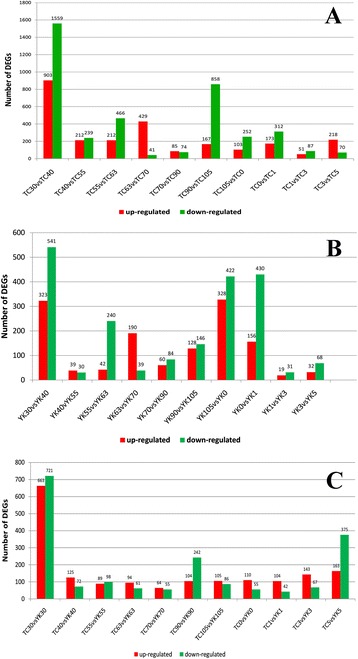
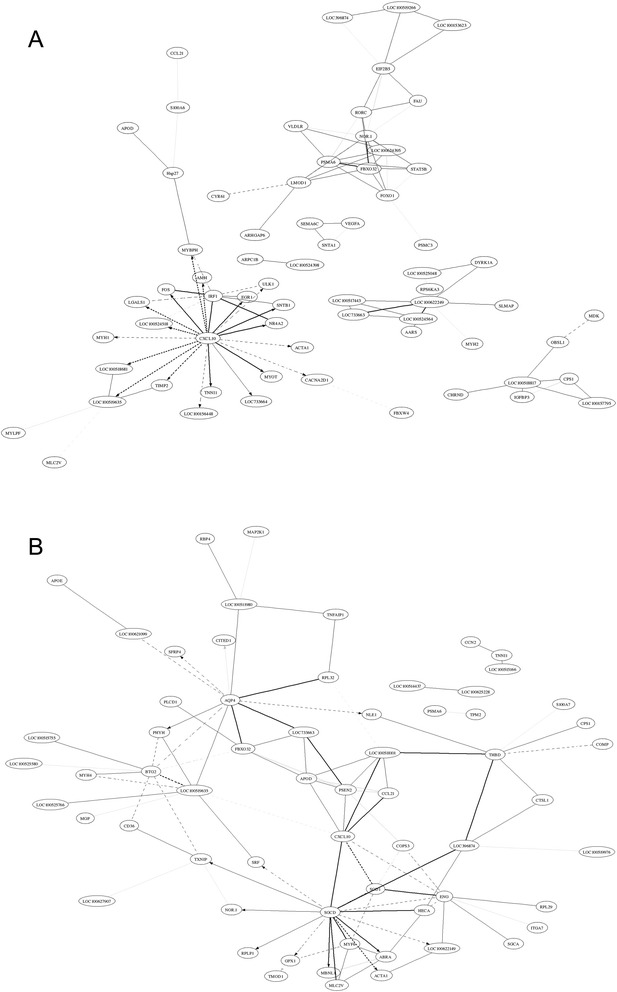
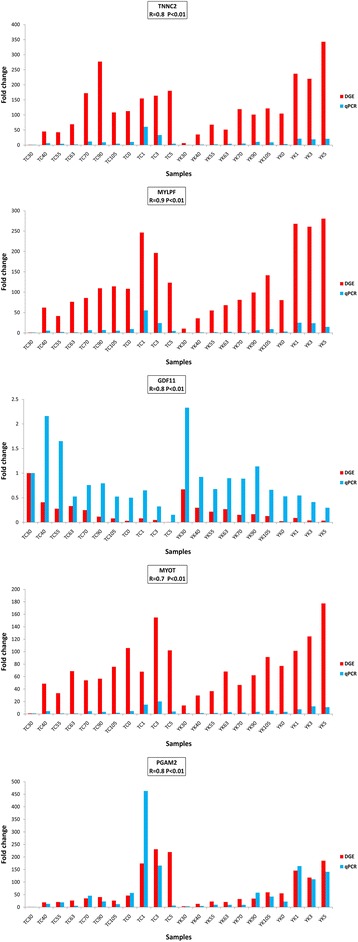
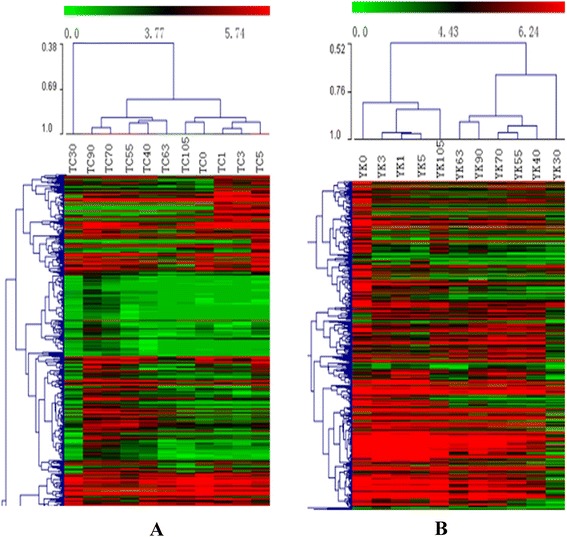
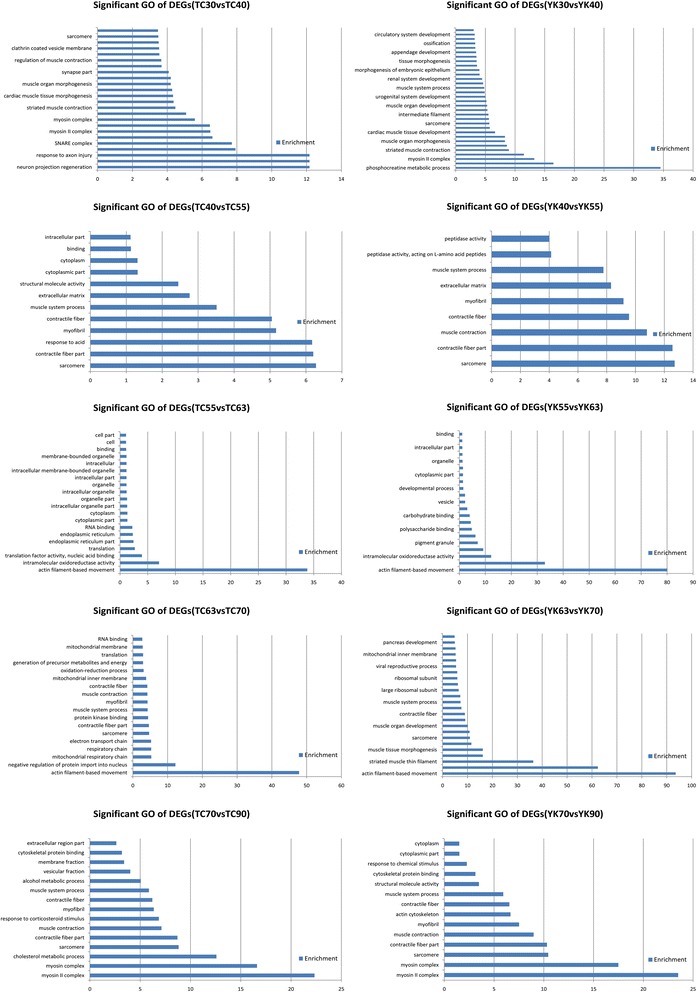
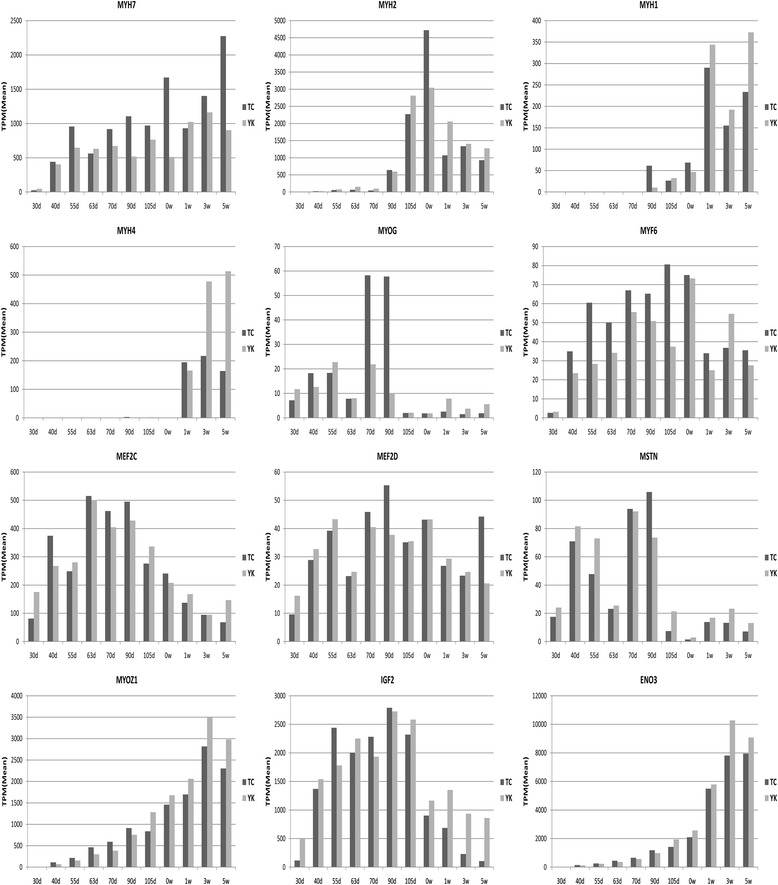
Muscle morphological changes indicate the importance of primary fiber formation from 30 to 40 dpc (days post coitus), and secondary fiber formation from 55 to 70 dpc. We screened 4,331 differentially expressed genes in TC and 2,259 in YK (log2 ratio >1 and probability >0.7). Cluster analysis showed different gene expression patterns between TC and YK pigs. The transcripts were annotated in terms of Gene Ontology related to muscle development. We found that the genes CXCL10, EIF2B5, PSMA6, FBXO32, and LOC100622249 played vital roles in the muscle regulatory networks in the TC breed, whereas the genes SGCD, ENG, THBD, AQP4, and BTG2 played dominant roles in the YK breed. These genes showed breed-specific and development-dependent differential expression patterns. Furthermore, 984 genes were identified in myogenesis. A heat map showed that significantly enriched pathways (FDR <0.05) had stage-specific functional regulatory mechanisms. Finally, the differentially expressed genes from our sequencing results were confirmed by real-time quantitative polymerase chain reaction.
This study detected many functional genes and showed differences in the molecular mechanisms of skeletal muscle development between TC and YK pigs. TC pigs showed slower muscle growth and more complicated genetic regulation than YK pigs. Many differentially expressed genes showed breed-specific expression patterns. Our data provide a better understanding of skeletal muscle developmental differences and valuable information for improving pork quality.
骨骼肌的生长发育直接影响猪肉生产的数量和质量。中国本土猪种和外来品种在肌肉生产和性能特征方面差异很大。我们使用Solexa/Illumina的基因组分析仪平台上的数字基因表达技术,呈现了来自通城(TC)猪和约克夏(YK)猪在11个发育时期(妊娠30、40、55、63、70、90和105天,以及0、1、3和5周龄)的110个骨骼肌样本的转录组图谱,以研究两个品种产前和产后骨骼肌的差异。
肌肉形态变化表明,从交配后30至40天原发性肌纤维形成以及从55至70天继发性肌纤维形成的重要性。我们在TC猪中筛选出4331个差异表达基因,在YK猪中筛选出2259个差异表达基因(log2比值>1且概率>0.7)。聚类分析显示TC和YK猪之间存在不同的基因表达模式。这些转录本根据与肌肉发育相关的基因本体进行注释。我们发现基因CXCL10、EIF2B5、PSMA6、FBXO32和LOC100622249在TC品种的肌肉调节网络中起关键作用,而基因SGCD、ENG、THBD、AQP4和BTG2在YK品种中起主导作用。这些基因表现出品种特异性和发育依赖性差异表达模式。此外,在肌生成过程中鉴定出984个基因。热图显示显著富集的通路(FDR<0.05)具有阶段特异性功能调节机制。最后,通过实时定量聚合酶链反应证实了我们测序结果中的差异表达基因。
本研究检测到许多功能基因,并显示了TC和YK猪骨骼肌发育分子机制的差异。TC猪的肌肉生长比YK猪慢,遗传调控更复杂。许多差异表达基因表现出品种特异性表达模式。我们的数据为更好地理解骨骼肌发育差异以及改善猪肉品质提供了有价值的信息。