State Key Laboratory of Biocontrol, Sun Yat-sen University, Guangzhou, Guangdong, People's Republic of China.
PLoS One. 2011;6(5):e19774. doi: 10.1371/journal.pone.0019774. Epub 2011 May 26.
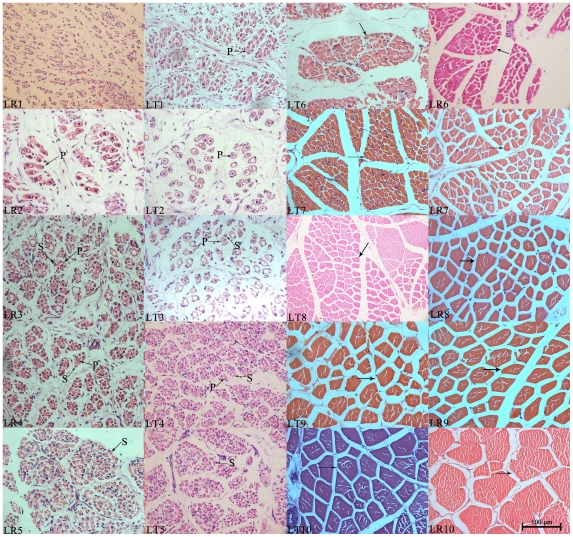
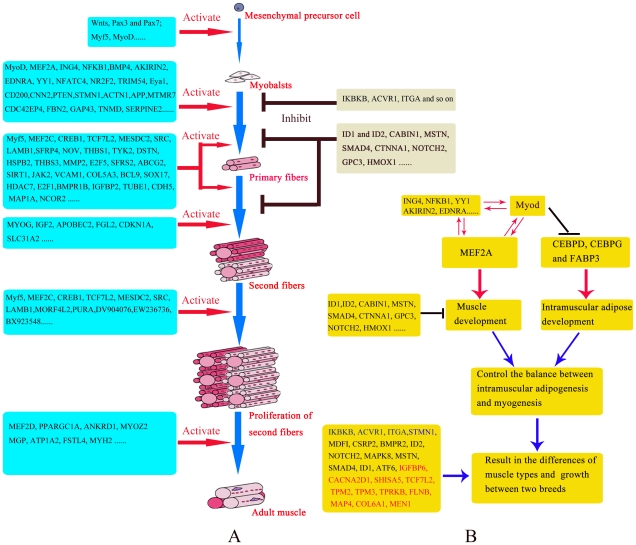
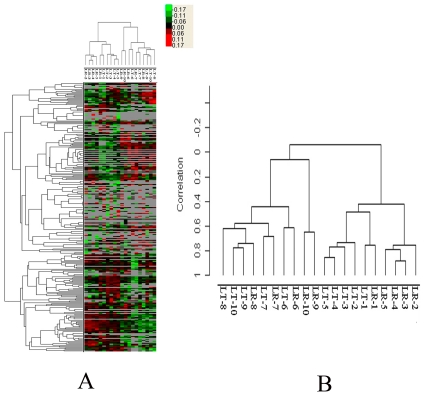
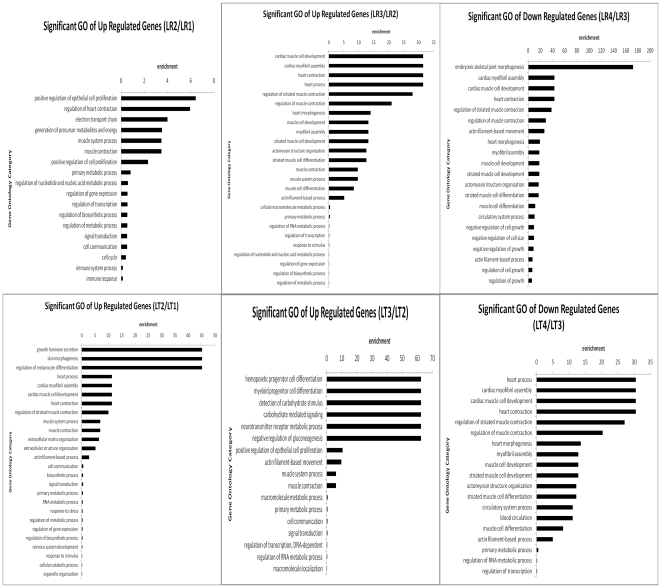
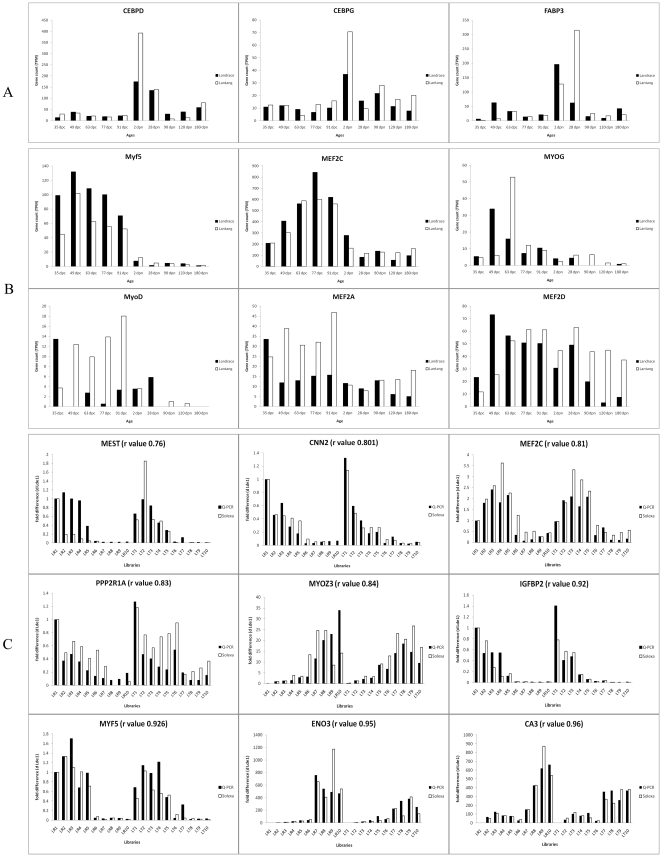
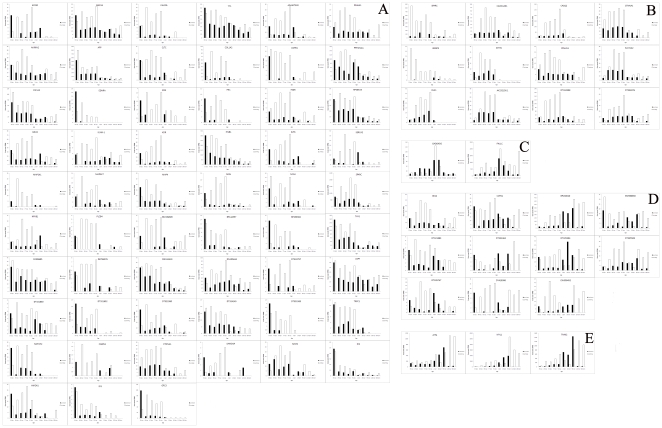
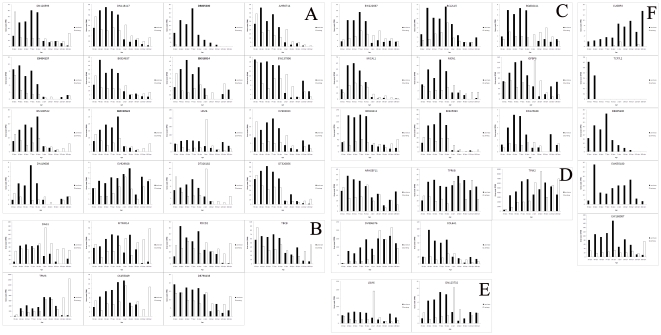
Understanding the dynamics of muscle transcriptome during development and between breeds differing in muscle growth is necessary to uncover the complex mechanism underlying muscle development. Herein, we present the first transcriptome-wide longissimus dorsi muscle development research concerning Lantang (LT, obese) and Landrace (LR, lean) pig breeds during 10 time-points from 35 days-post-coitus (dpc) to 180 days-post-natum (dpn) using Solexa/Illumina's Genome Analyzer. The data demonstrated that myogenesis was almost completed before 77 dpc, but the muscle phenotypes were still changed from 77 dpc to 28 dpn. Comparative analysis of the two breeds suggested that myogenesis started earlier but progressed more slowly in LT than in LR, the stages ranging from 49 dpc to 77 dpc are critical for formation of different muscle phenotypes. 595 differentially expressed myogenesis genes were identified, and their roles in myogenesis were discussed. Furthermore, GSK3B, IKBKB, ACVR1, ITGA and STMN1 might contribute to later myogenesis and more muscle fibers in LR than LT. Some myogenesis inhibitors (ID1, ID2, CABIN1, MSTN, SMAD4, CTNNA1, NOTCH2, GPC3 and HMOX1) were higher expressed in LT than in LR, which might contribute to more slow muscle differentiation in LT than in LR. We also identified several genes which might contribute to intramuscular adipose differentiation. Most important, we further proposed a novel model in which MyoD and MEF2A controls the balance between intramuscular adipogenesis and myogenesis by regulating CEBP family; Myf5 and MEF2C are essential during the whole myogenesis process while MEF2D affects muscle growth and maturation. The MRFs and MEF2 families are also critical for the phenotypic differences between the two pig breeds. Overall, this study contributes to elucidating the mechanism underlying muscle development, which could provide valuable information for pig meat quality improvement. The raw data have been submitted to Gene Expression Omnibus (GEO) under series GSE25406.
了解肌肉转录组在发育过程中的动态以及在肌肉生长方面存在差异的品种之间的动态,对于揭示肌肉发育的复杂机制是必要的。在此,我们展示了首例关于 Lantang(LT,肥胖)和长白猪(LR,瘦)品种的背最长肌发育研究,使用 Solexa/Illumina 的 Genome Analyzer 在 35 天妊娠后期(dpc)到 180 天出生后期(dpn)期间进行了 10 个时间点的研究。数据表明,肌生成几乎在 77 dpc 前完成,但肌肉表型仍在 77 dpc 至 28 dpn 之间发生变化。两个品种的比较分析表明,肌生成在 LT 中比在 LR 中开始得更早,但进展得更慢,从 49 dpc 到 77 dpc 的阶段对于形成不同的肌肉表型至关重要。鉴定了 595 个差异表达的肌生成基因,并讨论了它们在肌生成中的作用。此外,GSK3B、IKBKB、ACVR1、ITGA 和 STMN1 可能有助于 LR 中的后期肌生成和更多的肌肉纤维。一些肌生成抑制剂(ID1、ID2、CABIN1、MSTN、SMAD4、CTNNA1、NOTCH2、GPC3 和 HMOX1)在 LT 中的表达高于 LR,这可能有助于 LT 中的肌肉分化比 LR 更慢。我们还鉴定了一些可能有助于肌内脂肪分化的基因。最重要的是,我们进一步提出了一个新的模型,其中 MyoD 和 MEF2A 通过调节 CEBP 家族来控制肌内脂肪生成和肌生成之间的平衡;Myf5 和 MEF2C 在整个肌生成过程中是必不可少的,而 MEF2D 影响肌肉生长和成熟。MRFs 和 MEF2 家族对于两个猪品种之间的表型差异也至关重要。总的来说,这项研究有助于阐明肌肉发育的机制,为猪肉质改良提供有价值的信息。原始数据已提交给基因表达综合数据库(GEO),系列号为 GSE25406。