García-Padilla Sandra, Duarte-Vázquez Miguel Angel, Gonzalez-Romero Karla Elena, Caamaño María del Carmen, Rosado Jorge L
Cindetec A.C, Parque Industrial Querétaro, Jurica 122, C.P. 76220, Santiago de Querétaro, Qro, Mexico.
Nucitec S.A. de C.V, Santiago de Querétaro, Mexico.
BMC Musculoskelet Disord. 2015 May 13;16:114. doi: 10.1186/s12891-015-0568-4.
A novel therapeutic management of osteoarthritis (OA) of the knee was assessed. The study aimed to evaluate the effect of monthly sodium bicarbonate with a single (SBCG1) or double dose (SBCG2) of calcium gluconate injections on OA of the knee; as well as the efficacy and safety of both SBCG interventions in the long term.
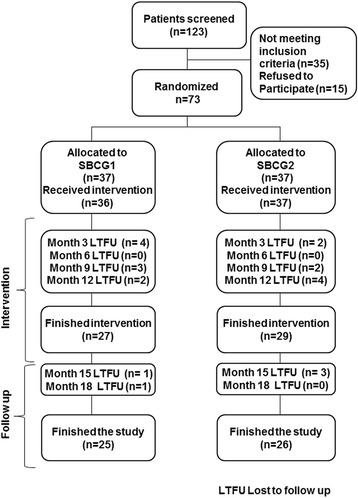
A double-blind parallel-group clinical trial with 74 knee OA patients was performed during 12 months, both SBCG interventions were followed-up for another 6mo after intervention. The outcome variables were the Western Ontario-McMaster University Osteoarthritis Index (WOMAC), the Lequesne's functional index and joint-space width changes from serial radiographs.
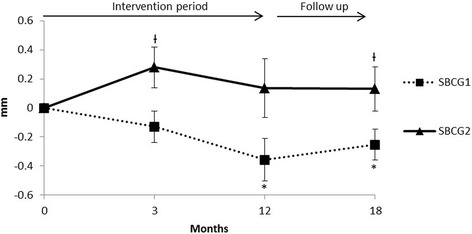
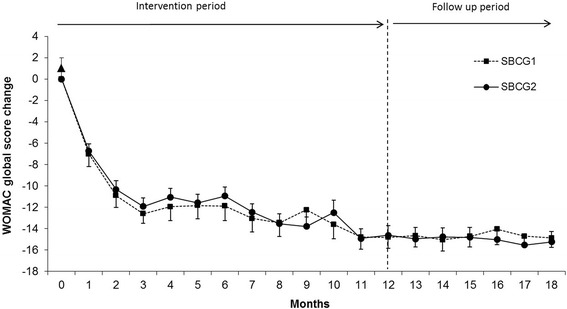
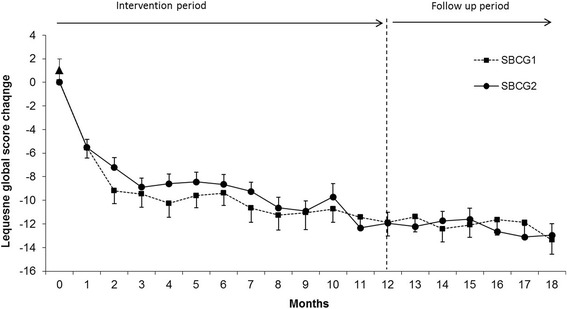
After 12 months, group SBCG1 decreased -14.8 (95% CI:-14.2, -17.0) and group SBCG2 decreased -14.6 (-16.9, -12.4) in the global WOMAC score, the mean changes represent 80% and 82% lessened pain, respectively. In the Lequesne Functional Index scale, SBCG1 decreased -11.9 (-10.4, -14.2) and SBCG2 decreased -11.9 (-13.8, -10.0), representing 66 and 69% of improvement. Both mean scores were maintained after intervention discontinued. SBCG2 improved the knees' joint space width more than SBCG1 at 3 and 18 months. Both SBCG interventions were well tolerated after 12 months of treatment
A solution of sodium bicarbonate and calcium gluconate is effective on reducing the symptoms associated with OA. Its beneficial effect is maintained for one year of continuous monthly administration and at least for 6 months after the administration is discontinued. When the dose of calcium gluconate is increased, it prevents further narrowing of joint-space.
Clinicaltrials.gov NCT00977444 September 11, 2009.
评估了一种治疗膝关节骨关节炎(OA)的新方法。该研究旨在评估每月注射碳酸氢钠联合单次(SBCG1)或双次剂量(SBCG2)葡萄糖酸钙对膝关节OA的疗效;以及两种SBCG干预措施的长期疗效和安全性。
对74例膝关节OA患者进行了为期12个月的双盲平行组临床试验,两种SBCG干预措施在干预后又随访了6个月。观察指标包括西安大略和麦克马斯特大学骨关节炎指数(WOMAC)、Lequesne功能指数以及连续X线片上关节间隙宽度的变化。
12个月后,SBCG1组的全球WOMAC评分下降了-14.8(95%CI:-14.2,-17.0),SBCG2组下降了-14.6(-16.9,-12.4),平均变化分别代表疼痛减轻了80%和82%。在Lequesne功能指数量表中,SBCG1组下降了-11.9(-10.4,-14.2),SBCG2组下降了-11.9(-13.8,-10.0),分别代表改善了66%和69%。干预停止后,两个平均得分均得以维持。在3个月和18个月时,SBCG2组比SBCG1组更能改善膝关节的关节间隙宽度。治疗12个月后两种SBCG干预措施的耐受性均良好。
碳酸氢钠和葡萄糖酸钙溶液对减轻与OA相关的症状有效。其有益效果在连续每月给药1年期间得以维持,且在停药后至少维持6个月。当葡萄糖酸钙剂量增加时,可防止关节间隙进一步变窄。
Clinicaltrials.gov NCT00977444,2009年9月11日。