Vandael David H F, Marcantoni Andrea, Carbone Emilio
Department of Drug Science, Corso Raffaello 30, I - 10125 Torino, Italy.
Curr Mol Pharmacol. 2015;8(2):149-61. doi: 10.2174/1874467208666150507105443.
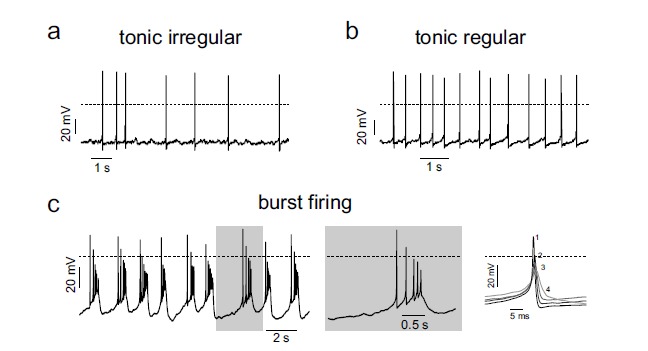
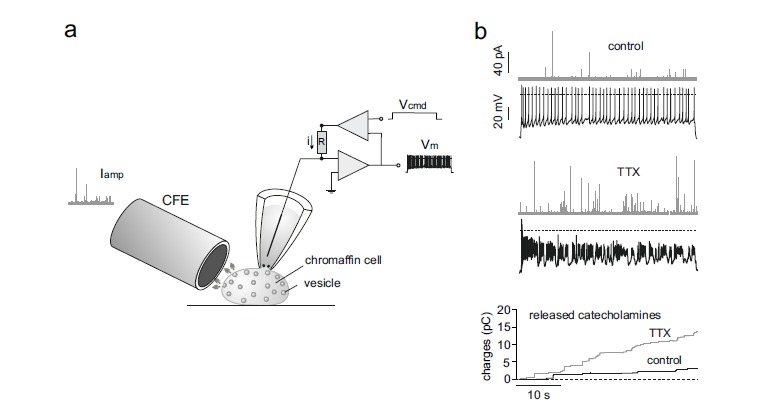
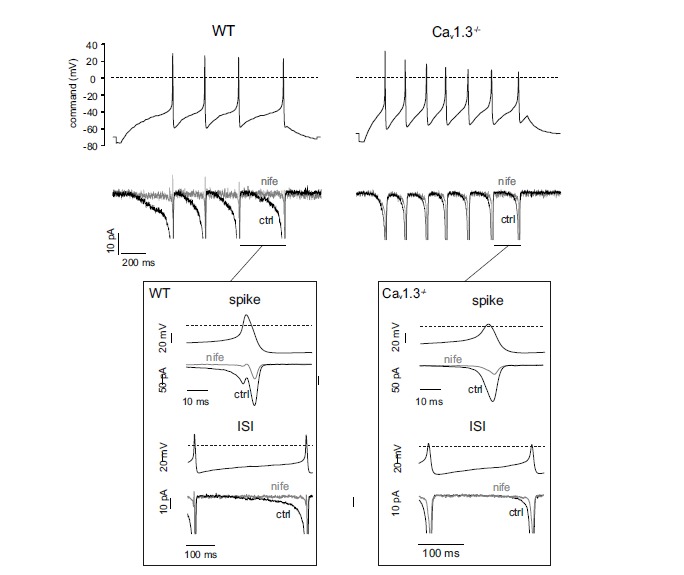
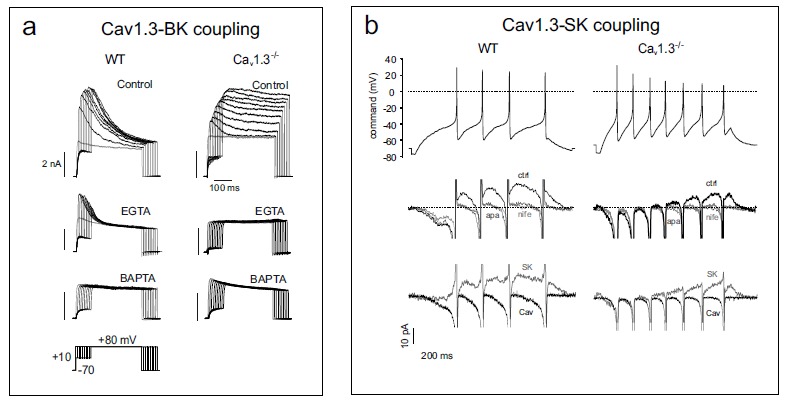
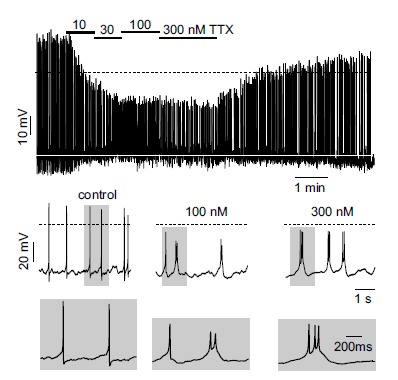
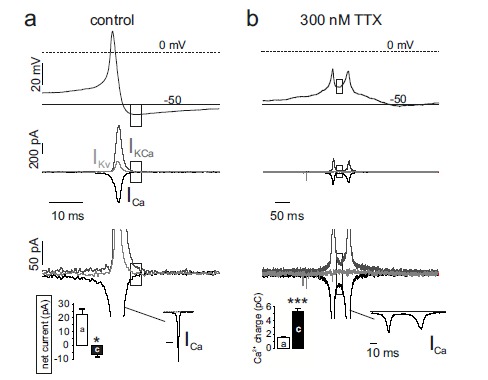
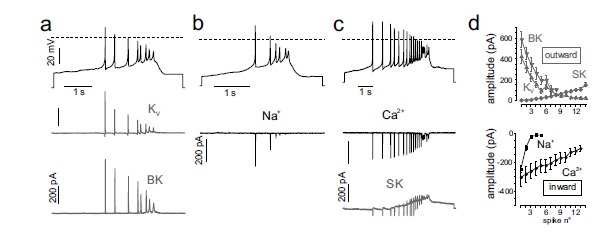
Neuronal and neuroendocrine L-type calcium channels (Cav1.2, Cav1.3) open readily at relatively low membrane potentials and allow Ca(2+) to enter the cells near resting potentials. In this way, Cav1.2 and Cav1.3 shape the action potential waveform, contribute to gene expression, synaptic plasticity, neuronal differentiation, hormone secretion and pacemaker activity. In the chromaffin cells (CCs) of the adrenal medulla, Cav1.3 is highly expressed and is shown to support most of the pacemaking current that sustains action potential (AP) firings and part of the catecholamine secretion. Cav1.3 forms Ca(2+)-nanodomains with the fast inactivating BK channels and drives the resting SK currents. These latter set the inter-spike interval duration between consecutive spikes during spontaneous firing and the rate of spike adaptation during sustained depolarizations. Cav1.3 plays also a primary role in the switch from "tonic" to "burst" firing that occurs in mouse CCs when either the availability of voltage-gated Na channels (Nav) is reduced or the β2 subunit featuring the fast inactivating BK channels is deleted. Here, we discuss the functional role of these "neuron-like" firing modes in CCs and how Cav1.3 contributes to them. The open issue is to understand how these novel firing patterns are adapted to regulate the quantity of circulating catecholamines during resting condition or in response to acute and chronic stress.
神经元和神经内分泌L型钙通道(Cav1.2、Cav1.3)在相对较低的膜电位时易于开放,并允许Ca²⁺在接近静息电位时进入细胞。通过这种方式,Cav1.2和Cav1.3塑造动作电位波形,促进基因表达、突触可塑性、神经元分化、激素分泌和起搏器活动。在肾上腺髓质的嗜铬细胞(CCs)中,Cav1.3高度表达,并被证明支持维持动作电位(AP)发放的大部分起搏电流以及部分儿茶酚胺分泌。Cav1.3与快速失活的BK通道形成Ca²⁺纳米域,并驱动静息SK电流。后者决定了自发发放期间连续峰电位之间的峰电位间隔持续时间以及持续去极化期间的峰电位适应速率。当电压门控钠通道(Nav)的可用性降低或具有快速失活BK通道的β2亚基缺失时,Cav1.3在小鼠CCs中从“紧张性”发放向“爆发性”发放的转变中也起主要作用。在这里,我们讨论这些“神经元样”发放模式在CCs中的功能作用以及Cav1.3如何对其产生影响。尚未解决的问题是了解这些新颖的发放模式如何在静息状态下或响应急性和慢性应激时调节循环儿茶酚胺的量。