Sacco Joseph J, Kenyani Jenna, Butt Zohra, Carter Rachel, Chew Hui Yi, Cheeseman Liam P, Darling Sarah, Denny Michael, Urbé Sylvie, Clague Michael J, Coulson Judy M
Cellular & Molecular Physiology, Institute of Translational Medicine, University of Liverpool, Liverpool, UK.
Current address: Cancer Stem Cell Biology, Agency for Science Technology and Research, Genome Institute of Singapore, Singapore.
Oncotarget. 2015 May 30;6(15):13757-71. doi: 10.18632/oncotarget.3765.
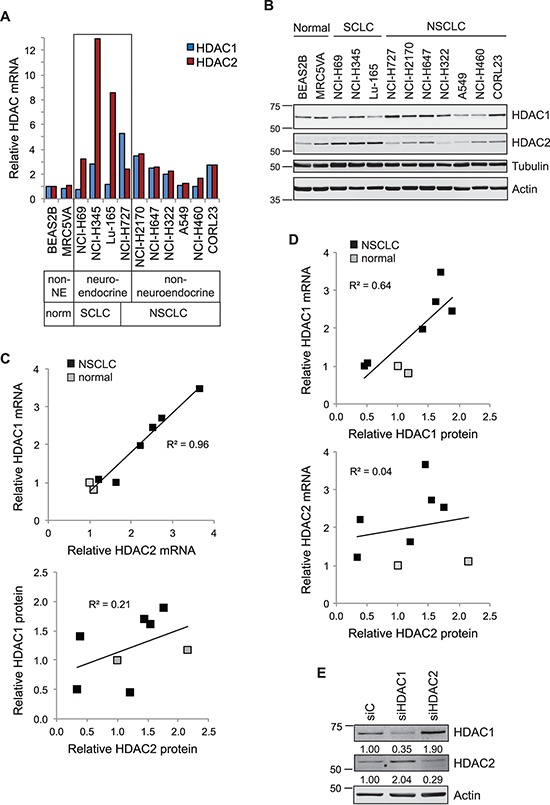
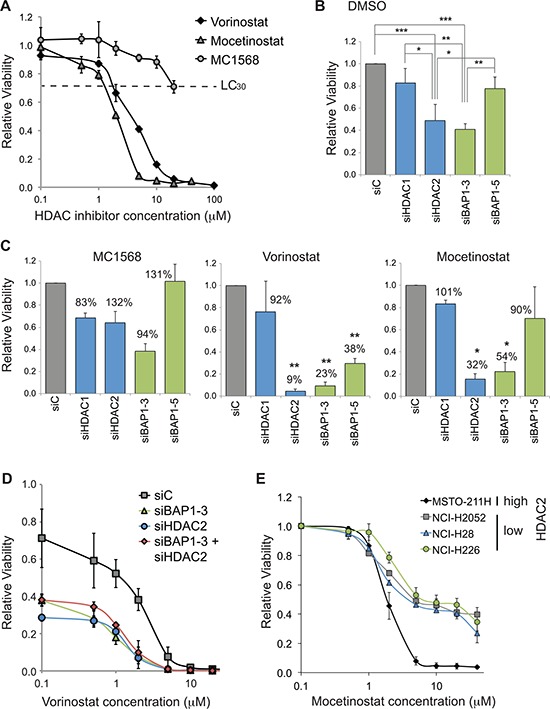
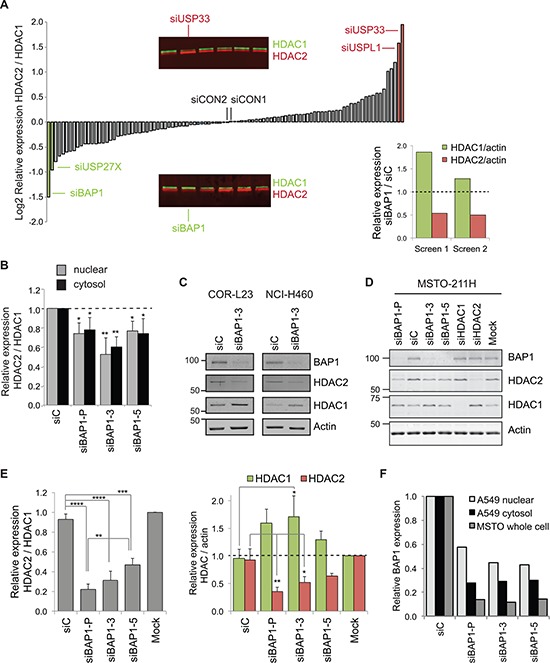
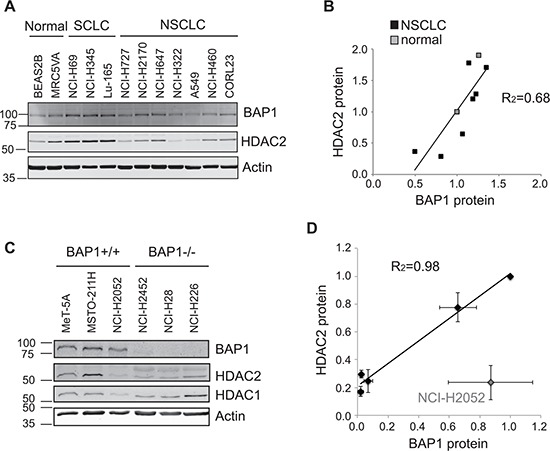
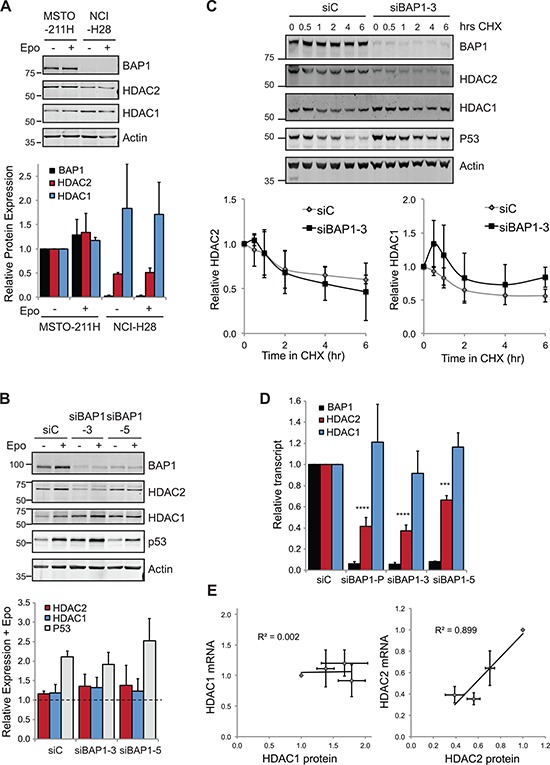
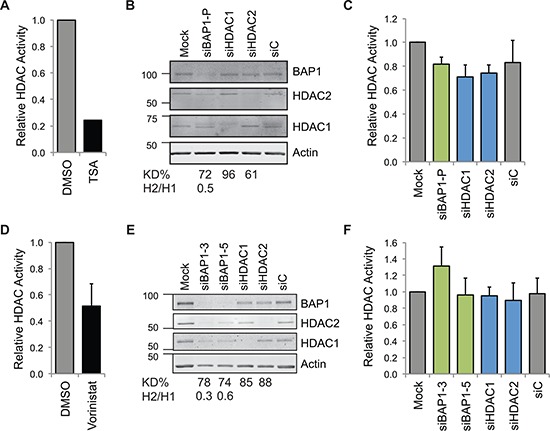
Histone deacetylases are important targets for cancer therapeutics, but their regulation is poorly understood. Our data show coordinated transcription of HDAC1 and HDAC2 in lung cancer cell lines, but suggest HDAC2 protein expression is cell-context specific. Through an unbiased siRNA screen we found that BRCA1-associated protein 1 (BAP1) regulates their expression, with HDAC2 reduced and HDAC1 increased in BAP1 depleted cells. BAP1 loss-of-function is increasingly reported in cancers including thoracic malignancies, with frequent mutation in malignant pleural mesothelioma. Endogenous HDAC2 directly correlates with BAP1 across a panel of lung cancer cell lines, and is downregulated in mesothelioma cell lines with genetic BAP1 inactivation. We find that BAP1 regulates HDAC2 by increasing transcript abundance, rather than opposing its ubiquitylation. Importantly, although total cellular HDAC activity is unaffected by transient depletion of HDAC2 or of BAP1 due to HDAC1 compensation, this isoenzyme imbalance sensitizes MSTO-211H cells to HDAC inhibitors. However, other established mesothelioma cell lines with low endogenous HDAC2 have adapted to become more resistant to HDAC inhibition. Our work establishes a mechanism by which BAP1 loss alters sensitivity of cancer cells to HDAC inhibitors. Assessment of BAP1 and HDAC expression may ultimately help identify patients likely to respond to HDAC inhibitors.
组蛋白去乙酰化酶是癌症治疗的重要靶点,但其调控机制仍知之甚少。我们的数据显示,肺癌细胞系中HDAC1和HDAC2存在协同转录,但提示HDAC2蛋白表达具有细胞背景特异性。通过无偏向性的siRNA筛选,我们发现BRCA1相关蛋白1(BAP1)调节它们的表达,在BAP1缺失的细胞中HDAC2减少而HDAC1增加。越来越多的研究报道BAP1功能丧失在包括胸段恶性肿瘤在内的多种癌症中出现,在恶性胸膜间皮瘤中频繁发生突变。在一组肺癌细胞系中,内源性HDAC2与BAP1直接相关,并且在发生基因BAP1失活的间皮瘤细胞系中HDAC2表达下调。我们发现BAP1通过增加转录本丰度来调节HDAC2,而不是通过对抗其泛素化。重要的是,尽管由于HDAC1的补偿作用,HDAC2或BAP1的瞬时缺失不会影响细胞总的HDAC活性,但这种同工酶失衡使MSTO - 211H细胞对HDAC抑制剂敏感。然而,其他内源性HDAC2含量低的已建立的间皮瘤细胞系已适应并对HDAC抑制产生更强的抗性。我们的研究建立了一种机制,通过该机制BAP1缺失改变癌细胞对HDAC抑制剂的敏感性。评估BAP1和HDAC的表达最终可能有助于识别可能对HDAC抑制剂有反应的患者。