Herrera Sócrates, Ochoa-Orozco Sergio Andrés, González Iveth J, Peinado Lucrecia, Quiñones Martha L, Arévalo-Herrera Myriam
Caucaseco Scientific Research Center, Cali, Colombia; Malaria Vaccine and Drug Development Center, Cali, Colombia.
Foundation for Innovative New Diagnostics (FIND), Geneva, Switzerland.
PLoS Negl Trop Dis. 2015 May 14;9(5):e0003700. doi: 10.1371/journal.pntd.0003700. eCollection 2015 May.
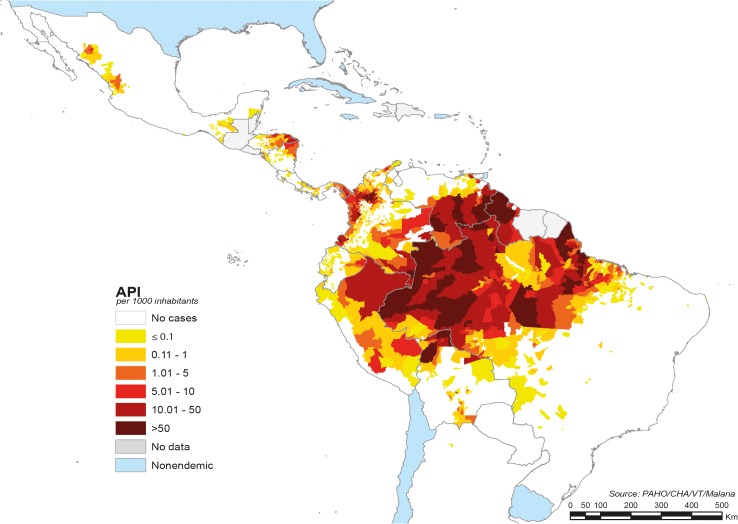
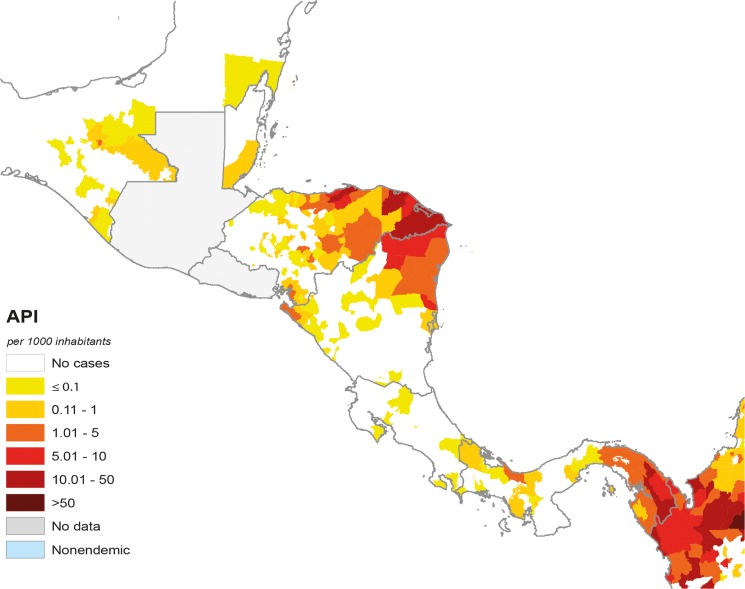
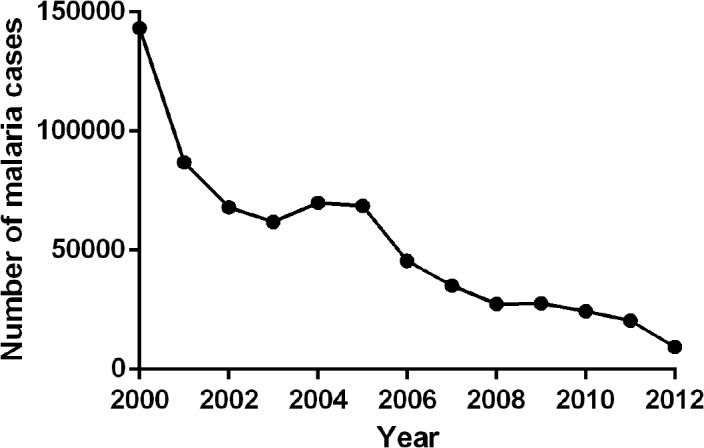
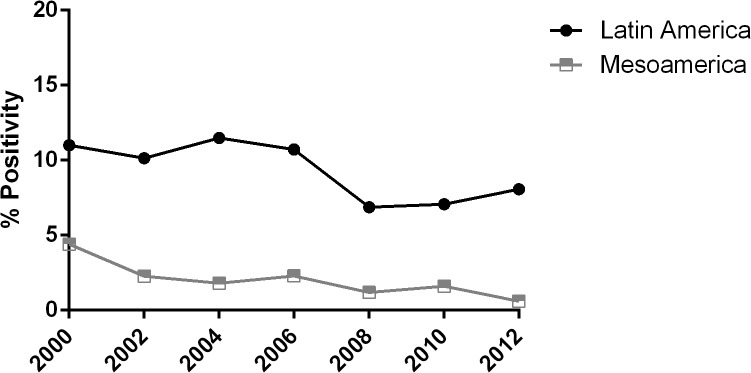
Malaria remains endemic in 21 countries of the American continent with an estimated 427,000 cases per year. Approximately 10% of these occur in the Mesoamerican and Caribbean regions. During the last decade, malaria transmission in Mesoamerica showed a decrease of ~85%; whereas, in the Caribbean region, Hispaniola (comprising the Dominican Republic [DR] and Haiti) presented an overall rise in malaria transmission, primarily due to a steady increase in Haiti, while DR experienced a significant transmission decrease in this period. The significant malaria reduction observed recently in the region prompted the launch of an initiative for Malaria Elimination in Mesoamerica and Hispaniola (EMMIE) with the active involvement of the National Malaria Control Programs (NMCPs) of nine countries, the Regional Coordination Mechanism (RCM) for Mesoamerica, and the Council of Health Ministries of Central America and Dominican Republic (COMISCA). The EMMIE initiative is supported by the Global Fund for Aids, Tuberculosis and Malaria (GFATM) with active participation of multiple partners including Ministries of Health, bilateral and multilateral agencies, as well as research centers. EMMIE's main goal is to achieve elimination of malaria transmission in the region by 2020. Here we discuss the prospects, challenges, and research needs associated with this initiative that, if successful, could represent a paradigm for other malaria-affected regions.
疟疾在美洲大陆的21个国家仍属地方病,估计每年有42.7万例病例。其中约10%发生在中美洲和加勒比地区。在过去十年中,中美洲的疟疾传播率下降了约85%;而在加勒比地区,伊斯帕尼奥拉岛(由多米尼加共和国[DR]和海地组成)的疟疾传播总体呈上升趋势,主要是由于海地的病例稳步增加,而DR在此期间疟疾传播显著减少。该地区近期观察到的疟疾显著减少促使发起了中美洲和伊斯帕尼奥拉岛疟疾消除倡议(EMMIE),九个国家的国家疟疾控制项目(NMCPs)、中美洲区域协调机制(RCM)以及中美洲和多米尼加共和国卫生部长理事会(COMISCA)积极参与其中。EMMIE倡议得到了全球防治艾滋病、结核病和疟疾基金(GFATM)的支持,多个伙伴积极参与,包括卫生部、双边和多边机构以及研究中心。EMMIE的主要目标是到2020年在该地区消除疟疾传播。在此,我们讨论与该倡议相关的前景、挑战和研究需求,如果该倡议取得成功,可能会为其他受疟疾影响的地区树立一个典范。