Griffing Sean M, Villegas Leopoldo, Udhayakumar Venkatachalam
Emerg Infect Dis. 2014 Oct;20(10):1697-704. doi: 10.3201/eid2010.130917.
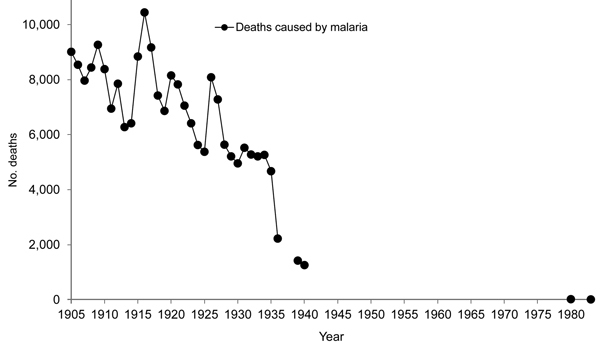
Venezuela had the highest number of human malaria cases in Latin American before 1936. During 1891–1920,malaria was endemic to >600,000 km2 of this country; malaria death rates led to major population decreases during 1891–1920. No pathogen, including the influenza virus that caused the 1918 pandemic, caused more deaths than malaria during 1905–1945. Early reports of malaria eradication in Venezuela helped spark the world's interest in global eradication. We describe early approaches to malaria epidemiology in Venezuela and how this country developed an efficient control program and an approach to eradication.Arnoldo Gabaldón was a key policy maker during this development process. He directed malaria control in Venezuela from the late 1930s to the end of the 1970s and contributed to malaria program planning of the World Health Organization.We discuss how his efforts helped reduce the incidence of malaria in Venezuela and how his approach diverged from World Health Organization guidelines.
1936年以前,委内瑞拉是拉丁美洲人类疟疾病例数最多的国家。在1891年至1920年期间,该国超过60万平方公里的地区疟疾呈地方性流行;1891年至1920年期间,疟疾死亡率导致人口大幅减少。在1905年至1945年期间,包括引发1918年大流行的流感病毒在内,没有任何病原体造成的死亡人数比疟疾更多。委内瑞拉早期关于疟疾根除的报告激发了全世界对全球根除疟疾的兴趣。我们描述了委内瑞拉疟疾流行病学的早期方法,以及该国如何制定高效的控制计划和根除方法。阿诺尔多·加瓦尔东是这一发展过程中的关键政策制定者。他从20世纪30年代末到70年代末负责委内瑞拉的疟疾控制工作,并为世界卫生组织的疟疾项目规划做出了贡献。我们讨论了他的努力如何帮助降低了委内瑞拉疟疾的发病率,以及他的方法与世界卫生组织的指导方针有何不同。