Zhao Y, Dua P, Lukiw W J
LSU Neuroscience Center, Louisiana State University Health Sciences Center, 2020 Gravier Street, New Orleans LA 70112 USA ; Department of Cell Biology and Anatomy, Louisiana State University Health Sciences Center, 1901 Perdido Street, New Orleans LA 70112 USA.
Department of Health Information Management, Louisiana State University Ruston LA 71270 USA.
J Alzheimers Dis Parkinsonism. 2015 Mar;5(1):177. doi: 10.4172/2161-0460.1000177.
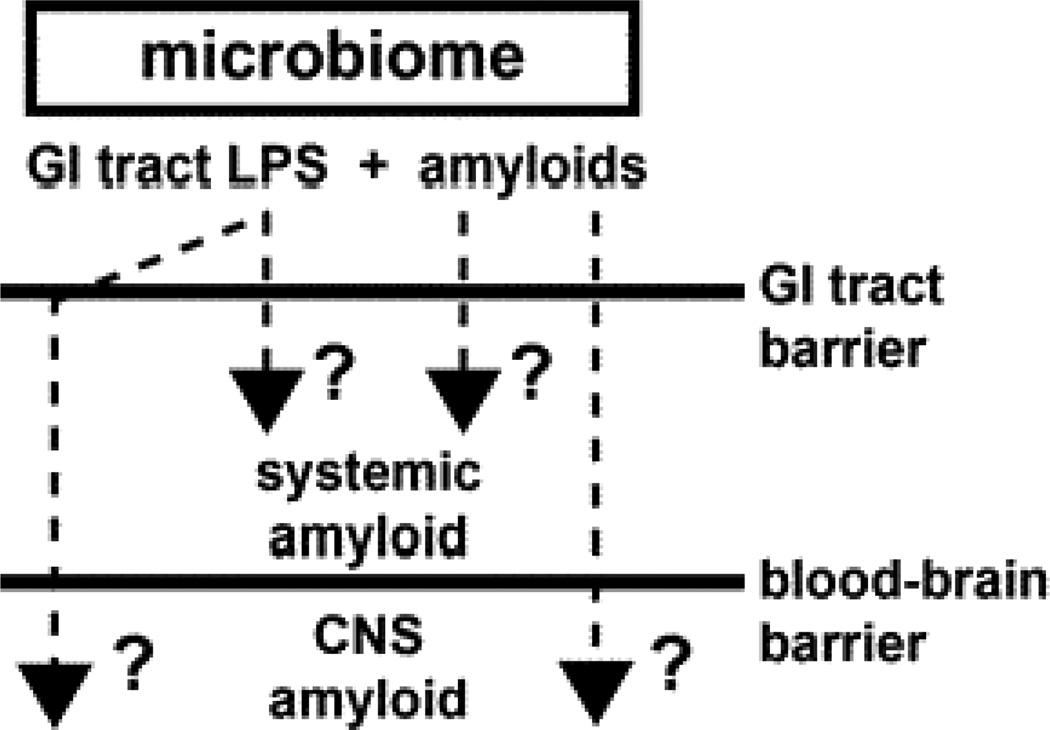
Since the inception of the human microbiome project (HMP) by the US National Institutes of Health (NIH) in 2007 there has been a keen resurgence in our recognition of the human microbiome and its contribution to development, immunity, neurophysiology, metabolic and nutritive support to central nervous system (CNS) health and disease. What is not generally appreciated is that (i) the ~10 microbial cells that comprise the human microbiome outnumber human host cells by approximately one hundred-to-one; (ii) together the microbial genes of the microbiome outnumber human host genes by about one hundred-and-fifty to one; (iii) collectively these microbes constitute the largest 'diffuse organ system' in the human body, more metabolically active than the liver; strongly influencing host nutritive-, innate-immune, neuroinflammatory-, neuromodulatory- and neurotransmission-functions; and (iv) that these microbes actively secrete highly complex, immunogenic mixtures of lipopolysaccharide (LPS) and amyloid from their outer membranes into their immediate environment. While secreted LPS and amyloids are generally quite soluble as monomers over time they form into highly insoluble fibrous protein aggregates that are implicated in the progressive degenerative neuropathology of several common, age-related disorders of the human CNS including Alzheimer's disease (AD). This general commentary-perspective paper will highlight some recent findings on microbial-derived secreted LPS and amyloids and the potential contribution of these neurotoxic and proinflammatory microbial exudates to age-related inflammatory amyloidogenesis and neurodegeneration, with specific reference to AD wherever possible.
自2007年美国国立卫生研究院(NIH)启动人类微生物组计划(HMP)以来,我们对人类微生物组及其在发育、免疫、神经生理学、代谢以及对中枢神经系统(CNS)健康与疾病的营养支持方面的贡献有了新的强烈认识。但人们普遍没有认识到的是:(i)构成人类微生物组的约10个微生物细胞数量比人类宿主细胞多出约一百倍;(ii)微生物组的微生物基因数量比人类宿主基因多出约一百五十倍;(iii)这些微生物共同构成了人体最大的“弥散器官系统”,其代谢活性比肝脏还高,对宿主的营养、固有免疫、神经炎症、神经调节和神经传递功能有强烈影响;(iv)这些微生物会主动将高度复杂的、具有免疫原性的脂多糖(LPS)和淀粉样蛋白混合物从其外膜分泌到周围环境中。虽然随着时间推移,分泌的LPS和淀粉样蛋白通常以单体形式相当易溶,但它们会形成高度不溶性的纤维状蛋白聚集体,这与包括阿尔茨海默病(AD)在内的几种常见的、与年龄相关的人类CNS退行性神经病理学有关。这篇一般性评论视角的论文将重点介绍一些关于微生物衍生的分泌LPS和淀粉样蛋白的最新发现,以及这些神经毒性和促炎性微生物渗出物对与年龄相关的炎性淀粉样蛋白生成和神经退行性变的潜在贡献,并尽可能具体提及AD。