Chung Woo-Chang, Kang Hye-Ri, Yoon Hyunyee, Kang Suk-Jo, Ting Jenny P-Y, Song Moon Jung
Virus-Host Interactions Laboratory, Department of Biosystems and Biotechnology, Division of Biotechnology, College of Life Sciences and Biotechnology, Korea University, Seoul, 136-713, Republic of Korea.
Virus-Host Interactions Laboratory, Department of Biosystems and Biotechnology, Division of Biotechnology, College of Life Sciences and Biotechnology, Korea University, Seoul, 136-713, Republic of Korea; Laboratory of Protein Immunology, Biomedical Research Institute, Seoul National University Hospital, Seoul, 110-744, Republic of Korea.
PLoS One. 2015 May 15;10(5):e0126456. doi: 10.1371/journal.pone.0126456. eCollection 2015.
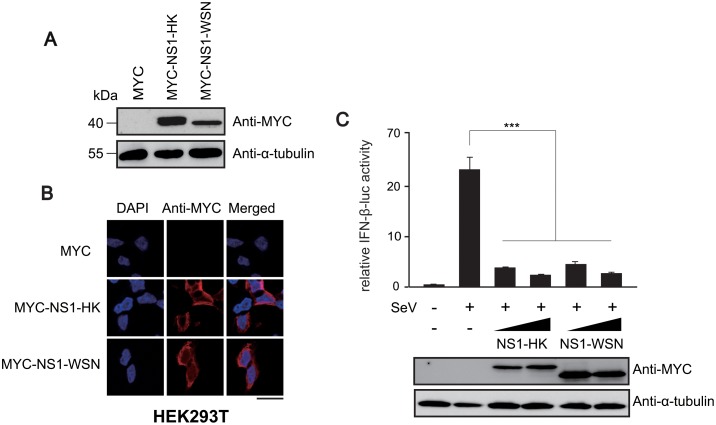
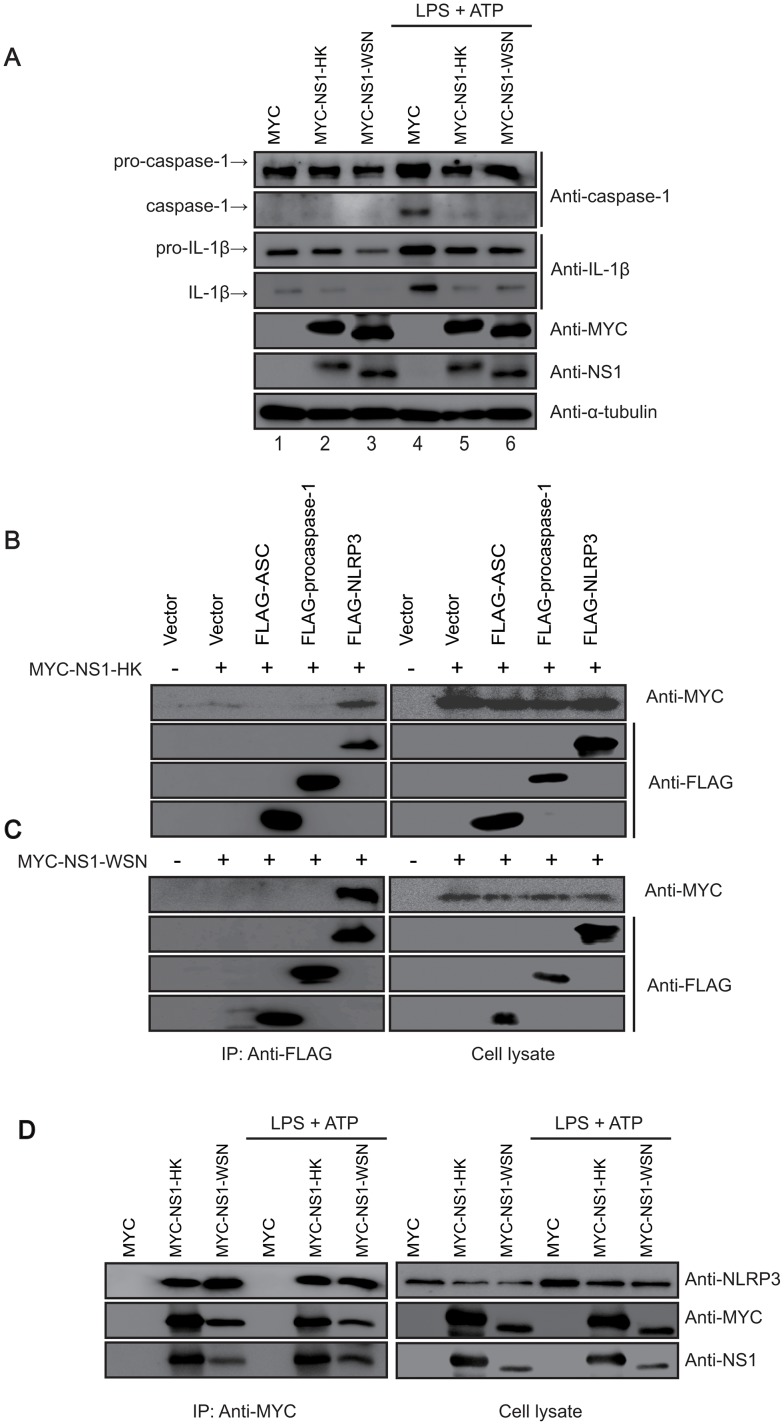
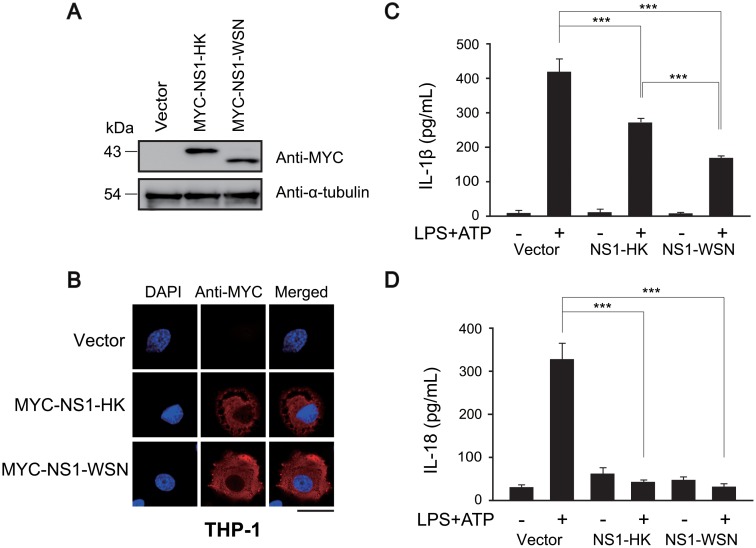
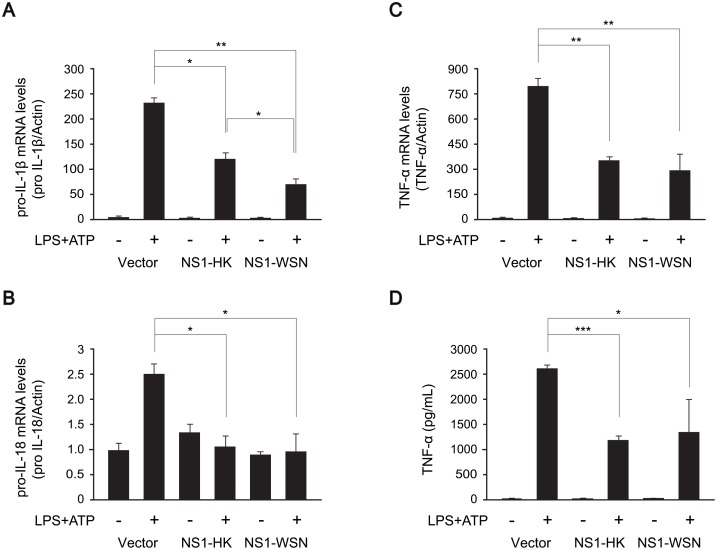
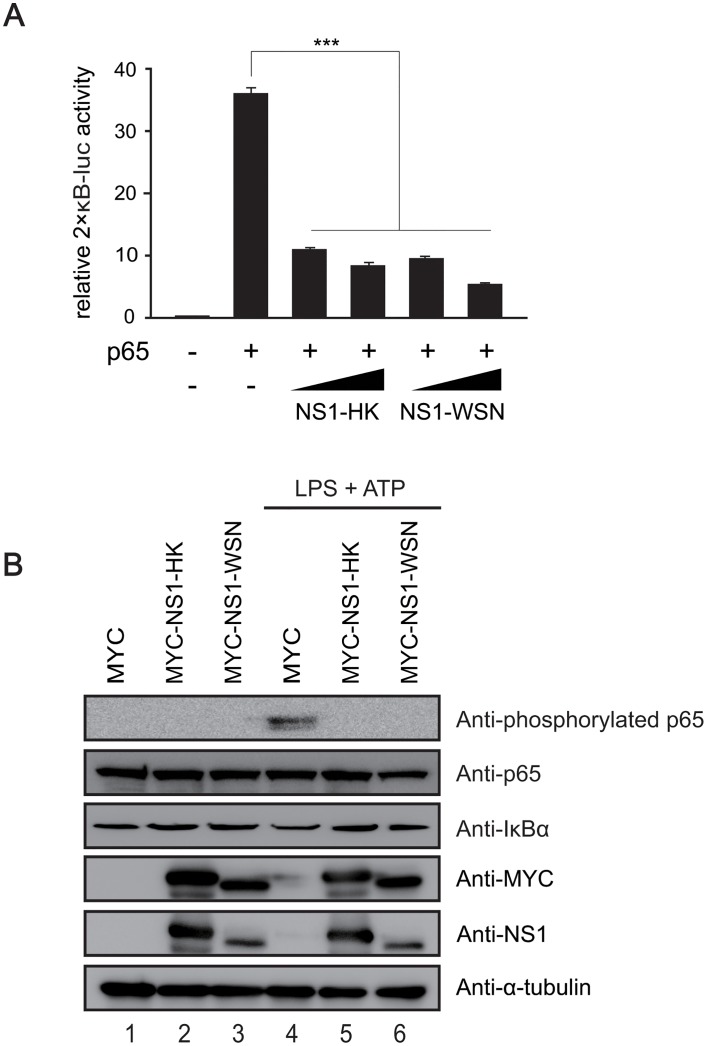
The inflammasome is a molecular platform that stimulates the activation of caspase-1 and the processing of pro-interleukin (IL)-1β and pro-IL-18 for secretion. The NOD-like receptor family, pyrin domain containing 3 (NLRP3) protein is activated by diverse molecules and pathogens, leading to the formation of the NLRP3 inflammasome. Recent studies showed that the NLRP3 inflammasome mediates innate immunity against influenza A virus (IAV) infection. In this study, we investigated the function of the IAV non-structural protein 1 (NS1) in the modulation of NLRP3 inflammasome. We found that NS1 proteins derived from both highly pathogenic and low pathogenic strains efficiently decreased secretion of IL-1β and IL-18 from THP-1 cells treated with LPS and ATP. NS1 overexpression significantly impaired the transcription of proinflammatory cytokines by inhibiting transactivation of the nuclear factor-κB (NF-κB), a major transcription activator. Furthermore, NS1 physically interacted with endogenous NLRP3 and activation of the NLRP3 inflammasome was abrogated in NS1-expressing THP-1 cells. These findings suggest that NS1 downregulates NLRP3 inflammasome activation by targeting NLRP3 as well as NF-κB, leading to a reduction in the levels of inflammatory cytokines as a viral immune evasion strategy.
炎性小体是一个分子平台,可刺激半胱天冬酶-1的激活以及促白细胞介素(IL)-1β和促IL-18的加工以进行分泌。含吡啉结构域的NOD样受体家族3(NLRP3)蛋白可被多种分子和病原体激活,导致NLRP3炎性小体的形成。最近的研究表明,NLRP3炎性小体介导针对甲型流感病毒(IAV)感染的固有免疫。在本研究中,我们调查了IAV非结构蛋白1(NS1)在调节NLRP3炎性小体中的功能。我们发现,来自高致病性和低致病性毒株的NS1蛋白均能有效降低经脂多糖(LPS)和三磷酸腺苷(ATP)处理的THP-1细胞中IL-1β和IL-18的分泌。NS1的过表达通过抑制主要转录激活因子核因子-κB(NF-κB)的反式激活,显著损害促炎细胞因子的转录。此外,NS1与内源性NLRP3发生物理相互作用,并且在表达NS1的THP-1细胞中NLRP3炎性小体的激活被消除。这些发现表明,NS1通过靶向NLRP3以及NF-κB来下调NLRP3炎性小体的激活,作为一种病毒免疫逃避策略导致炎性细胞因子水平降低。