Smirnov Aleksey, Esnault Catherine, Prigent Magali, Holland Ian Barry, Virolle Marie-Joelle
"Energetic Metabolism of Streptomyces", Institute for Integrative Biology of the Cell (I2BC), CEA, CNRS, Université Paris-Sud, Orsay, France.
Energetic Metabolism of Streptomyces, Institute for Integrative Biology of the Cell (I2BC), University Paris-Sud, Orsay, France, Sorbonne Universités, UPMC, Univ. Paris 06, UFR927, Sciences de la vie, Paris, France.
PLoS One. 2015 May 15;10(5):e0126221. doi: 10.1371/journal.pone.0126221. eCollection 2015.
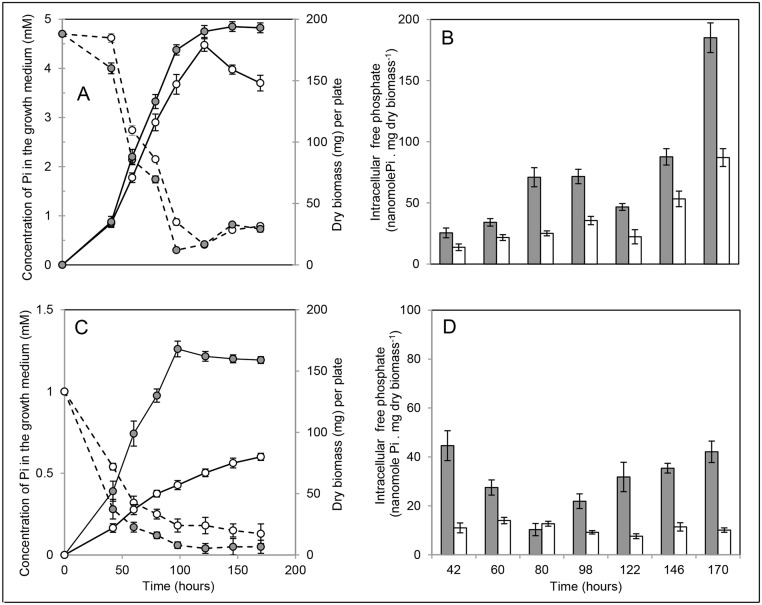
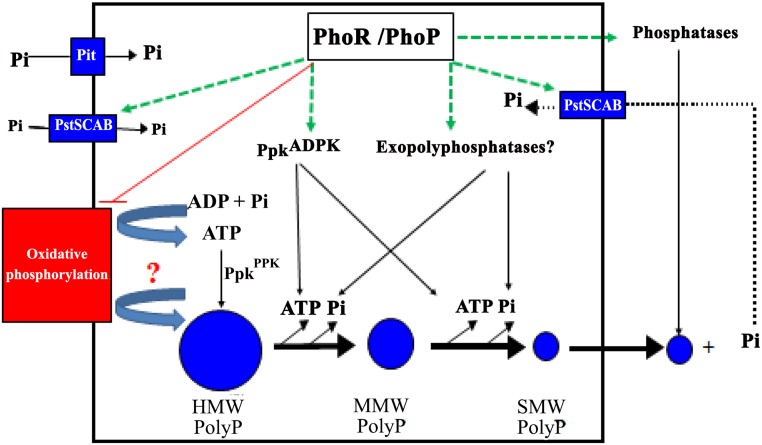
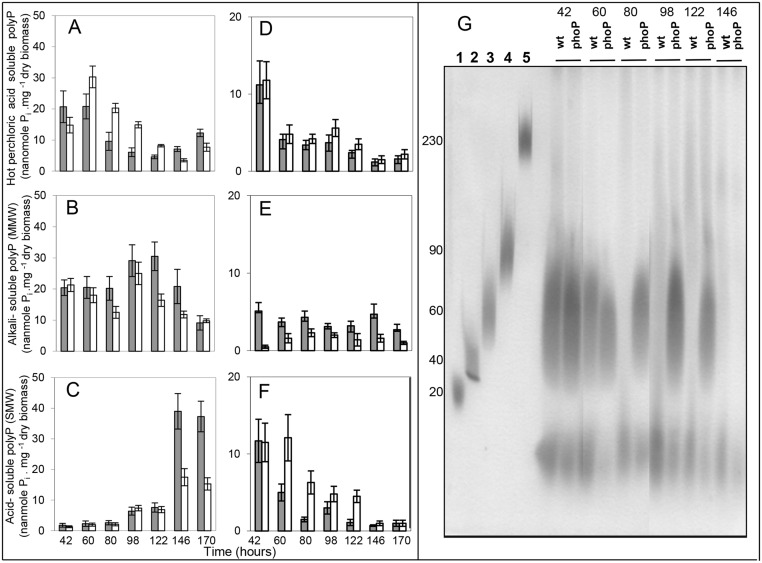
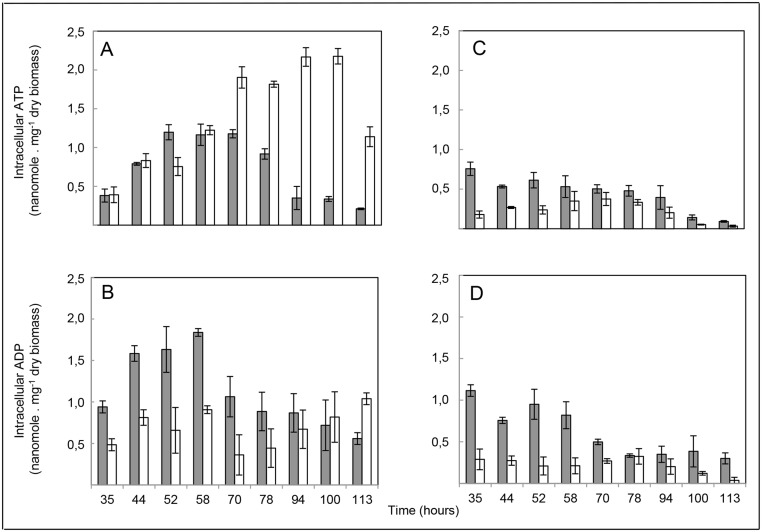
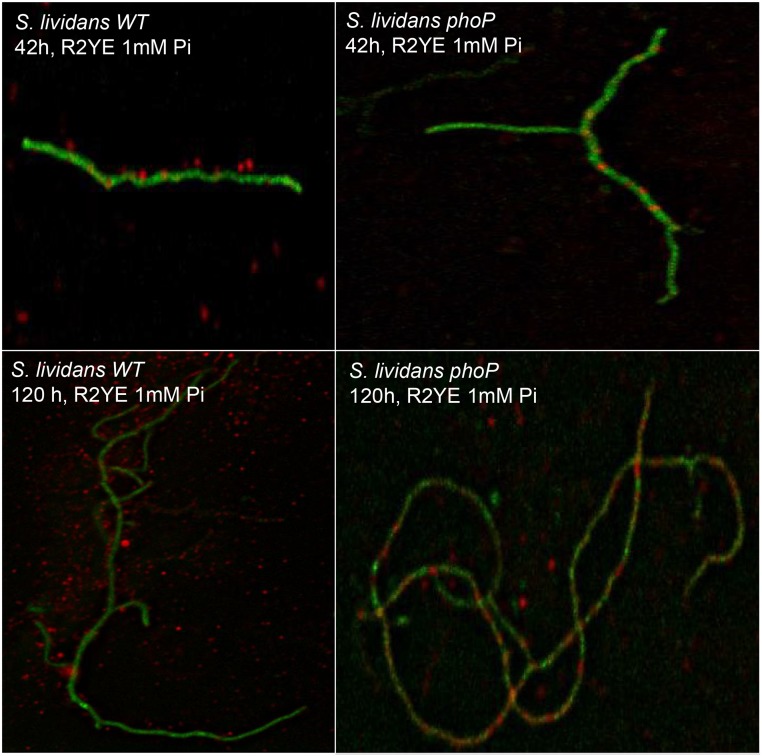
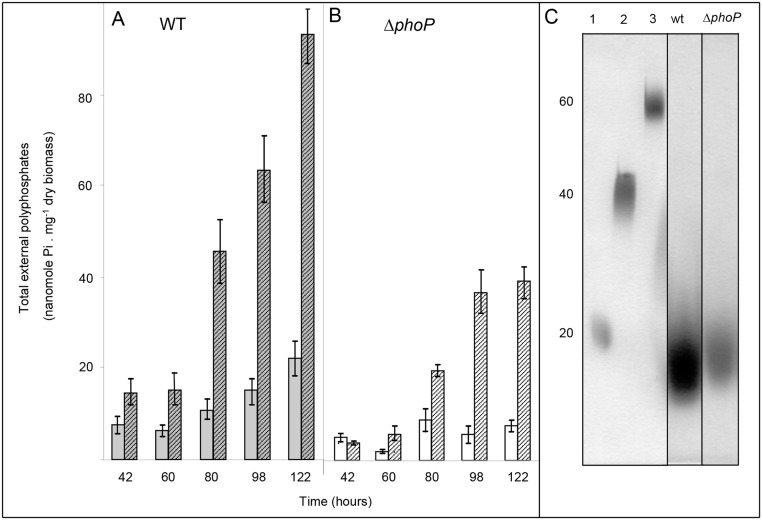
Phosphate, as a constituent of the high energy molecules, ATP/GTP and polyphosphate, plays a crucial role in most of the metabolic processes of living organisms. Therefore, the adaptation to low Pi availability is a major challenge for bacteria. In Streptomyces, this adaptation is tightly controlled by the two component PhoR/PhoP system. In this study, the free intracellular Pi, ATP, ADP and polyP content of the wild type and the phoP mutant strain of S. lividans TK24 were analyzed at discrete time points throughout growth in Pi replete and limited media. PolyP length and content was shown to be directly related to the Pi content of the growth medium. In Pi repletion, ATP and high molecular weight (HMW) polyP contents were higher in the phoP mutant than in the WT strain. This supports the recently proposed repressive effect of PhoP on oxidative phosphorylation. High oxidative phosphorylation activity might also have a direct or indirect positive impact on HMW polyP synthesis. In Pi sufficiency as in Pi limitation, the degradation of these polymers was shown to be clearly delayed in the phoP mutant, indicating PhoP dependent expression of the enzymes involved in this degradation. The efficient storage of Pi as polyphosphate and/or its inefficient degradation in Pi in the phoP mutant resulted in low levels of free Pi and ATP that are likely to be, at least in part, responsible for the very poor growth of this mutant in Pi limitation. Furthermore, short polyP was shown to be present outside the cell, tightly bound to the mycelium via electrostatic interactions involving divalent cations. Less short polyP was found to be associated with the mycelium of the phoP mutant than with that of the WT strain, indicating that generation and externalization of these short polyP molecules was directly or indirectly dependent on PhoP.
磷酸盐作为高能分子ATP/GTP和多聚磷酸盐的组成成分,在生物体的大多数代谢过程中发挥着关键作用。因此,适应低磷可用性是细菌面临的一项重大挑战。在链霉菌中,这种适应过程受到双组分PhoR/PhoP系统的严格控制。在本研究中,对天蓝色链霉菌TK24野生型和phoP突变株在富含磷和磷受限培养基中生长的不同时间点的细胞内游离磷、ATP、ADP和多聚磷酸盐含量进行了分析。结果表明,多聚磷酸盐的长度和含量与生长培养基中的磷含量直接相关。在磷充足时,phoP突变株中的ATP和高分子量(HMW)多聚磷酸盐含量高于野生型菌株。这支持了最近提出的PhoP对氧化磷酸化的抑制作用。高氧化磷酸化活性也可能对HMW多聚磷酸盐的合成有直接或间接的积极影响。在磷充足和磷受限的情况下,phoP突变株中这些聚合物的降解明显延迟,表明参与这种降解的酶的表达依赖于PhoP。phoP突变株中磷作为多聚磷酸盐的有效储存和/或其在磷中的低效降解导致游离磷和ATP水平较低,这可能至少部分是该突变株在磷受限条件下生长极差的原因。此外,短链多聚磷酸盐被证明存在于细胞外,通过涉及二价阳离子的静电相互作用与菌丝体紧密结合。与野生型菌株相比,phoP突变株的菌丝体上结合的短链多聚磷酸盐较少,这表明这些短链多聚磷酸盐分子的产生和外化直接或间接依赖于PhoP。