Cuyàs Elisabet, Fernández-Arroyo Salvador, Corominas-Faja Bruna, Rodríguez-Gallego Esther, Bosch-Barrera Joaquim, Martin-Castillo Begoña, De Llorens Rafael, Joven Jorge, Menendez Javier A
Metabolism and Cancer Group, Translational Research Laboratory, Catalan Institute of Oncology (ICO), Girona, Catalonia, Spain.
Molecular Oncology Group, Girona Biomedical Research Institute (IDIBGI), Girona, Catalonia, Spain.
Oncotarget. 2015 May 20;6(14):12279-96. doi: 10.18632/oncotarget.3733.
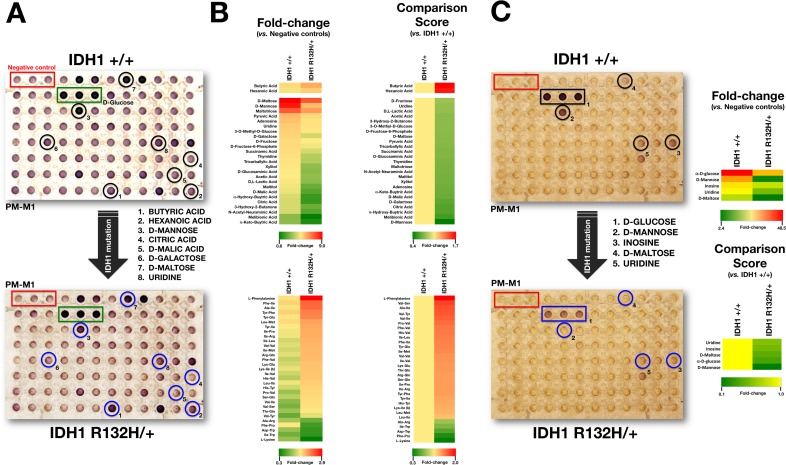
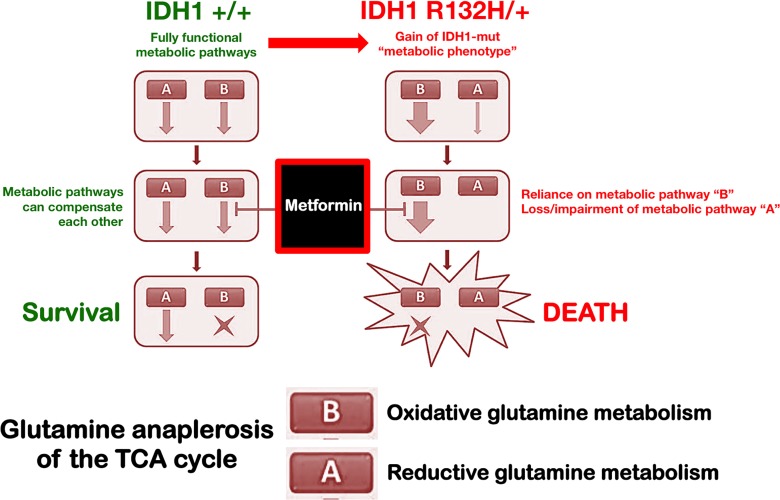
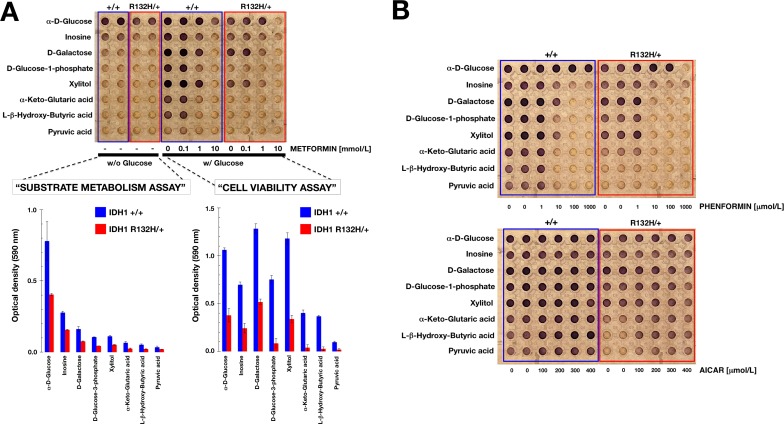
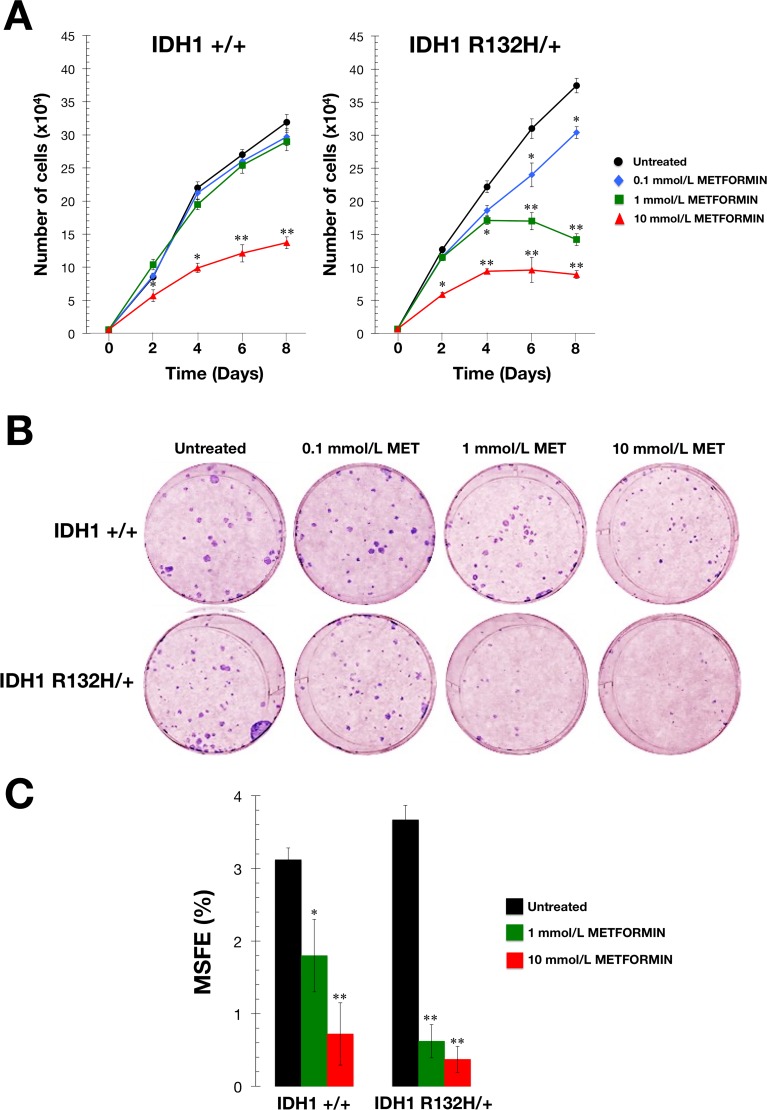
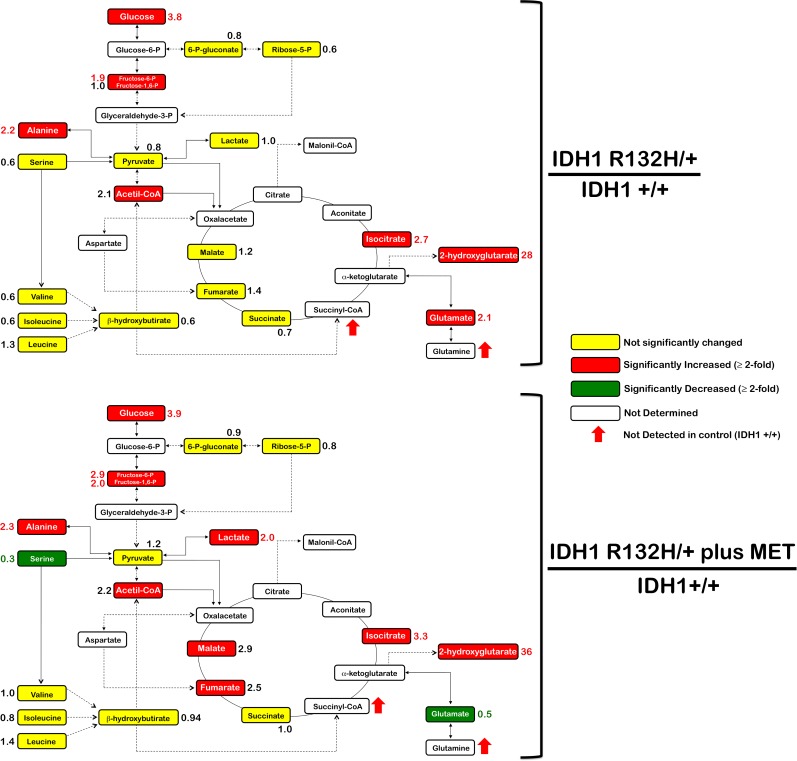
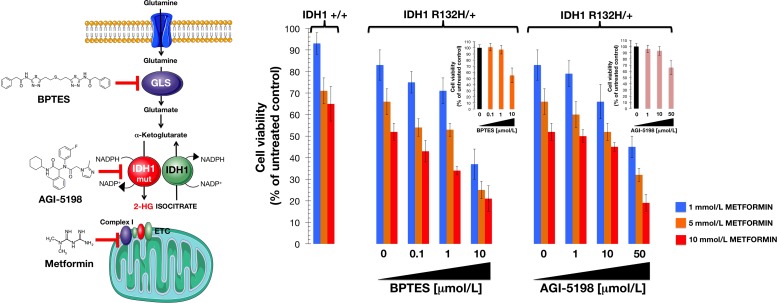
Metabolic flexibility might be particularly constrained in tumors bearing mutations in isocitrate dehydrogenase 1 (IDH1) leading to the production of the oncometabolite 2-hydroxygluratate (2HG). To test the hypothesis that IDH1 mutations could generate metabolic vulnerabilities for therapeutic intervention, we utilized an MCF10A cell line engineered with an arginine-to-histidine conversion at position 132 (R132H) in the catalytic site of IDH1, which equips the enzyme with a neomorphic α-ketoglutarate to 2HG reducing activity in an otherwise isogenic background. IDH1 R132H/+ and isogenic IDH1 +/+ parental cells were screened for their ability to generate energy-rich NADH when cultured in a standardized high-throughput Phenotype MicroArrayplatform comprising >300 nutrients. A radical remodeling of the metabotype occurred in cells carrying the R132H mutation since they presented a markedly altered ability to utilize numerous carbon catabolic fuels. A mitochondria toxicity-screening modality confirmed a severe inability of IDH1-mutated cells to use various carbon substrates that are fed into the electron transport chain at different points. The mitochondrial biguanide poisons, metformin and phenformin, further impaired the intrinsic weakness of IDH1-mutant cells to use certain carbon-energy sources. Additionally, metabolic reprogramming of IDH1-mutant cells increased their sensitivity to metformin in assays of cell proliferation, clonogenic potential, and mammosphere formation. Targeted metabolomics studies revealed that the ability of metformin to interfere with the anaplerotic entry of glutamine into the tricarboxylic acid cycle could explain the hypersensitivity of IDH1-mutant cells to biguanides. Moreover, synergistic interactions occurred when metformin treatment was combined with the selective R132H-IDH1 inhibitor AGI-5198. Together, these results suggest that therapy involving the simultaneous targeting of metabolic vulnerabilities with metformin, and 2HG overproduction with mutant-selective inhibitors (AGI-5198-related AG-120 [Agios]), might represent a worthwhile avenue of exploration in the treatment of IDH1-mutated tumors.
代谢灵活性可能在携带异柠檬酸脱氢酶1(IDH1)突变的肿瘤中受到特别限制,这种突变会导致产生致癌代谢物2-羟基戊二酸(2HG)。为了验证IDH1突变可能产生代谢脆弱性以供治疗干预的假设,我们利用了一种MCF10A细胞系,该细胞系在IDH1催化位点的第132位由精氨酸突变为组氨酸(R132H),这使得该酶在同基因背景下具有新形态的α-酮戊二酸还原为2HG的活性。在一个包含300多种营养物质的标准化高通量表型微阵列平台上培养时,对IDH1 R132H/+和同基因IDH1 +/+亲本细胞产生富含能量的NADH的能力进行了筛选。携带R132H突变的细胞发生了代谢型的彻底重塑,因为它们利用多种碳分解代谢燃料的能力明显改变。一种线粒体毒性筛选方法证实,IDH1突变细胞严重无法利用在电子传递链不同点进入的各种碳底物。线粒体双胍类毒物二甲双胍和苯乙双胍进一步损害了IDH1突变细胞利用某些碳能源的内在弱点。此外,在细胞增殖、克隆形成潜力和乳腺球形成试验中,IDH1突变细胞的代谢重编程增加了它们对二甲双胍的敏感性。靶向代谢组学研究表明,二甲双胍干扰谷氨酰胺进入三羧酸循环的回补途径的能力可以解释IDH1突变细胞对双胍类药物的超敏感性。此外,当二甲双胍治疗与选择性R132H-IDH1抑制剂AGI-5198联合使用时,会发生协同相互作用。总之,这些结果表明,同时靶向代谢脆弱性的二甲双胍治疗以及用突变体选择性抑制剂(与AGI-5198相关的AG-120 [Agios])抑制2HG过量产生的疗法可能是治疗IDH1突变肿瘤的一个值得探索途径。