White Kris M, De Jesus Paul, Chen Zhong, Abreu Pablo, Barile Elisa, Mak Puiying A, Anderson Paul, Nguyen Quy T, Inoue Atsushi, Stertz Silke, Koenig Renate, Pellecchia Maurizio, Palese Peter, Kuhen Kelli, García-Sastre Adolfo, Chanda Sumit K, Shaw Megan L
Department of Microbiology, Icahn School of Medicine at Mount Sinai , New York, New York 10029, United States.
Infectious and Inflammatory Disease Center, Sanford-Burnham Medical Research Institute , 10901 North Torrey Pines Road, La Jolla, California 92037, United States.
ACS Infect Dis. 2015 Feb 13;1(2):98-109. doi: 10.1021/id500022h. Epub 2014 Dec 15.
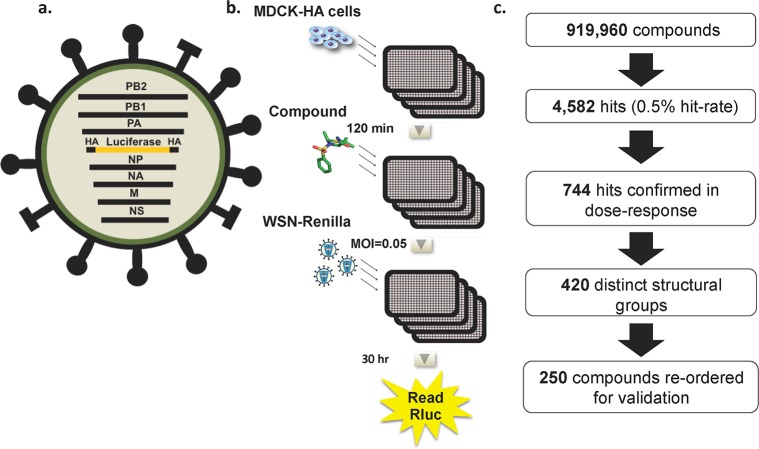
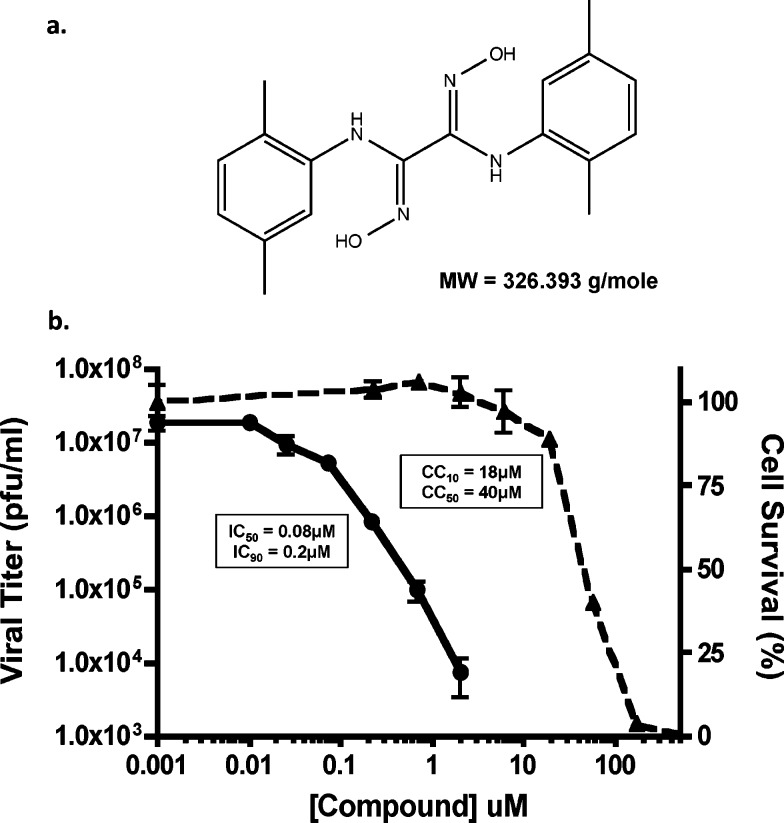
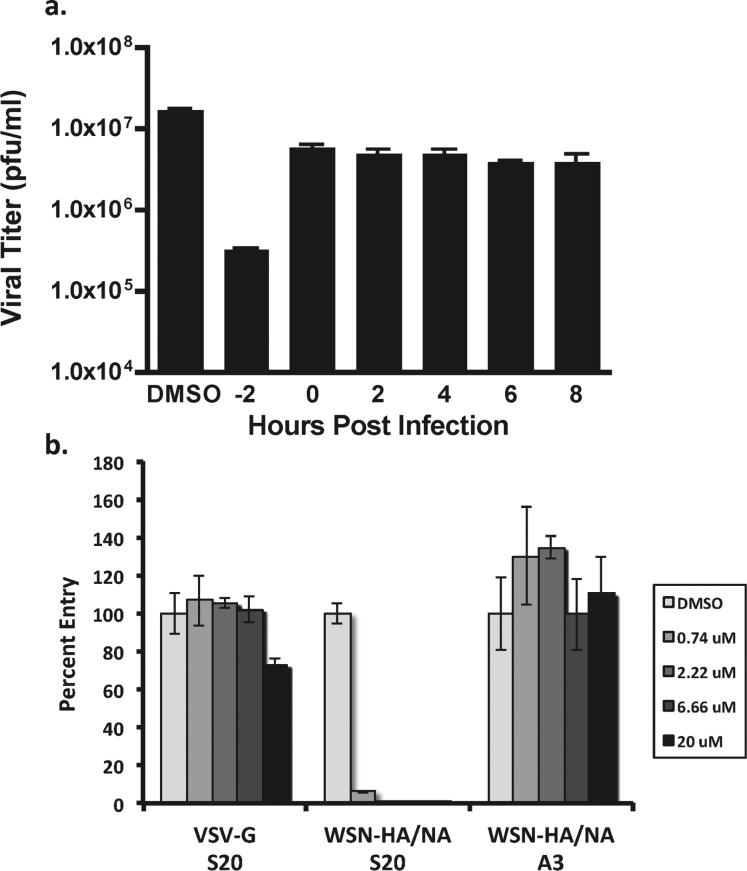
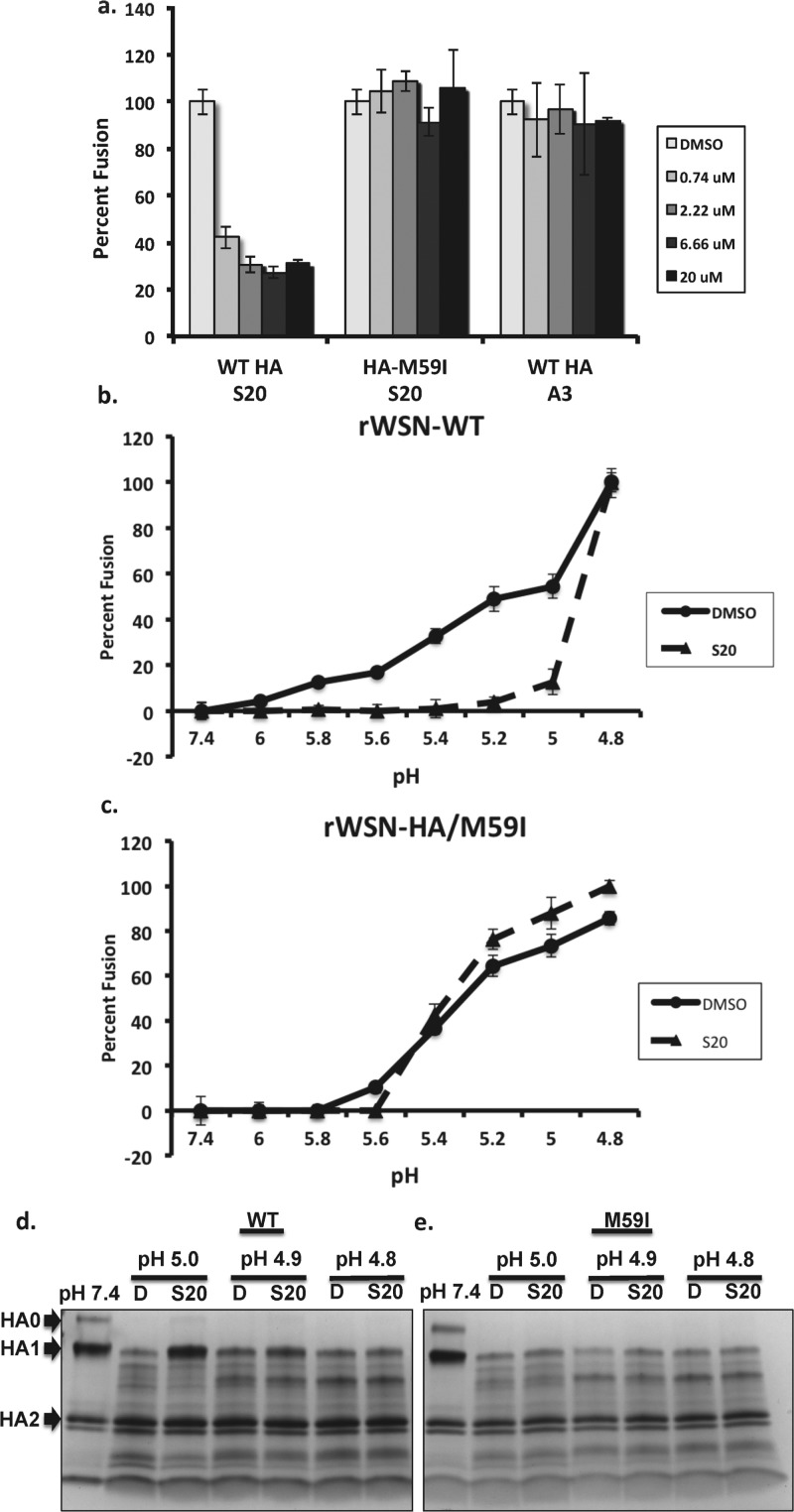
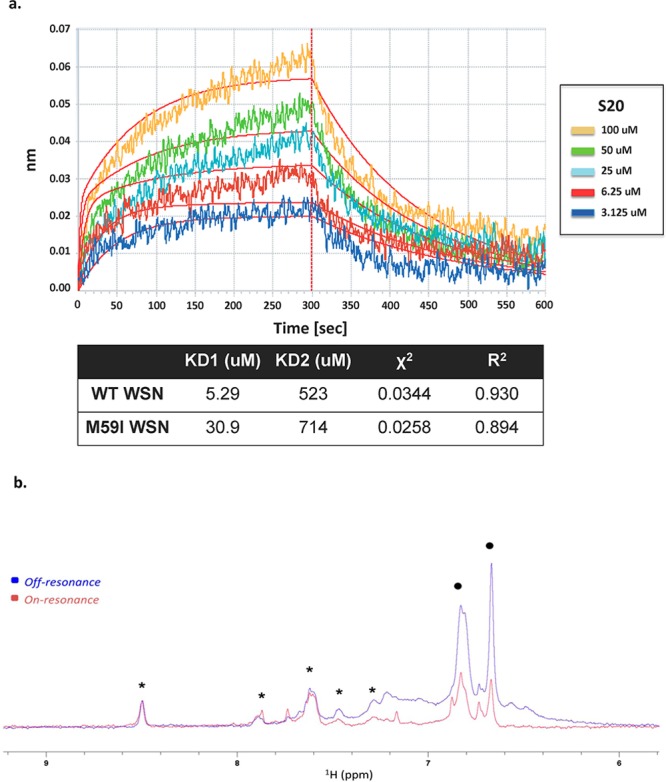
An ultrahigh-throughput screen was performed to identify novel small molecule inhibitors of influenza virus replication. The screen employed a recombinant influenza A/WSN/33 virus expressing luciferase and yielded a hit rate of 0.5%, of which the vast majority showed little cytotoxicity at the inhibitory concentration. One of the top hits from this screen, designated S20, inhibits HA-mediated membrane fusion. S20 shows potent antiviral activity (IC = 80 nM) and low toxicity (CC = 40 μM), yielding a selectivity index of 500 and functionality against all of the group 1 influenza A viruses tested in this study, including the pandemic H1N1 and avian H5N1 viruses. Mechanism of action studies proved a direct S20-HA interaction and showed that S20 inhibits fusion by stabilizing the prefusion conformation of HA. In silico docking studies were performed, and the predicted binding site in HA2 corresponds with the area where resistance mutations occurred and correlates with the known role of this region in fusion. This high-throughput screen has yielded many promising new lead compounds, including S20, which will potentially shed light on the molecular mechanisms of viral infection and serve as research tools or be developed for clinical use as antivirals.
进行了一项超高通量筛选,以鉴定新型流感病毒复制小分子抑制剂。该筛选采用了一种表达荧光素酶的重组甲型流感病毒A/WSN/33,命中率为0.5%,其中绝大多数在抑制浓度下几乎没有细胞毒性。该筛选中排名靠前的一个命中物,命名为S20,可抑制HA介导的膜融合。S20显示出强大的抗病毒活性(IC = 80 nM)和低毒性(CC = 40 μM),选择性指数为500,并且对本研究中测试的所有1组甲型流感病毒均有作用,包括大流行的H1N1和禽流感H5N1病毒。作用机制研究证明了S20与HA直接相互作用,并表明S20通过稳定HA的融合前构象来抑制融合。进行了计算机对接研究,预测的HA2结合位点与抗性突变发生的区域相对应,并且与该区域在融合中的已知作用相关。这种高通量筛选产生了许多有前景的新先导化合物,包括S20,这可能会揭示病毒感染的分子机制,并用作研究工具或开发为临床使用的抗病毒药物。