Département de microbiologie, infectiologie et immunologie, Université de Montréal, Montréal, Québec, Canada H3C 3J7.
Département de microbiologie, infectiologie et immunologie, Université de Montréal, Montréal, Québec, Canada H3C 3J7.
Virology. 2015 Sep;483:229-35. doi: 10.1016/j.virol.2015.04.020. Epub 2015 May 15.
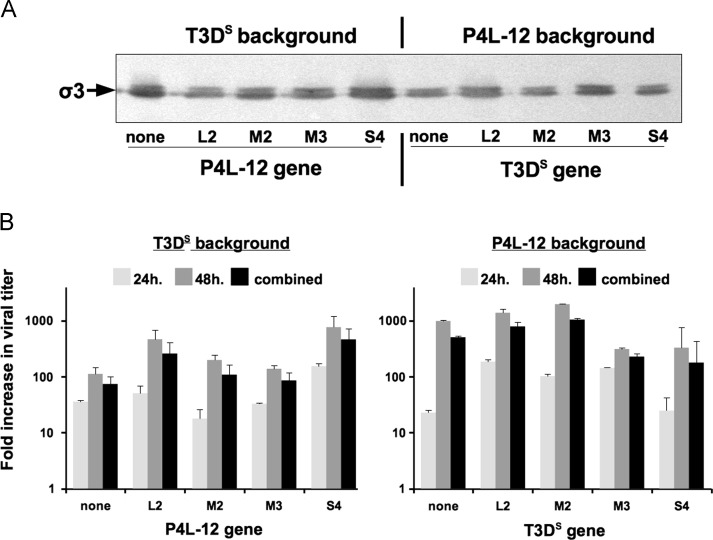
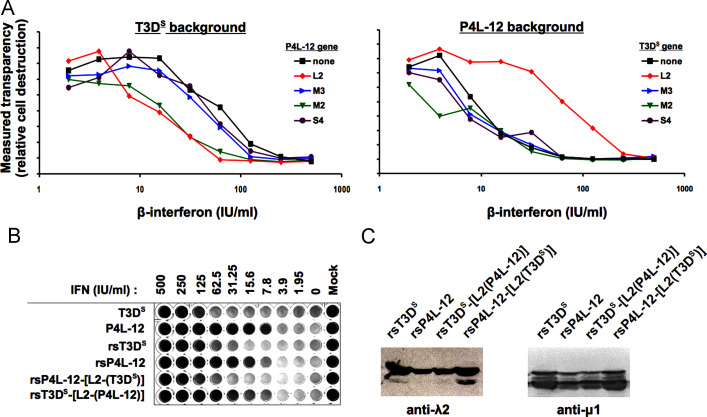
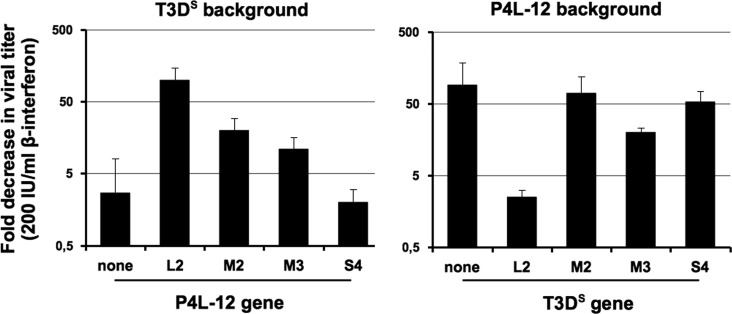
In the last few years, the development of a plasmid-based reverse genetics system for mammalian reovirus has allowed the production and characterization of mutant viruses. This could be especially significant in the optimization of reovirus strains for virotherapeutic applications, either as gene vectors or oncolytic viruses. The genome of a mutant virus exhibiting increased sensitivity to interferon was completely sequenced and compared with its parental virus. Viruses corresponding to either the parental or mutant viruses were then rescued by reverse genetics and shown to exhibit the expected phenotypes. Systematic rescue of different viruses harboring either of the four parental genes in a mutant virus backbone, or reciprocally, indicated that a single amino acid substitution in one of λ2 methyltransferase domains is the major determinant of the difference in interferon sensitivity between these two viruses.
在过去的几年中,哺乳动物呼肠孤病毒基于质粒的反向遗传学系统的发展允许产生和表征突变病毒。这在优化呼肠孤病毒株用于病毒治疗应用方面可能特别重要,无论是作为基因载体还是溶瘤病毒。表现出对干扰素敏感性增加的突变病毒的基因组被完全测序,并与亲本病毒进行比较。通过反向遗传学拯救相应的亲本病毒或突变病毒,并证明它们表现出预期的表型。系统地拯救携带突变病毒骨架中任一个亲本基因的不同病毒,或者反过来,表明在这两种病毒之间干扰素敏感性差异的主要决定因素是一个 λ2 甲基转移酶结构域中的单个氨基酸取代。