Murphy Andrew, Semenov Alexander, Korneev Alexander, Korneeva Yulia, Gol'tsman Gregory, Bezryadin Alexey
Department of Physics, University of Illinois at Urbana-Champaign, Urbana, Illinois 61801, USA.
1] Moscow State Pedagogical University, 1 Malaya Pirogovskaya, 119991 Moscow, Russia [2] Moscow Institute of Physics and Technology, 141700, Dolgoprudny, Moscow Region, Russia.
Sci Rep. 2015 May 19;5:10174. doi: 10.1038/srep10174.
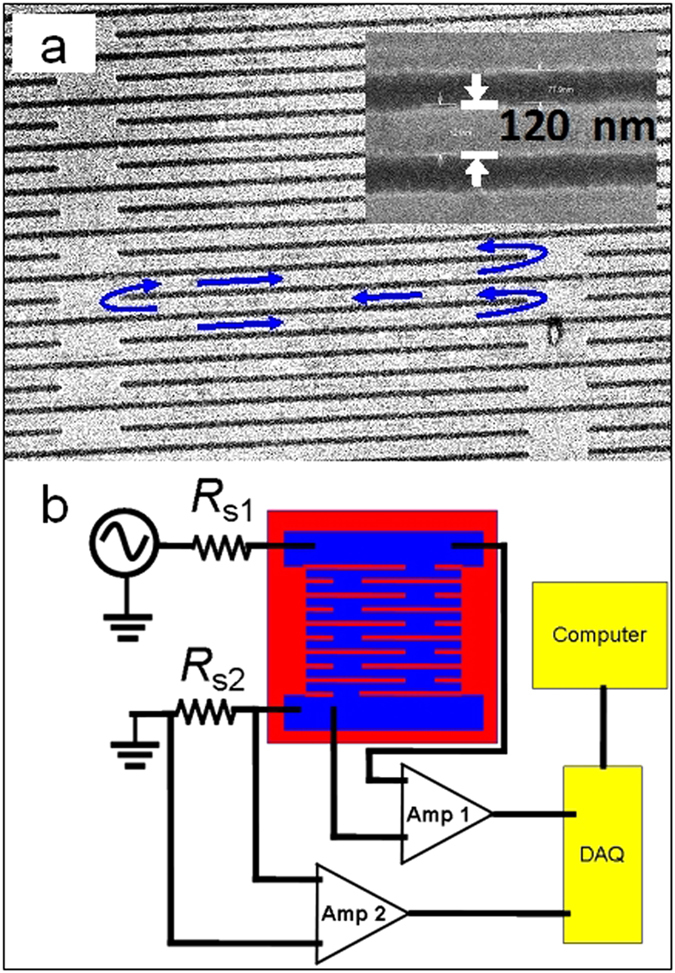
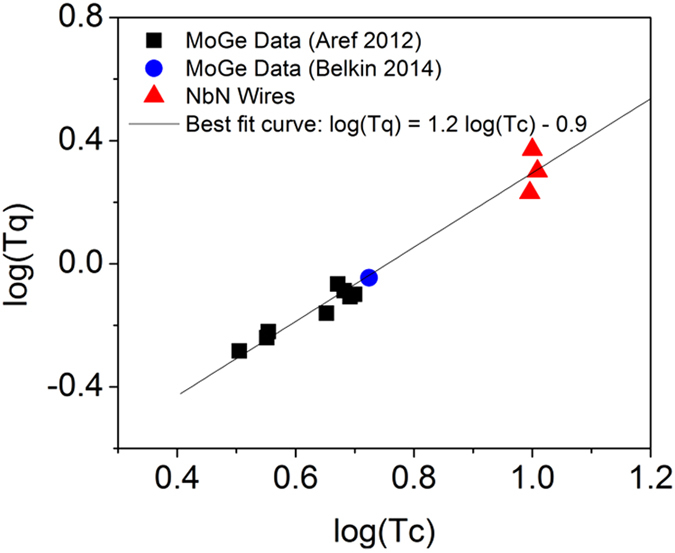
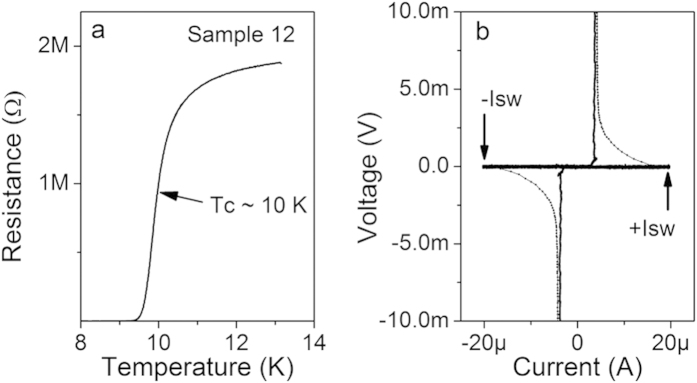
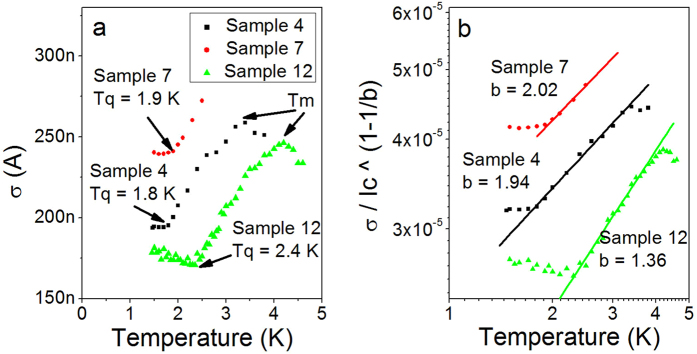
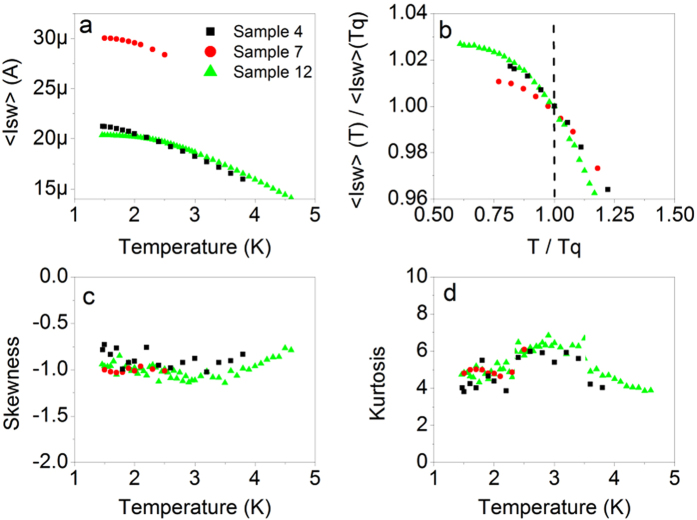
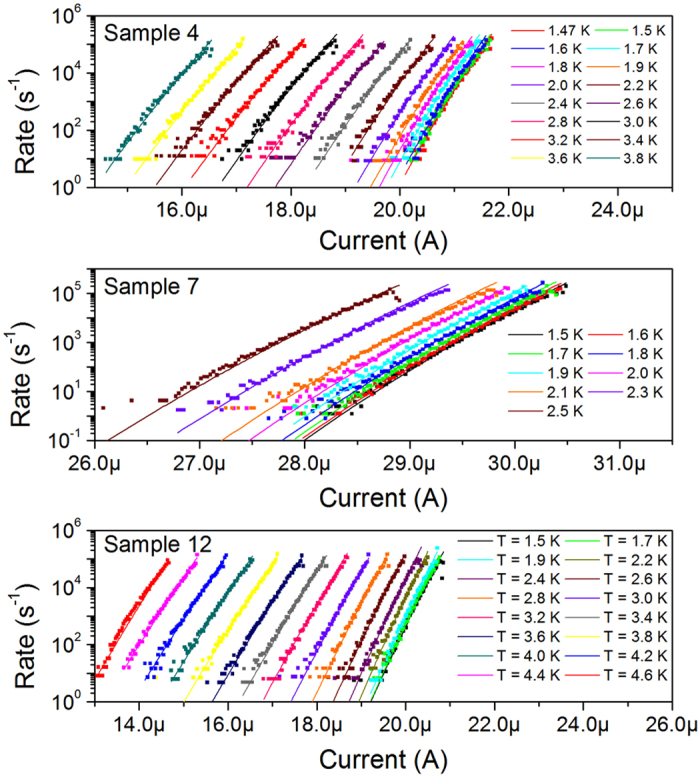
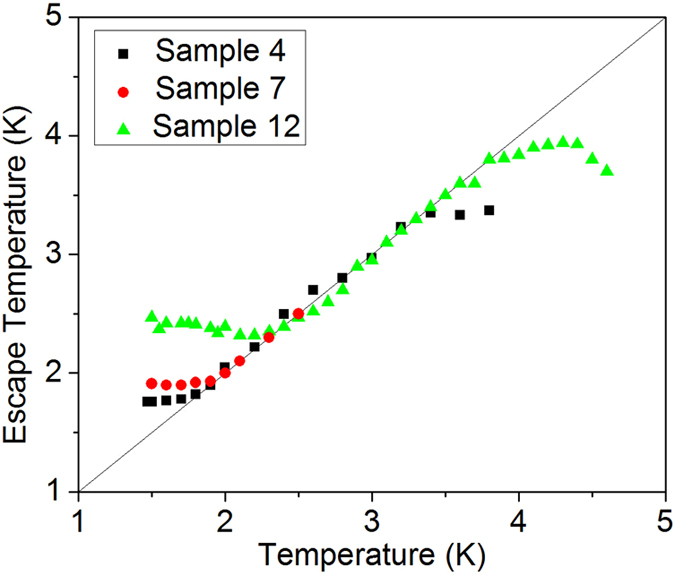
We perform measurements of the switching current distributions of three w ≈ 120 nm wide, 4 nm thick NbN superconducting strips which are used for single-photon detectors. These strips are much wider than the diameter of the vortex cores, so they are classified as quasi-two-dimensional (quasi-2D). We discover evidence of macroscopic quantum tunneling by observing the saturation of the standard deviation of the switching distributions at temperatures around 2 K. We analyze our results using the Kurkijärvi-Garg model and find that the escape temperature also saturates at low temperatures, confirming that at sufficiently low temperatures, macroscopic quantum tunneling is possible in quasi-2D strips and can contribute to dark counts observed in single photon detectors. At the highest temperatures the system enters a multiple phase-slip regime. In this range single phase-slips are unable to produce dark counts and the fluctuations in the switching current are reduced.
我们对三条宽度约为120纳米、厚度为4纳米的用于单光子探测器的氮化铌超导条带的开关电流分布进行了测量。这些条带比涡旋核的直径宽得多,因此它们被归类为准二维(准2D)。通过观察在约2K温度下开关分布的标准差的饱和情况,我们发现了宏观量子隧穿的证据。我们使用库尔基耶尔维 - 加尔格模型分析了我们的结果,发现逃逸温度在低温下也会饱和,这证实了在足够低的温度下,宏观量子隧穿在准2D条带中是可能的,并且会导致单光子探测器中观察到的暗计数。在最高温度下,系统进入多相位滑移状态。在此范围内,单相位滑移无法产生暗计数,并且开关电流的波动会减小。