David Lawrence A, Weil Ana, Ryan Edward T, Calderwood Stephen B, Harris Jason B, Chowdhury Fahima, Begum Yasmin, Qadri Firdausi, LaRocque Regina C, Turnbaugh Peter J
Society of Fellows, Harvard University, Cambridge, Massachusetts, USA FAS Center for Systems Biology, Harvard University, Cambridge, Massachusetts, USA.
Center for Vaccine Sciences, International Centre for Diarrhoeal Disease Research, Dhaka, Bangladesh.
mBio. 2015 May 19;6(3):e00381-15. doi: 10.1128/mBio.00381-15.
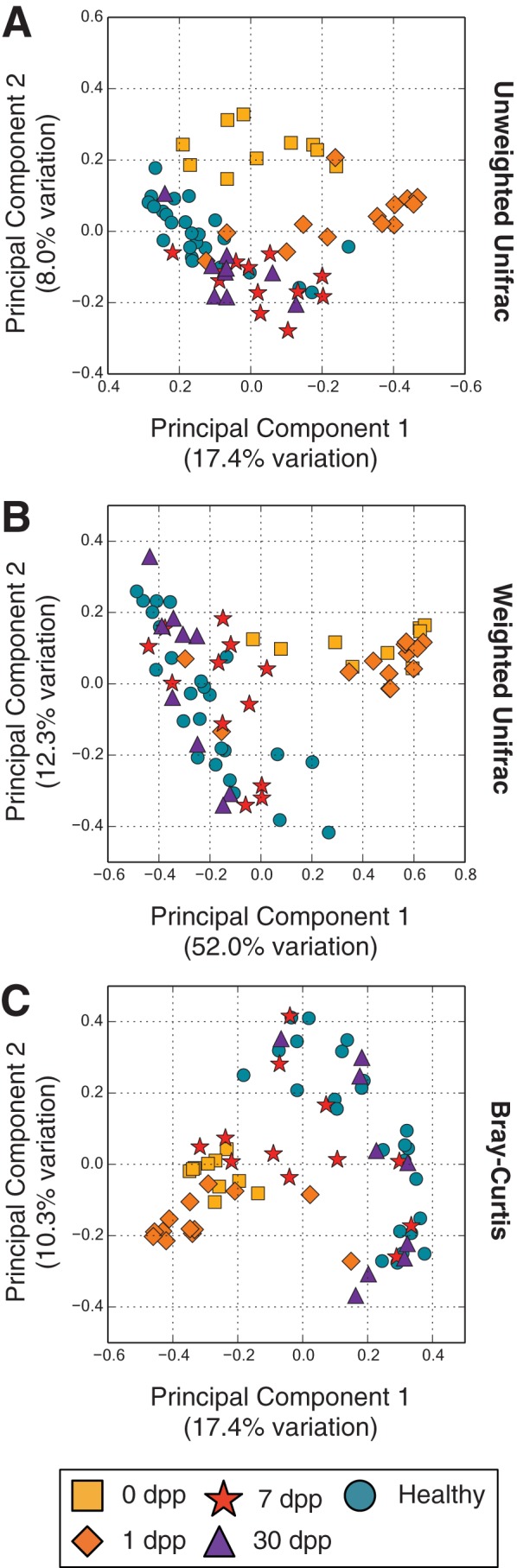
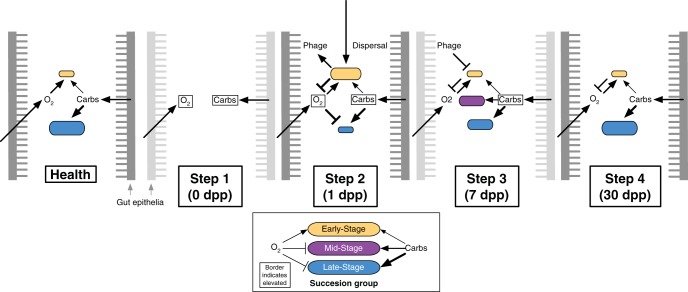
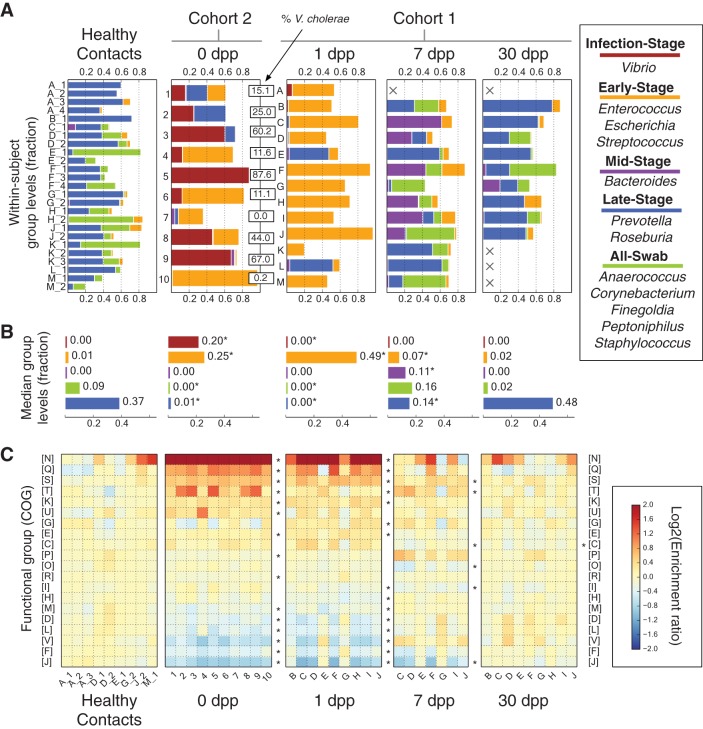
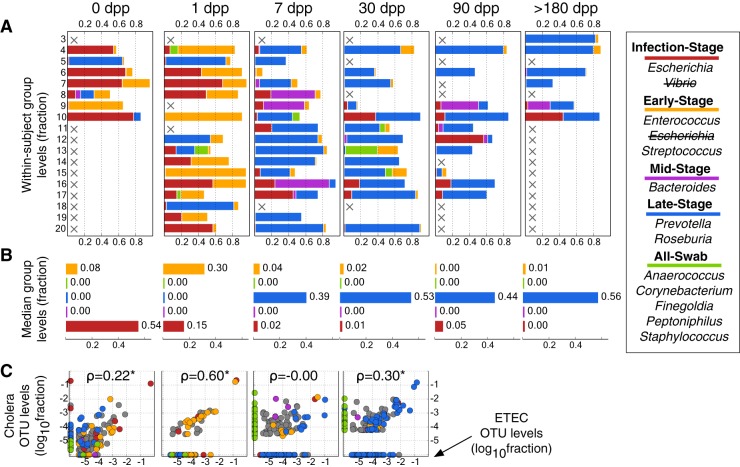
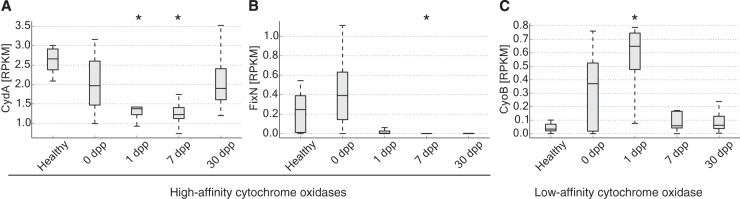
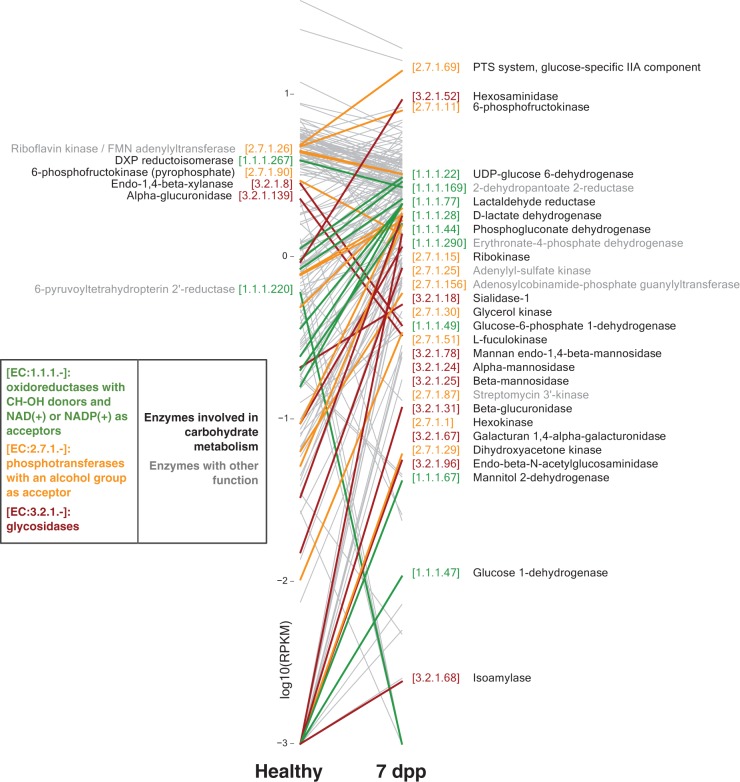
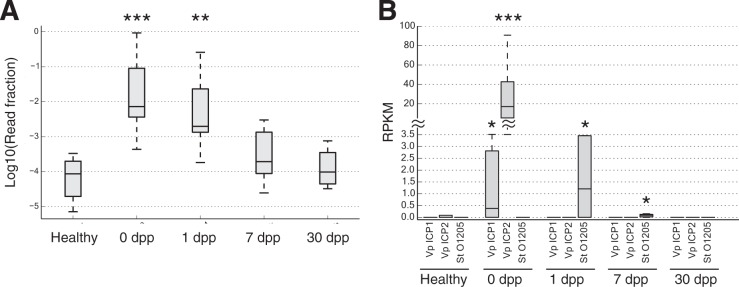
Disability after childhood diarrhea is an important burden on global productivity. Recent studies suggest that gut bacterial communities influence how humans recover from infectious diarrhea, but we still lack extensive data and mechanistic hypotheses for how these bacterial communities respond to diarrheal disease and its treatment. Here, we report that after Vibrio cholerae infection, the human gut microbiota undergoes an orderly and reproducible succession that features transient reversals in relative levels of enteric Bacteroides and Prevotella. Elements of this succession may be a common feature in microbiota recovery from acute secretory diarrhea, as we observed similar successional dynamics after enterotoxigenic Escherichia coli (ETEC) infection. Our metagenomic analyses suggest that multiple mechanisms drive microbial succession after cholera, including bacterial dispersal properties, changing enteric oxygen and carbohydrate levels, and phage dynamics. Thus, gut microbiota recovery after cholera may be predictable at the level of community structure but is driven by a complex set of temporally varying ecological processes. Our findings suggest opportunities for diagnostics and therapies targeting the gut microbiota in humans recovering from infectious diarrhea.
Disability after diarrhea is a major burden on public health in the developing world. Gut bacteria may affect this recovery, but it remains incompletely understood how resident microbes in the digestive tract respond to diarrheal illness. Here, we observed an orderly and reproducible succession of gut bacterial groups after cholera in humans. Genomic analyses associated the succession with bacterial dispersal in food, an altered microbial environment, and changing phage levels. Our findings suggest that it may one day be feasible to manage resident bacterial populations in the gut after infectious diarrhea.
儿童期腹泻后的残疾是全球生产力的一项重要负担。近期研究表明,肠道细菌群落会影响人类从感染性腹泻中恢复的方式,但我们仍缺乏关于这些细菌群落如何应对腹泻疾病及其治疗的广泛数据和机制假说。在此,我们报告称,霍乱弧菌感染后,人类肠道微生物群会经历有序且可重复的演替,其特征为肠道拟杆菌属和普雷沃菌属相对水平的短暂逆转。这种演替的要素可能是微生物群从急性分泌性腹泻中恢复的一个共同特征,因为我们在产肠毒素大肠杆菌(ETEC)感染后观察到了类似的演替动态。我们的宏基因组分析表明,多种机制驱动霍乱后的微生物演替,包括细菌扩散特性、肠道氧气和碳水化合物水平的变化以及噬菌体动态。因此,霍乱后肠道微生物群的恢复在群落结构层面可能是可预测的,但由一系列复杂的随时间变化的生态过程驱动。我们的研究结果提示了针对从感染性腹泻中恢复的人类肠道微生物群进行诊断和治疗的机会。
腹泻后的残疾是发展中世界公共卫生的一项重大负担。肠道细菌可能会影响这种恢复,但消化道中的常驻微生物如何应对腹泻疾病仍未完全了解。在此,我们观察到人类霍乱后肠道细菌群有有序且可重复的演替。基因组分析将这种演替与食物中的细菌扩散、改变的微生物环境以及噬菌体水平的变化联系起来。我们的研究结果表明,未来有一天在感染性腹泻后管理肠道中的常驻细菌种群可能是可行的。