O'Neill Katherine, Bradley Judy M, Johnston Elinor, McGrath Stephanie, McIlreavey Leanne, Rowan Stephen, Reid Alastair, Bradbury Ian, Einarsson Gisli, Elborn J Stuart, Tunney Michael M
CF and Airways Microbiology Research Group, Queen's University Belfast, Belfast, United Kingdom; Centre for Infection and Immunity, School of Medicine, Dentistry and Biomedical Sciences, Queen's University Belfast, Belfast, United Kingdom.
Centre for Health and Rehabilitation Technologies (CHART), University of Ulster, Belfast, United Kingdom.
PLoS One. 2015 May 20;10(5):e0126980. doi: 10.1371/journal.pone.0126980. eCollection 2015.
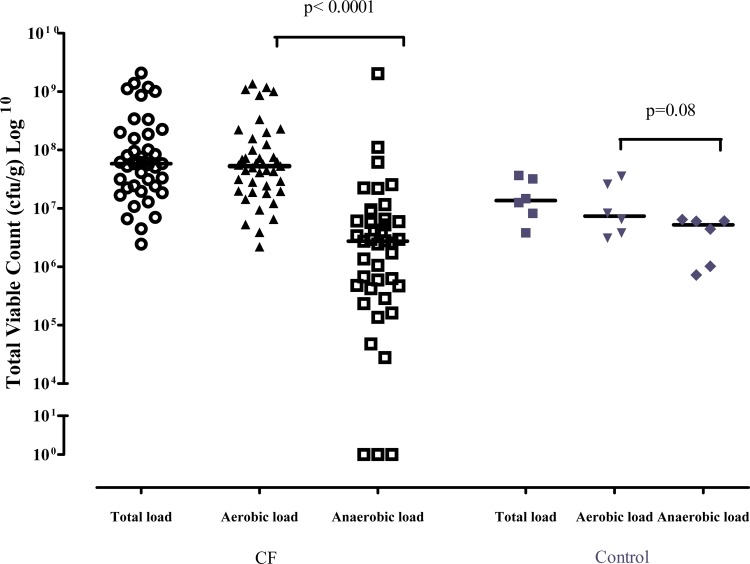
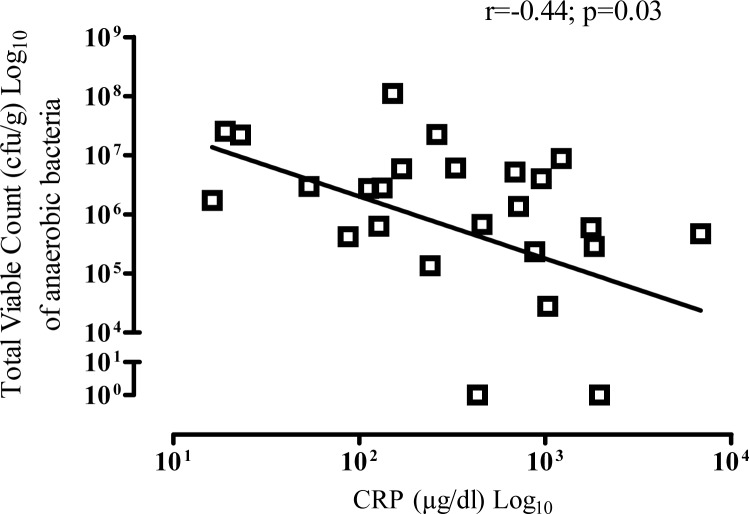
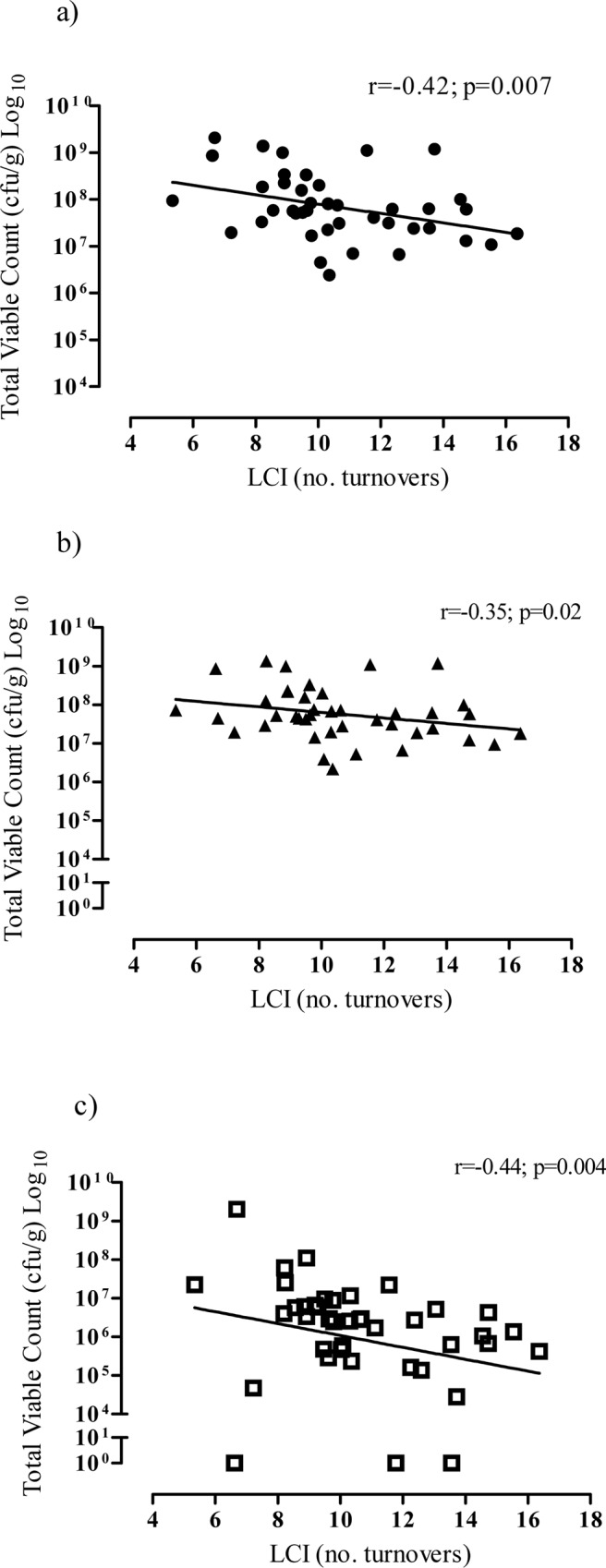
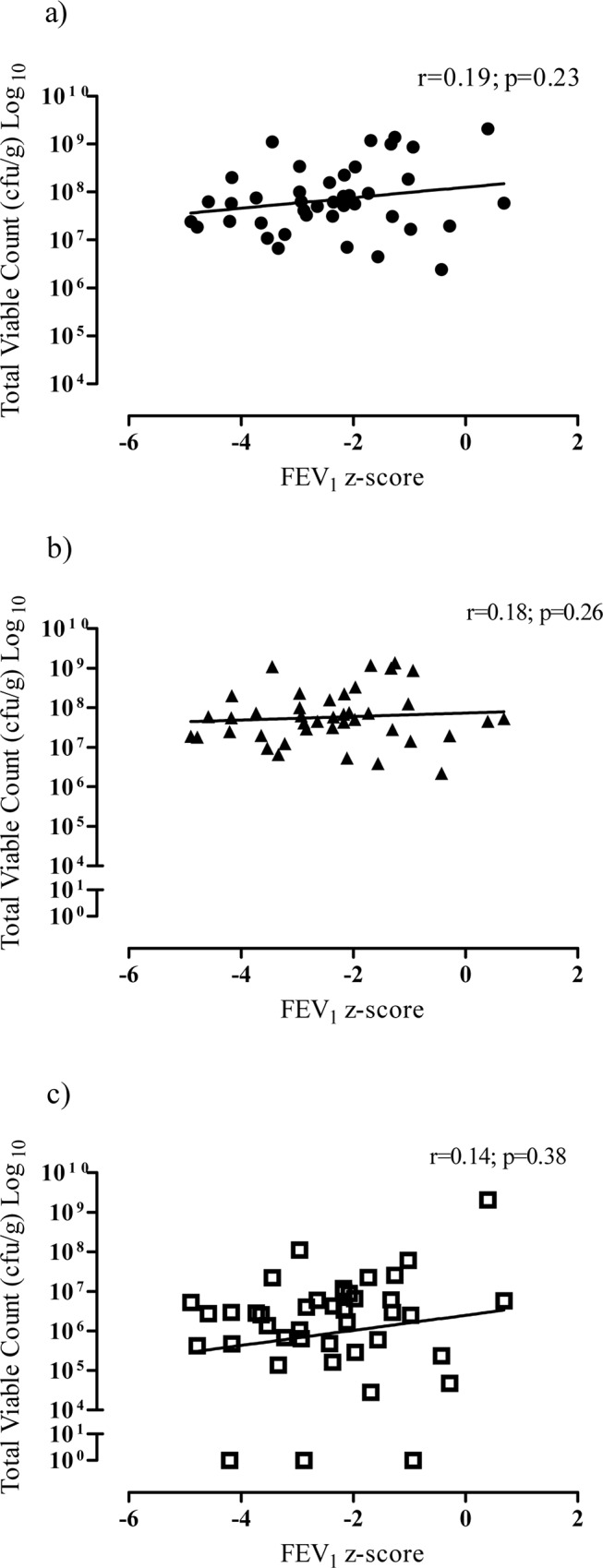
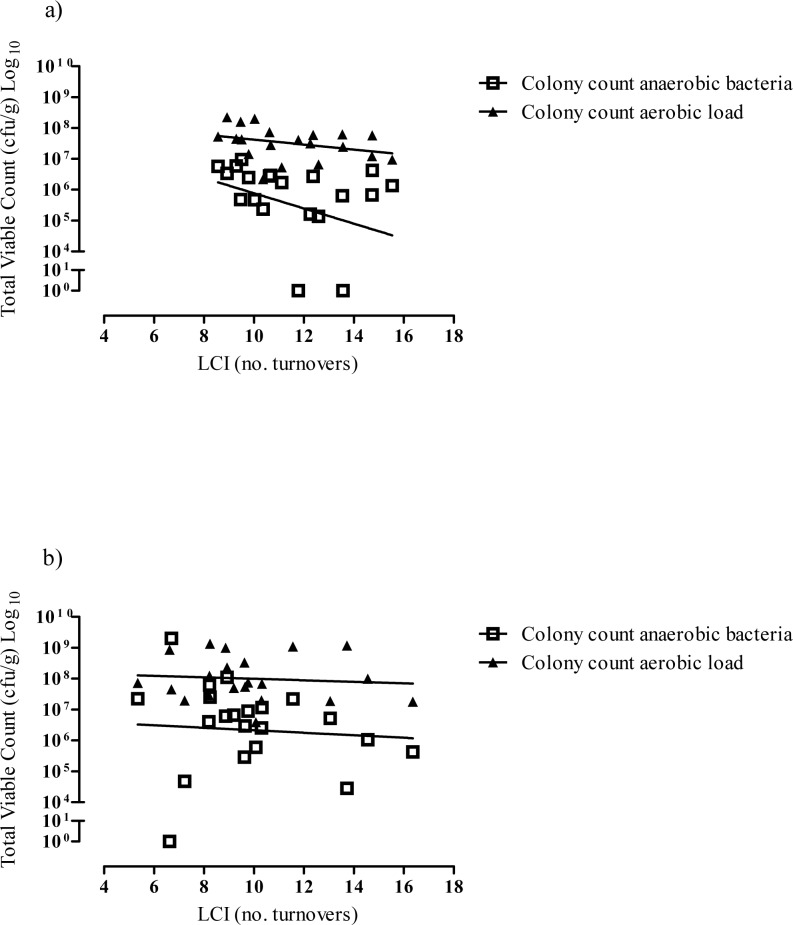
Anaerobic bacteria have been identified in abundance in the airways of cystic fibrosis (CF) subjects. The impact their presence and abundance has on lung function and inflammation is unclear. The aim of this study was to investigate the relationship between the colony count of aerobic and anaerobic bacteria, lung clearance index (LCI), spirometry and C-Reactive Protein (CRP) in patients with CF. Sputum and blood were collected from CF patients at a single cross-sectional visit when clinically stable. Community composition and bacterial colony counts were analysed using extended aerobic and anaerobic culture. Patients completed spirometry and a multiple breath washout (MBW) test to obtain LCI. An inverse correlation between colony count of aerobic bacteria (n = 41, r = -0.35; p = 0.02), anaerobic bacteria (n = 41, r = -0.44, p = 0.004) and LCI was observed. There was an inverse correlation between colony count of anaerobic bacteria and CRP (n = 25, r = -0.44, p = 0.03) only. The results of this study demonstrate that a lower colony count of aerobic and anaerobic bacteria correlated with a worse LCI. A lower colony count of anaerobic bacteria also correlated with higher CRP levels. These results indicate that lower abundance of aerobic and anaerobic bacteria may reflect microbiota disruption and disease progression in the CF lung.
在囊性纤维化(CF)患者的气道中已大量发现厌氧菌。它们的存在和数量对肺功能及炎症的影响尚不清楚。本研究的目的是调查CF患者需氧菌和厌氧菌的菌落计数、肺清除指数(LCI)、肺功能测定以及C反应蛋白(CRP)之间的关系。在临床稳定的单次横断面访视时,从CF患者采集痰液和血液。使用扩展需氧和厌氧培养分析群落组成和细菌菌落计数。患者完成肺功能测定和多次呼气洗脱(MBW)试验以获得LCI。观察到需氧菌(n = 41,r = -0.35;p = 0.02)、厌氧菌(n = 41,r = -0.44,p = 0.004)的菌落计数与LCI呈负相关。仅厌氧菌的菌落计数与CRP之间存在负相关(n = 25,r = -0.44,p = 0.03)。本研究结果表明,需氧菌和厌氧菌的菌落计数较低与较差的LCI相关。厌氧菌的菌落计数较低也与较高的CRP水平相关。这些结果表明,需氧菌和厌氧菌数量较少可能反映了CF肺部微生物群的破坏和疾病进展。