Crava Cristina M, Jakubowska Agata K, Escriche Baltasar, Herrero Salvador, Bel Yolanda
Department of Genetics, University of Valencia, Burjassot, Valencia, Spain; Estructura de Recerca Interdisciplinar en Biotecnologia i Biomedicina (ERI BIOTECMED), University of Valencia, Burjassot, Valencia, Spain.
PLoS One. 2015 May 18;10(5):e0125991. doi: 10.1371/journal.pone.0125991. eCollection 2015.
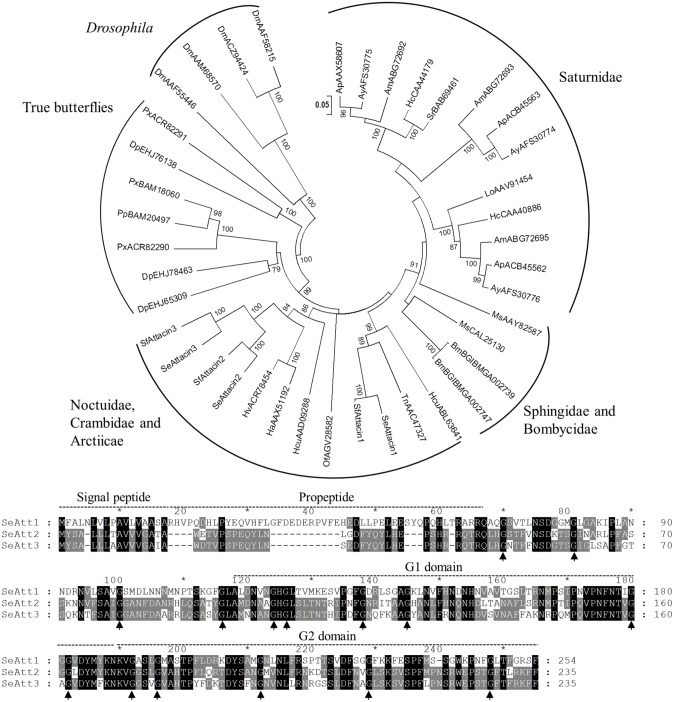
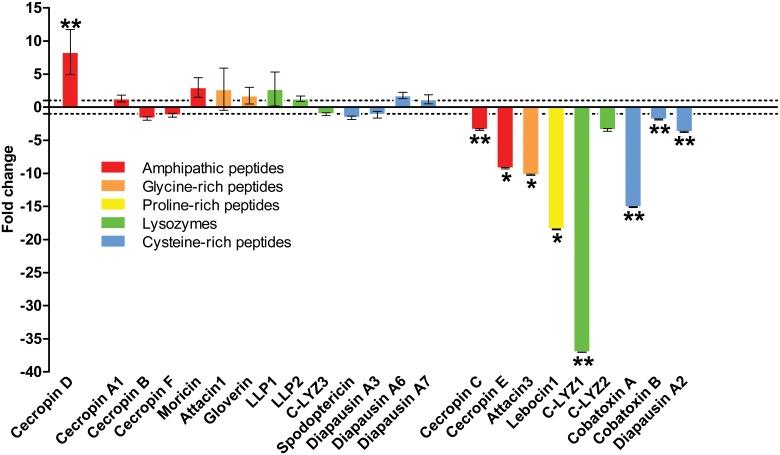
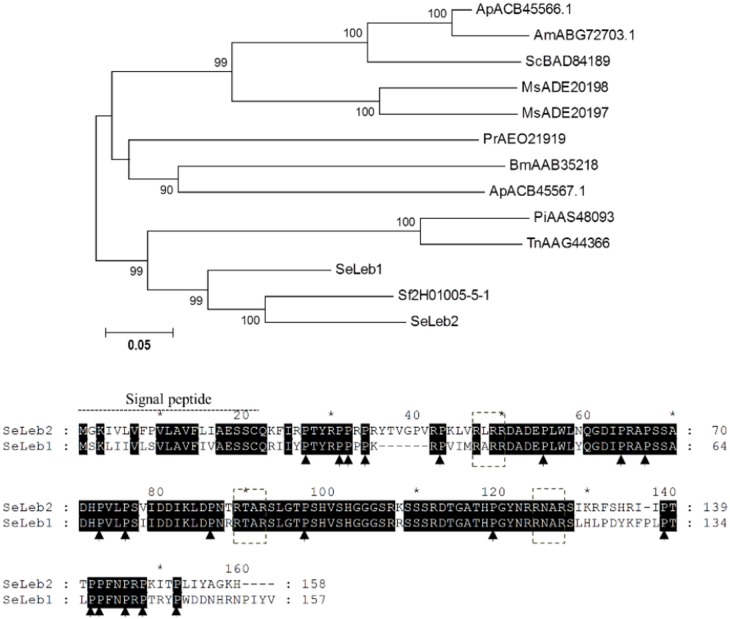
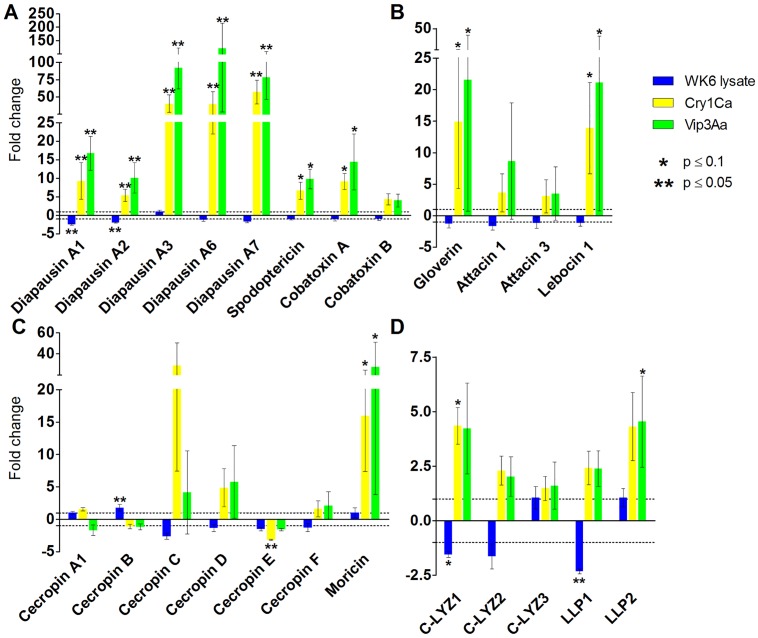
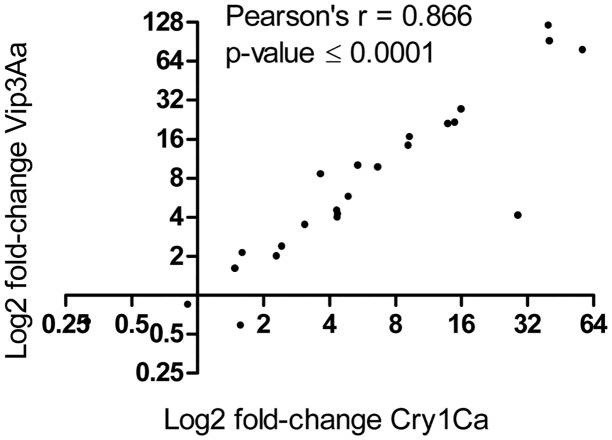
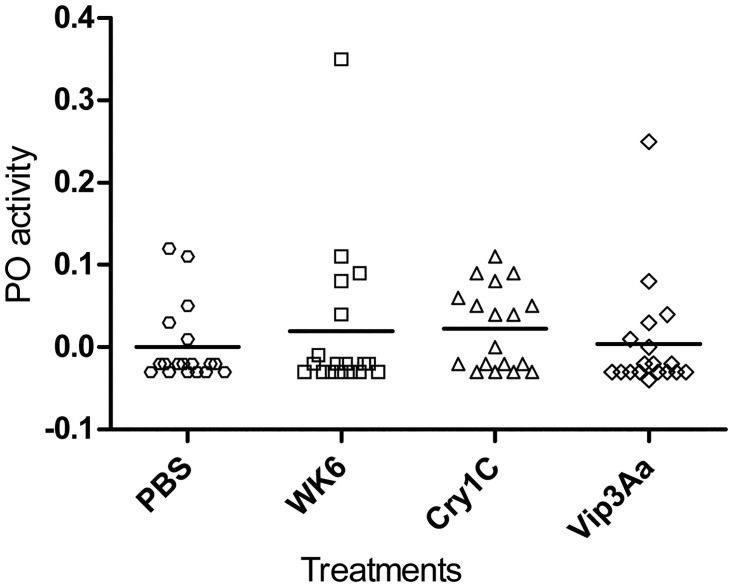
Antimicrobial peptides (AMPs) and lysozymes are the main effectors of the insect immune system, and they are involved in both local and systemic responses. Among local responses, midgut immune reaction plays an important role in fighting pathogens that reach the insect body through the oral route, as do many microorganisms used in pest control. Under this point of view, understanding how insects defend themselves locally during the first phases of infections caused by food-borne pathogens is important to further improve microbial control strategies. In the present study, we analyzed the transcriptional response of AMPs and lysozymes in the midgut of Spodoptera exigua (Lepidoptera: Noctuidae), a polyphagous pest that is commonly controlled by products based on Bacillus thuringiensis (Bt) or baculovirus. First, we comprehensively characterized the transcripts encoding AMPs and lysozymes expressed in S. exigua larval midgut, identifying 35 transcripts that represent the S. exigua arsenal against microbial infection. Secondly, we analyzed their expression in the midgut after ingestion of sub-lethal doses of two different pore-forming B. thuringiensis toxins, Cry1Ca and Vip3Aa, and the S. exigua nucleopolyhedrovirus (SeMNPV). We observed that both Bt toxins triggered a similar, wide and in some cases high transcriptional activation of genes encoding AMPs and lysozymes, which was not reflected in the activation of the classical systemic immune-marker phenoloxidase in hemolymph. Baculovirus ingestion resulted in the opposed reaction: Almost all transcripts coding for AMPs and lysozymes were down-regulated or not induced 96 hours post infection. Our results shed light on midgut response to different virulence factors or pathogens used nowadays as microbial control agents and point out the importance of the midgut immune response contribution to the larval immunity.
抗菌肽(AMPs)和溶菌酶是昆虫免疫系统的主要效应分子,它们参与局部和全身反应。在局部反应中,中肠免疫反应在对抗通过口部途径进入昆虫体内的病原体方面发挥着重要作用,许多用于害虫防治的微生物也是如此。从这个角度来看,了解昆虫在食源性病原体引起的感染初期如何进行局部防御,对于进一步改进微生物控制策略至关重要。在本研究中,我们分析了甜菜夜蛾(鳞翅目:夜蛾科)中肠中抗菌肽和溶菌酶的转录反应,甜菜夜蛾是一种多食性害虫,通常由基于苏云金芽孢杆菌(Bt)或杆状病毒的产品进行防治。首先,我们全面表征了在甜菜夜蛾幼虫中肠中表达的编码抗菌肽和溶菌酶的转录本,鉴定出35个转录本,它们代表了甜菜夜蛾对抗微生物感染的武器库。其次,我们分析了在摄入亚致死剂量的两种不同的形成孔道的苏云金芽孢杆菌毒素Cry1Ca和Vip3Aa以及甜菜夜蛾核型多角体病毒(SeMNPV)后,它们在中肠中的表达情况。我们观察到,两种Bt毒素都引发了编码抗菌肽和溶菌酶的基因的相似、广泛且在某些情况下高度的转录激活,而这并未反映在血淋巴中经典的全身免疫标志物酚氧化酶的激活上。摄入杆状病毒则导致相反的反应:几乎所有编码抗菌肽和溶菌酶的转录本在感染后96小时都被下调或未被诱导。我们的结果揭示了中肠对当今用作微生物控制剂的不同毒力因子或病原体的反应,并指出了中肠免疫反应对幼虫免疫的重要性。