Lynch Caitlin, Zhao Jinghua, Huang Ruili, Xiao Jingwei, Li Linhao, Heyward Scott, Xia Menghang, Wang Hongbing
Department of Pharmaceutical Sciences, University of Maryland School of Pharmacy, Baltimore, 21201 Maryland.
National Center for Advancing Translational Sciences (NCATS), National Institutes of Health, Bethesda, 20892 Maryland.
Sci Rep. 2015 May 20;5:10405. doi: 10.1038/srep10405.
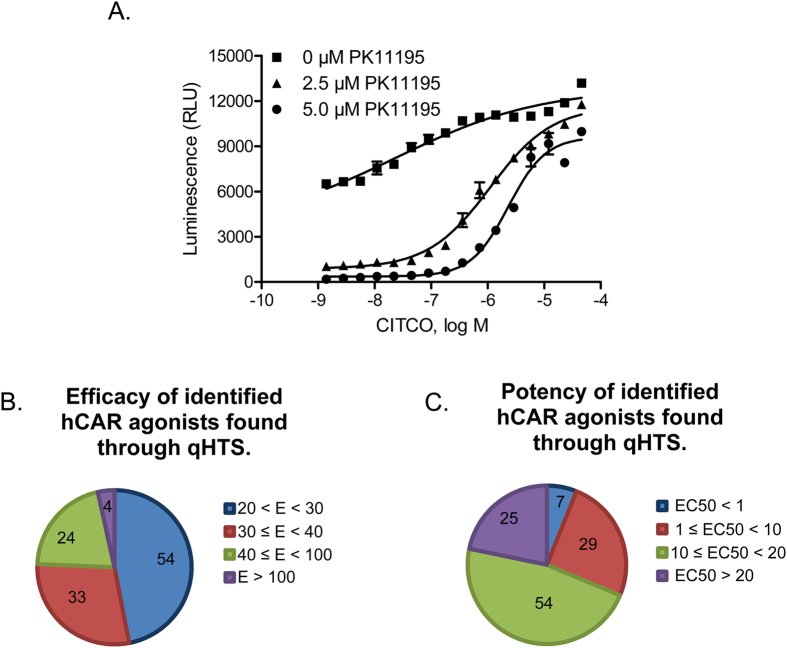
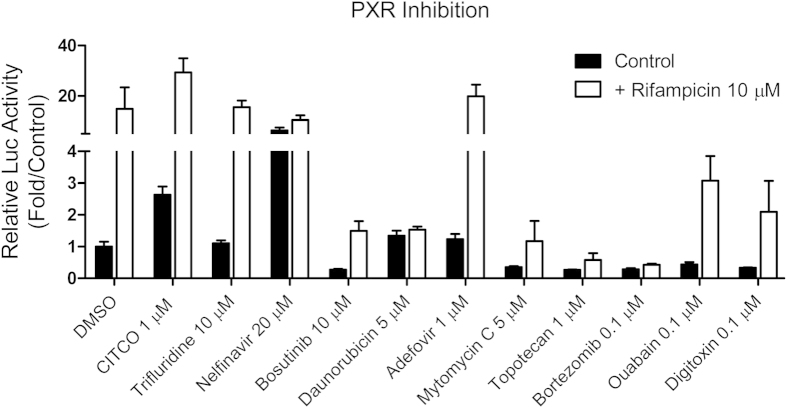
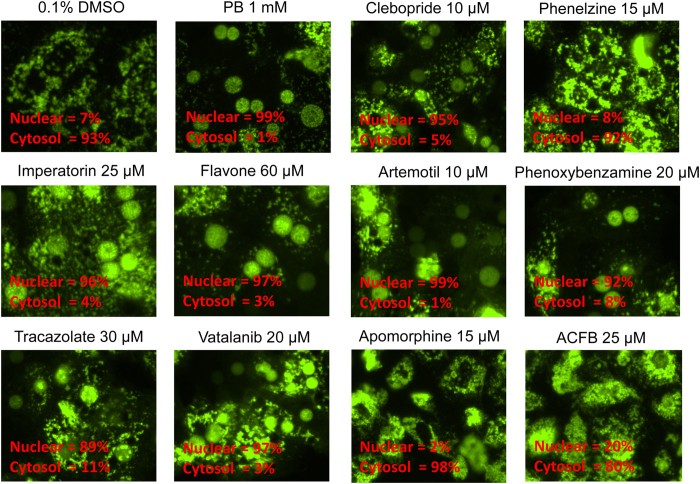
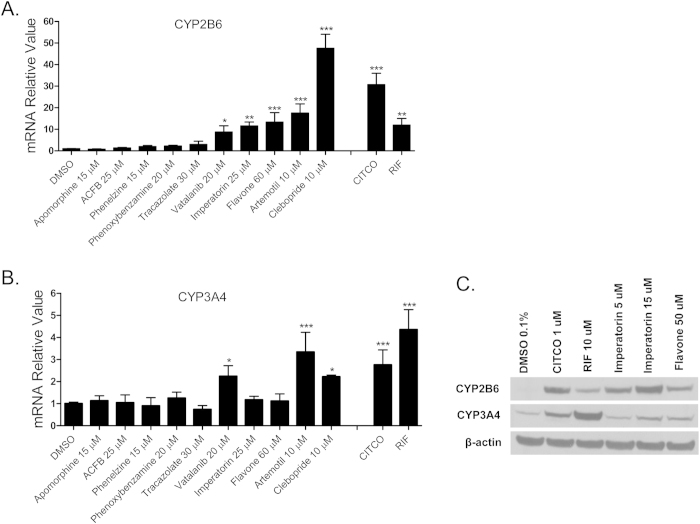
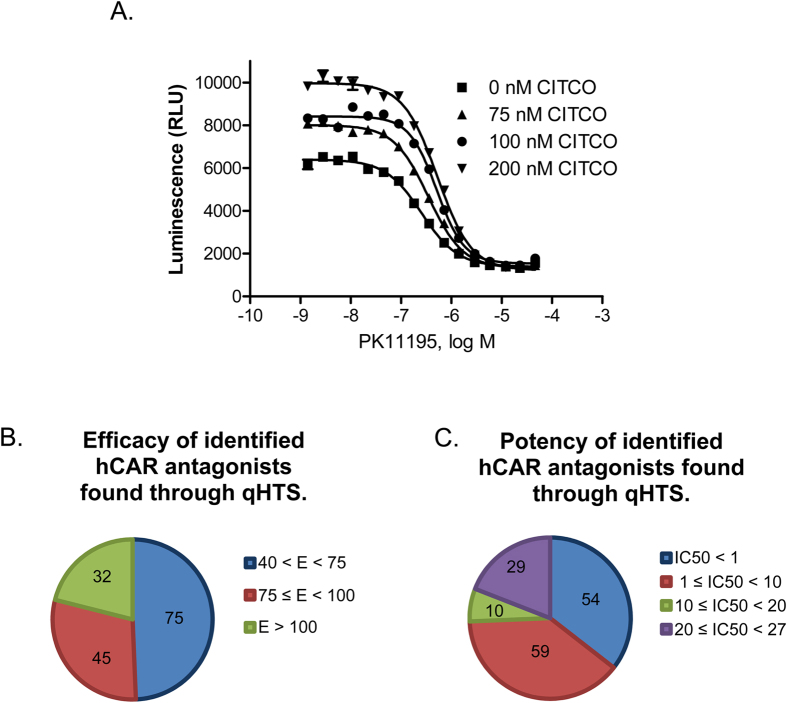
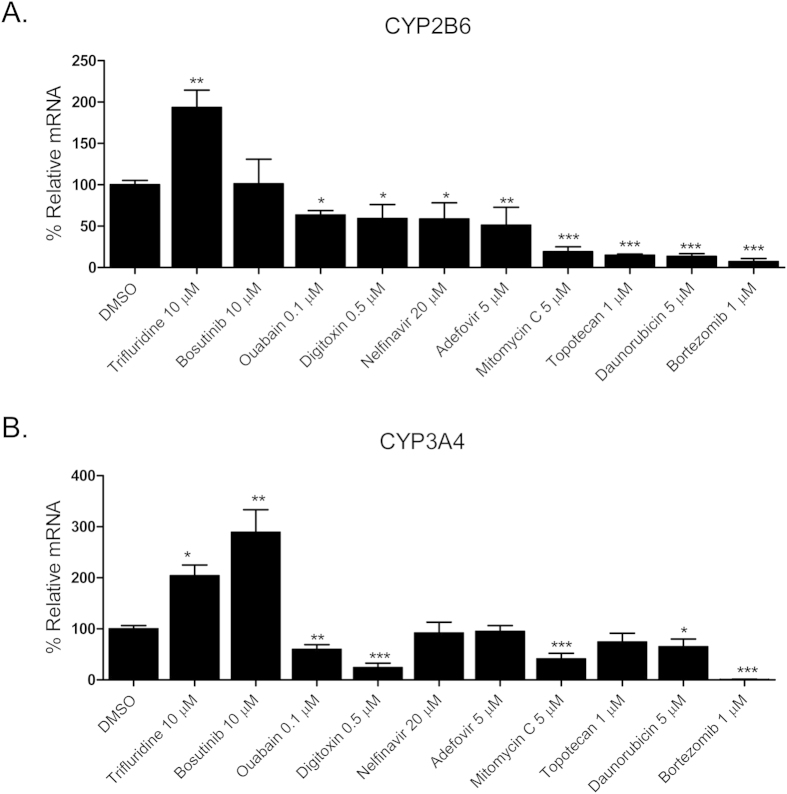
The constitutive androstane receptor (CAR, NR1I3) plays a key role in governing the transcription of numerous hepatic genes that involve xenobiotic metabolism/clearance, energy homeostasis, and cell proliferation. Thus, identification of novel human CAR (hCAR) modulators may not only enhance early prediction of drug-drug interactions but also offer potentially novel therapeutics for diseases such as metabolic disorders and cancer. In this study, we have generated a double stable cell line expressing both hCAR and a CYP2B6-driven luciferase reporter for quantitative high-throughput screening (qHTS) of hCAR modulators. Approximately 2800 compounds from the NIH Chemical Genomics Center Pharmaceutical Collection were screened employing both the activation and deactivation modes of the qHTS. Activators (115) and deactivators (152) of hCAR were identified from the primary qHTS, among which 10 agonists and 10 antagonists were further validated in the physiologically relevant human primary hepatocytes for compound-mediated hCAR nuclear translocation and target gene expression. Collectively, our results reveal that hCAR modulators can be efficiently identified through this newly established qHTS assay. Profiling drug collections for hCAR activity would facilitate the prediction of metabolism-based drug-drug interactions, and may lead to the identification of potential novel therapeutics.
组成型雄烷受体(CAR,NR1I3)在调控众多肝脏基因的转录过程中发挥关键作用,这些基因涉及外源性物质代谢/清除、能量稳态和细胞增殖。因此,鉴定新型人类CAR(hCAR)调节剂不仅可以加强对药物相互作用的早期预测,还可能为代谢紊乱和癌症等疾病提供潜在的新型治疗方法。在本研究中,我们构建了一种双稳定细胞系,该细胞系同时表达hCAR和CYP2B6驱动的荧光素酶报告基因,用于hCAR调节剂的定量高通量筛选(qHTS)。使用qHTS的激活和失活模式,对来自美国国立卫生研究院化学基因组学中心药物库的约2800种化合物进行了筛选。从初步的qHTS中鉴定出hCAR的激活剂(115种)和失活剂(152种),其中10种激动剂和10种拮抗剂在生理相关的人类原代肝细胞中进一步验证了化合物介导的hCAR核转位和靶基因表达。总体而言,我们的结果表明,通过这种新建立的qHTS分析可以有效地鉴定hCAR调节剂。分析药物库中hCAR的活性将有助于基于代谢的药物相互作用的预测,并可能导致潜在新型治疗方法的鉴定。