Ng Charlotte K Y, Martelotto Luciano G, Gauthier Arnaud, Wen Huei-Chi, Piscuoglio Salvatore, Lim Raymond S, Cowell Catherine F, Wilkerson Paul M, Wai Patty, Rodrigues Daniel N, Arnould Laurent, Geyer Felipe C, Bromberg Silvio E, Lacroix-Triki Magali, Penault-Llorca Frederique, Giard Sylvia, Sastre-Garau Xavier, Natrajan Rachael, Norton Larry, Cottu Paul H, Weigelt Britta, Vincent-Salomon Anne, Reis-Filho Jorge S
Department of Pathology, Memorial Sloan Kettering Cancer Center, New York, NY, 10065, USA.
Department of Tumor Biology, Institut Curie, 75248, Paris, France.
Genome Biol. 2015 May 22;16(1):107. doi: 10.1186/s13059-015-0657-6.
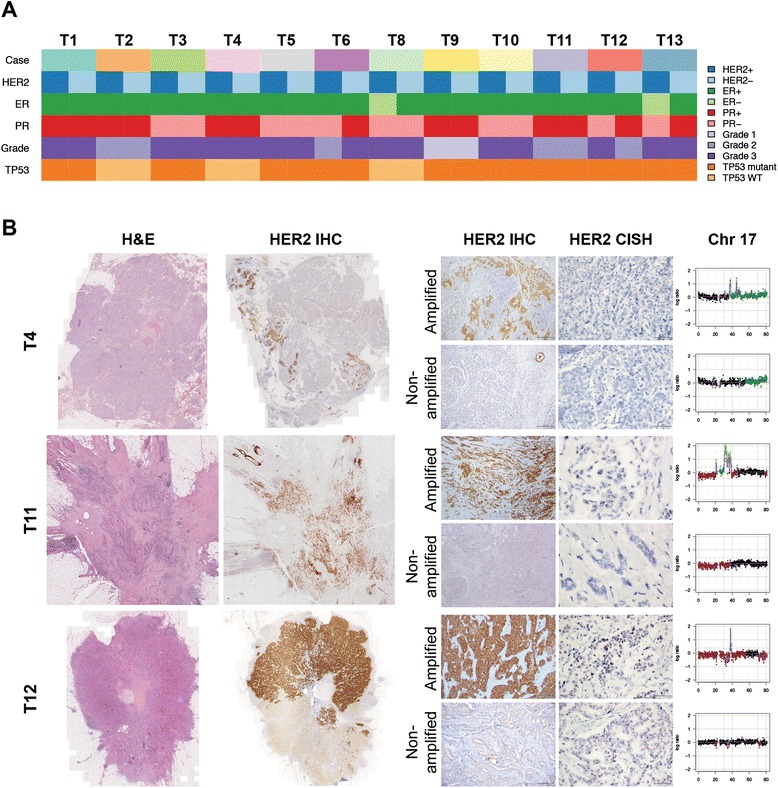
HER2 is overexpressed and amplified in approximately 15% of invasive breast cancers, and is the molecular target and predictive marker of response to anti-HER2 agents. In a subset of these cases, heterogeneous distribution of HER2 gene amplification can be found, which creates clinically challenging scenarios. Currently, breast cancers with HER2 amplification/overexpression in just over 10% of cancer cells are considered HER2-positive for clinical purposes; however, it is unclear as to whether the HER2-negative components of such tumors would be driven by distinct genetic alterations. Here we sought to characterize the pathologic and genetic features of the HER2-positive and HER2-negative components of breast cancers with heterogeneous HER2 gene amplification and to define the repertoire of potential driver genetic alterations in the HER2-negative components of these cases.
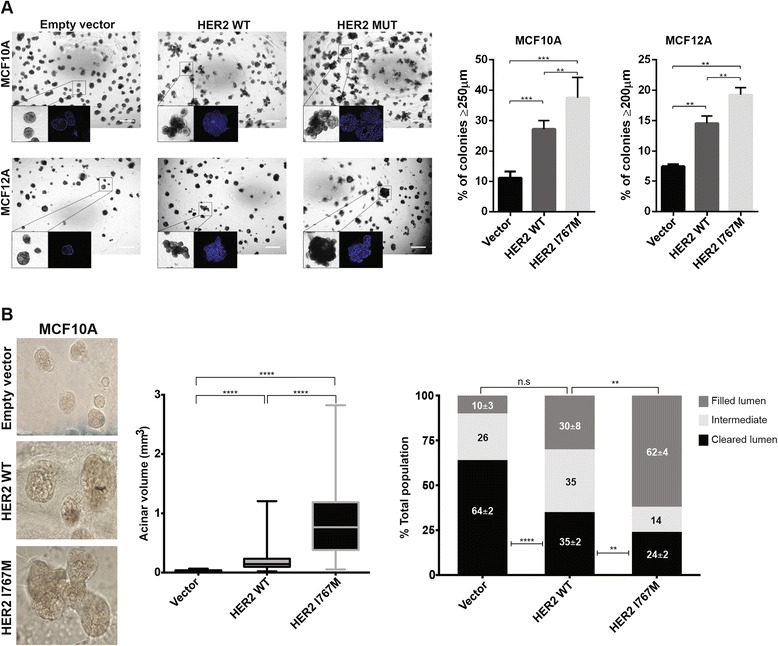
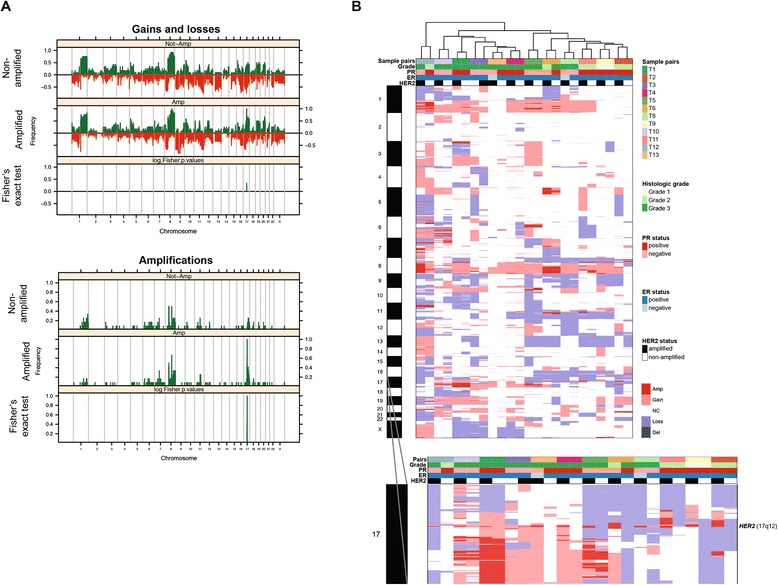
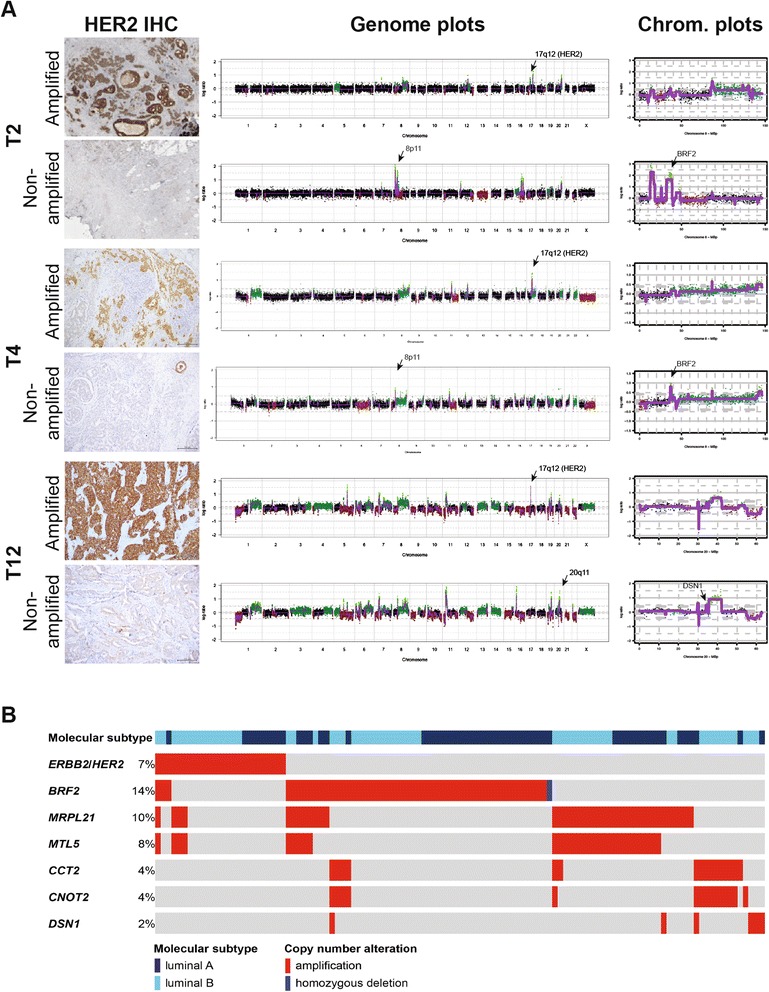
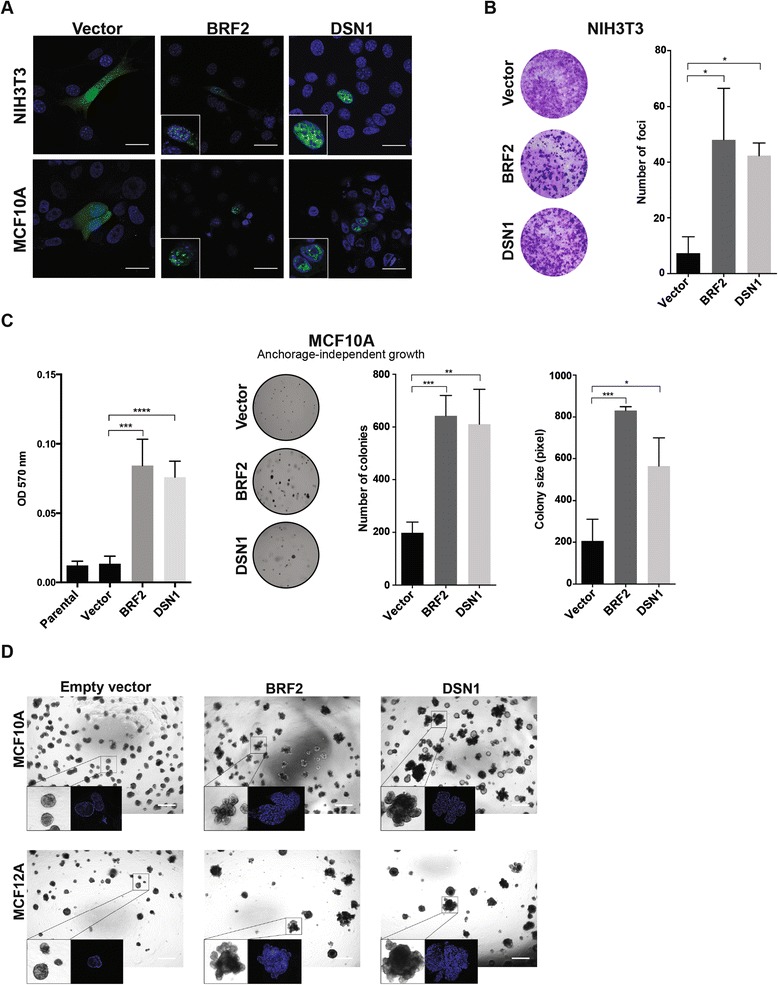
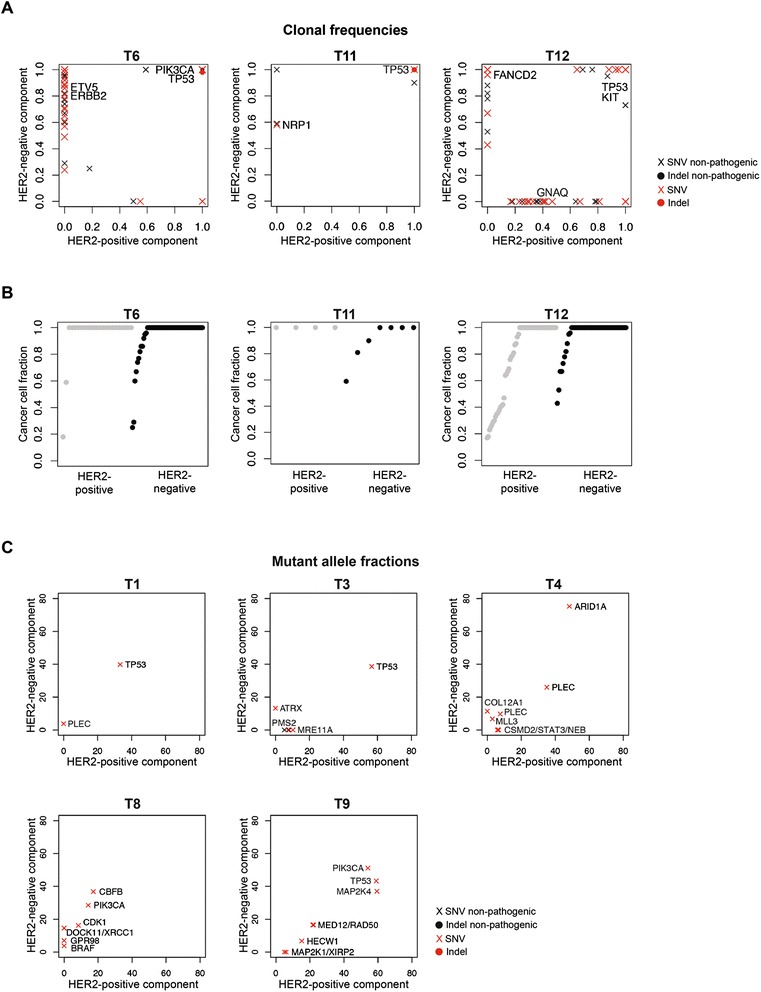
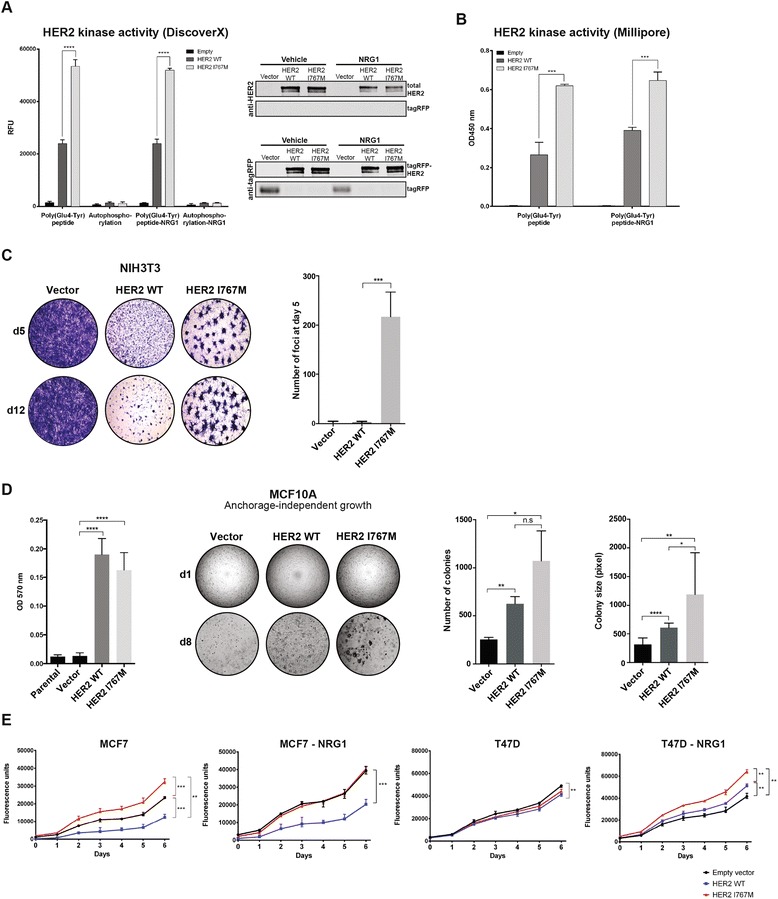
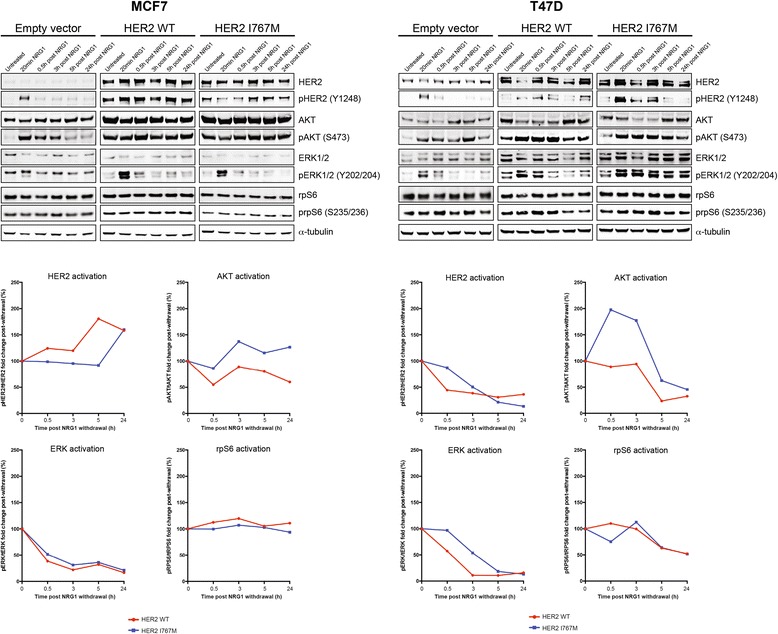
We separately analyzed the HER2-negative and HER2-positive components of 12 HER2 heterogeneous breast cancers using gene copy number profiling and massively parallel sequencing, and identified potential driver genetic alterations restricted to the HER2-negative cells in each case. In vitro experiments provided functional evidence to suggest that BRF2 and DSN1 overexpression/amplification, and the HER2 I767M mutation may be alterations that compensate for the lack of HER2 amplification in the HER2-negative components of HER2 heterogeneous breast cancers.
Our results indicate that even driver genetic alterations, such as HER2 gene amplification, can be heterogeneously distributed within a cancer, and that the HER2-negative components are likely driven by genetic alterations not present in the HER2-positive components, including BRF2 and DSN1 amplification and HER2 somatic mutations.
HER2在约15%的浸润性乳腺癌中过表达和扩增,是抗HER2药物反应的分子靶点和预测标志物。在这些病例的一个子集中,可发现HER2基因扩增的异质性分布,这带来了临床挑战。目前,临床上仅10%以上癌细胞中存在HER2扩增/过表达的乳腺癌被视为HER2阳性;然而,尚不清楚此类肿瘤的HER2阴性成分是否由不同的基因改变驱动。在此,我们试图表征具有HER2基因扩增异质性的乳腺癌的HER2阳性和HER2阴性成分的病理和遗传特征,并确定这些病例中HER2阴性成分潜在驱动基因改变的种类。
我们使用基因拷贝数分析和大规模平行测序分别分析了12例HER2异质性乳腺癌的HER2阴性和HER2阳性成分,并在每个病例中鉴定出仅限于HER2阴性细胞的潜在驱动基因改变。体外实验提供了功能证据,表明BRF2和DSN1的过表达/扩增以及HER2 I767M突变可能是补偿HER2异质性乳腺癌HER2阴性成分中HER2扩增缺失的改变。
我们的结果表明,即使是驱动基因改变,如HER2基因扩增,也可在肿瘤内异质性分布,并且HER2阴性成分可能由HER2阳性成分中不存在的基因改变驱动,包括BRF2和DSN1扩增以及HER2体细胞突变。