Reader Janette, Botha Mariëtte, Theron Anjo, Lauterbach Sonja B, Rossouw Claire, Engelbrecht Dewaldt, Wepener Melanie, Smit Annél, Leroy Didier, Mancama Dalu, Coetzer Theresa L, Birkholtz Lyn-Marie
Malaria Parasite Molecular Laboratory, Centre for Sustainable Malaria Control, Department of Biochemistry, University of Pretoria, Private Bag x20, Hatfield, Pretoria, 0028, South Africa.
Biosciences, Council for Scientific and Industrial Research, PO Box 395, Pretoria, 0001, South Africa.
Malar J. 2015 May 22;14:213. doi: 10.1186/s12936-015-0718-z.
The discovery of malaria transmission-blocking compounds is seen as key to malaria elimination strategies and gametocyte-screening platforms are critical filters to identify active molecules. However, unlike asexual parasite assays measuring parasite proliferation, greater variability in end-point readout exists between different gametocytocidal assays. This is compounded by difficulties in routinely producing viable, functional and stage-specific gametocyte populations. Here, a parallel evaluation of four assay platforms on the same gametocyte populations was performed for the first time. This allowed the direct comparison of the ability of different assay platforms to detect compounds with gametocytocidal activity and revealed caveats in some assay readouts that interrogate different parasite biological functions.
Gametocytogenesis from Plasmodium falciparum (NF54) was optimized with a robust and standardized protocol. ATP, pLDH, luciferase reporter and PrestoBlue® assays were compared in context of a set of 10 reference compounds. The assays were performed in parallel on the same gametocyte preparation (except for luciferase reporter lines) using the same drug preparations (48 h). The remaining parameters for each assay were all comparable.
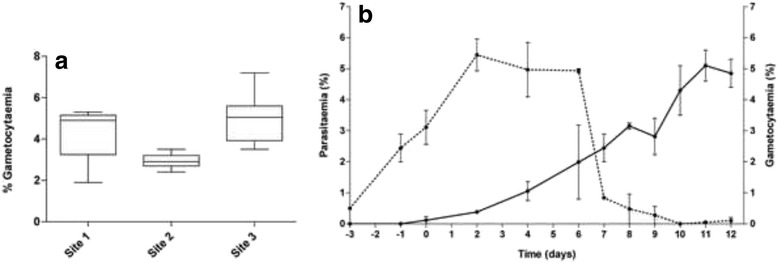
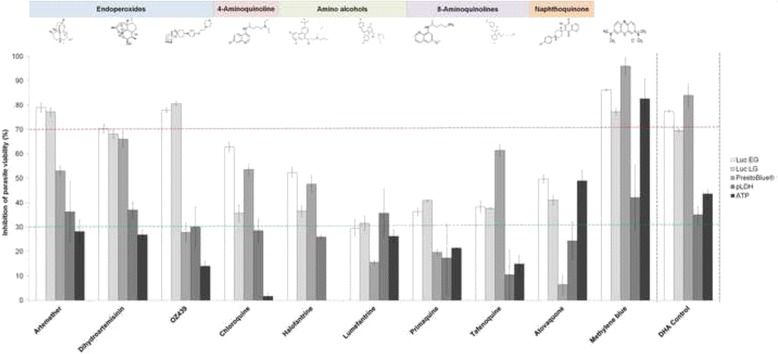
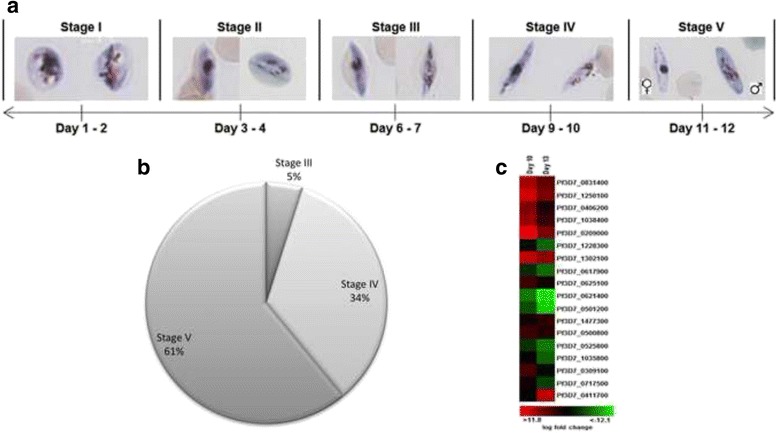
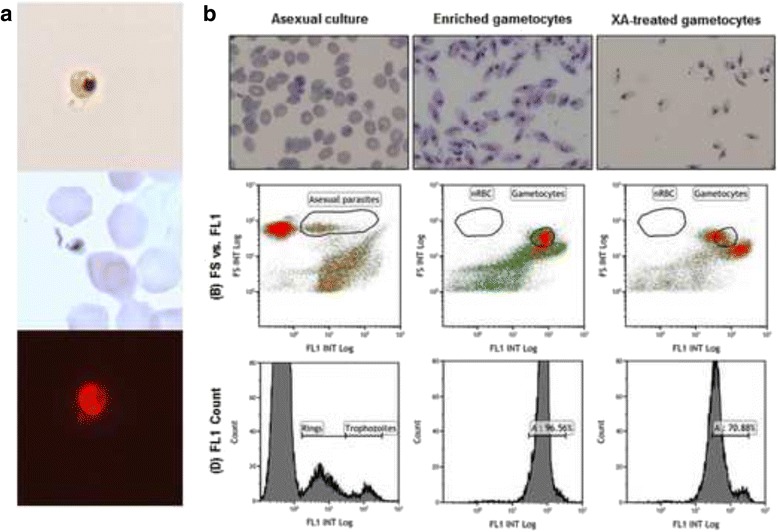
A highly robust method for generating viable and functional gametocytes was developed and comprehensively validated resulting in an average gametocytaemia of 4%. Subsequent parallel assays for gametocytocidal activity indicated that different assay platforms were not able to screen compounds with variant chemical scaffolds similarly. Luciferase reporter assays revealed that synchronized stage-specific gametocyte production is essential for drug discovery, as differential susceptibility in various gametocyte developmental populations is evident.
With this study, the key parameters for assays aiming at testing the gametocytocidal activity of potential transmission blocking molecules against Plasmodium gametocytes were accurately dissected. This first and uniquely comparative study emphasizes differential effects seen with the use of different assay platforms interrogating variant biological systems. Whilst this data is informative from a biological perspective and may provide indications of the drug mode of action, it does highlight the care that must be taken when screening broad-diversity chemotypes with a single assay platform against gametocytes for which the biology is not clearly understood.
疟疾传播阻断化合物的发现被视为疟疾消除策略的关键,而配子体筛选平台是识别活性分子的关键过滤器。然而,与测量寄生虫增殖的无性寄生虫检测不同,不同的杀配子体检测在终点读数上存在更大的变异性。常规生产有活力、功能正常且阶段特异性的配子体群体存在困难,这使情况更加复杂。在此,首次对同一配子体群体的四种检测平台进行了平行评估。这使得能够直接比较不同检测平台检测具有杀配子体活性化合物的能力,并揭示了一些检测读数中询问不同寄生虫生物学功能时的注意事项。
采用稳健且标准化的方案优化恶性疟原虫(NF54)的配子体生成。在一组10种参考化合物的背景下比较了ATP、pLDH、荧光素酶报告基因和PrestoBlue®检测。除荧光素酶报告基因系外,使用相同的药物制剂(48小时)在同一配子体制备物上平行进行检测。每种检测的其余参数均具有可比性。
开发并全面验证了一种生成有活力和功能正常的配子体的高度稳健方法,导致平均配子体血症为4%。随后对杀配子体活性的平行检测表明,不同的检测平台无法以类似方式筛选具有不同化学支架的化合物。荧光素酶报告基因检测表明,同步的阶段特异性配子体生成对于药物发现至关重要,因为不同配子体发育群体中的敏感性差异很明显。
通过这项研究,准确剖析了旨在测试潜在传播阻断分子对疟原虫配子体的杀配子体活性的检测的关键参数。这项首次且独特的比较研究强调了使用询问不同生物系统的不同检测平台所看到的差异效应。虽然这些数据从生物学角度提供了信息,并可能提供药物作用模式的指示,但它确实凸显了在使用单一检测平台针对生物学尚不清楚的配子体筛选广泛多样的化学类型时必须谨慎。