Eddens Taylor, Elsegeiny Waleed, Nelson Michael P, Horne William, Campfield Brian T, Steele Chad, Kolls Jay K
Department of Immunology, University of Pittsburgh School of Medicine, Pittsburgh, PA 15224; Richard King Mellon Foundation Institute for Pediatric Research, Children's Hospital of Pittsburgh of University of Pittsburgh Medical Center, Pittsburgh, PA 15224;
Department of Medicine, University of Alabama at Birmingham, Birmingham, AL 35294; and.
J Immunol. 2015 Jul 1;195(1):185-93. doi: 10.4049/jimmunol.1403162. Epub 2015 May 20.
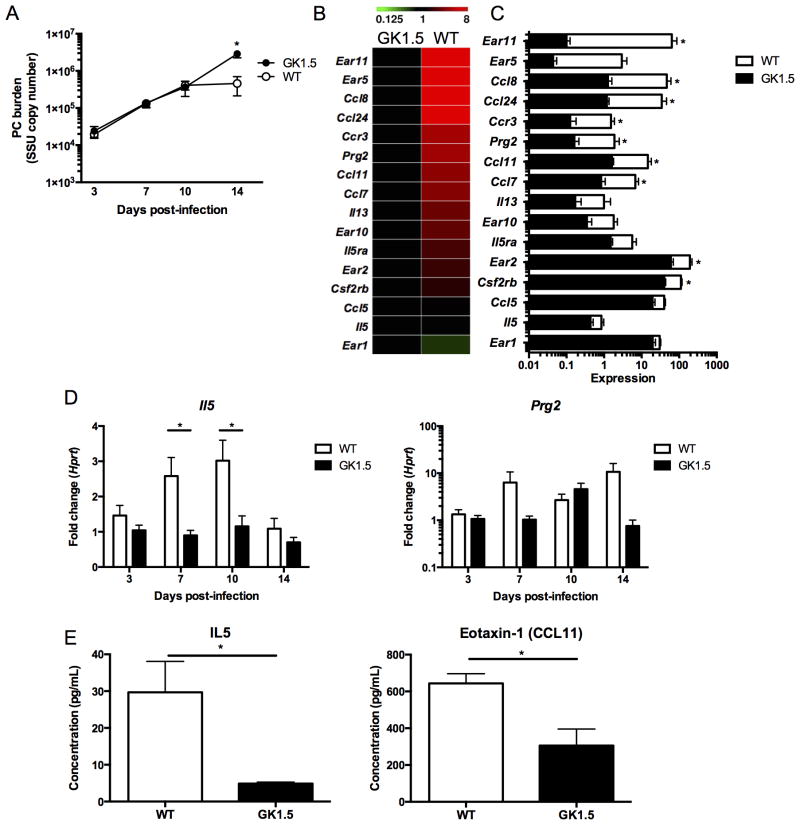
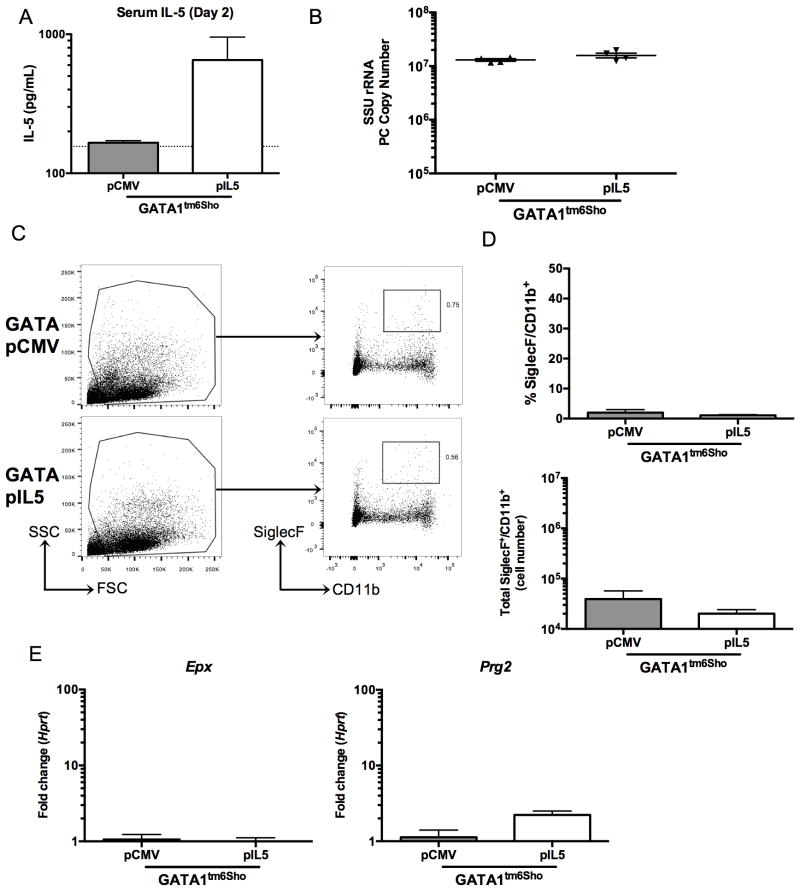
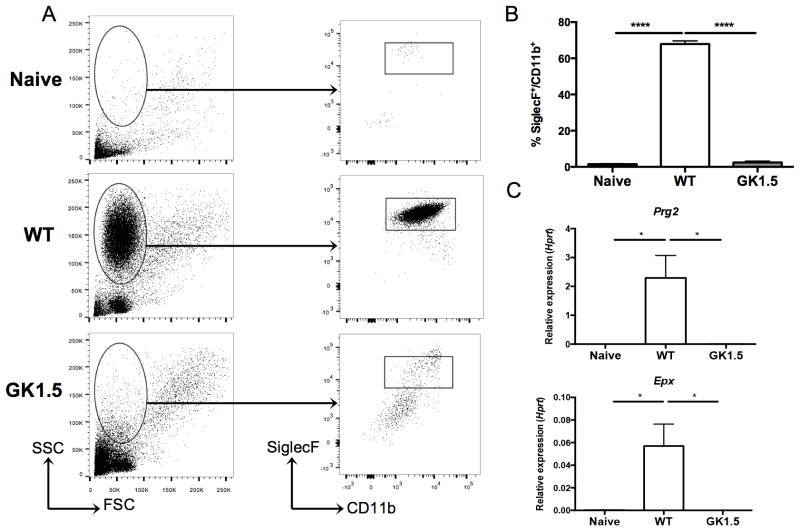
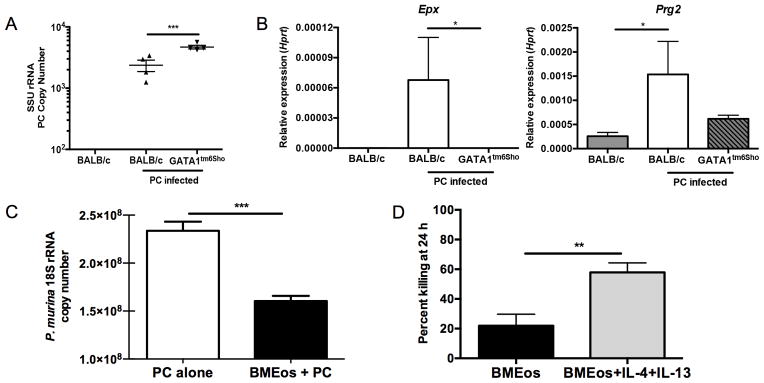
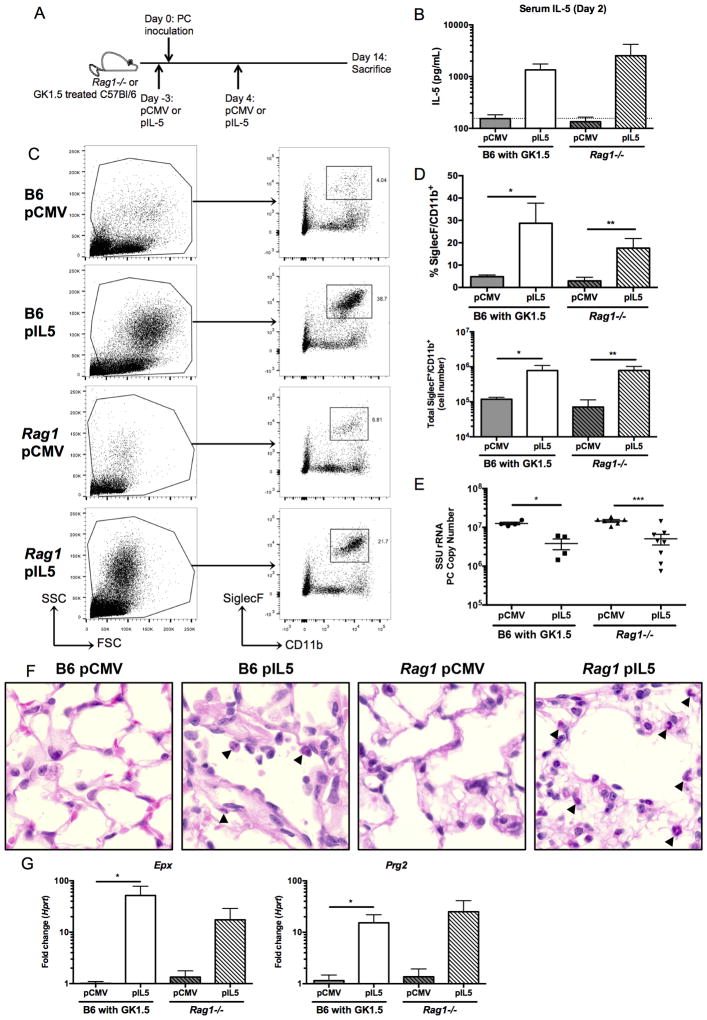
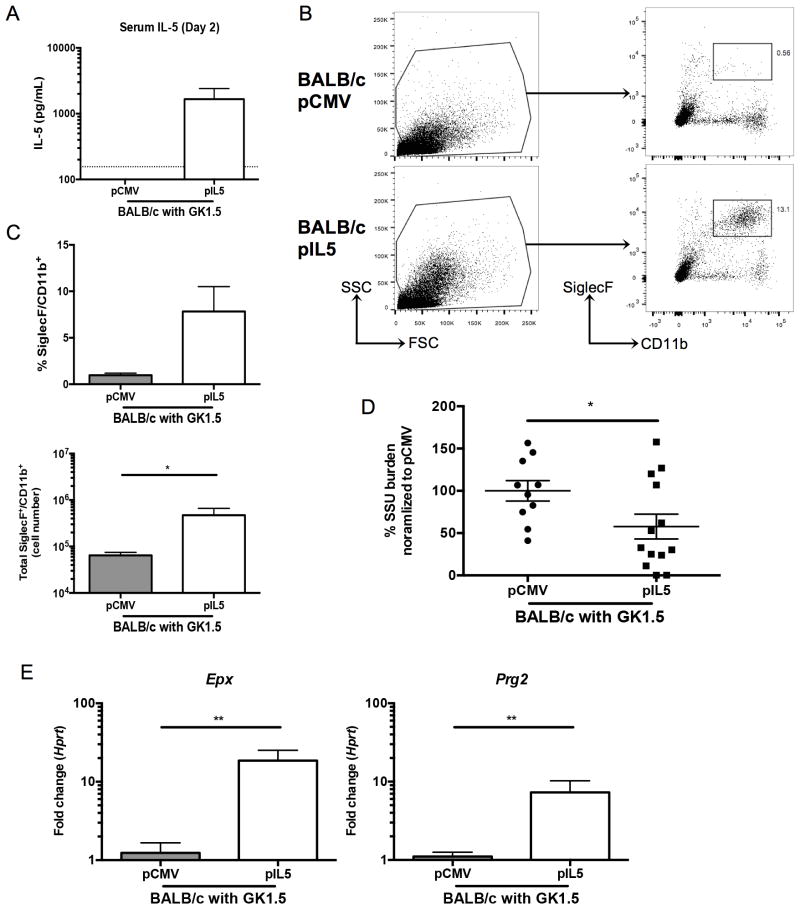
Pneumocystis pneumonia remains a common opportunistic infection in the diverse immunosuppressed population. One clear risk factor for susceptibility to Pneumocystis is a declining CD4(+) T cell count in the setting of HIV/AIDS or primary immunodeficiency. Non-HIV-infected individuals taking immunosuppressive drug regimens targeting T cell activation are also susceptible. Given the crucial role of CD4(+) T cells in host defense against Pneumocystis, we used RNA sequencing of whole lung early in infection in wild-type and CD4-depleted animals as an unbiased approach to examine mechanisms of fungal clearance. In wild-type mice, a strong eosinophil signature was observed at day 14 post Pneumocystis challenge, and eosinophils were increased in the bronchoalveolar lavage fluid of wild-type mice. Furthermore, eosinophilopoiesis-deficient Gata1(tm6Sho)/J mice were more susceptible to Pneumocystis infection when compared with BALB/c controls, and bone marrow-derived eosinophils had in vitro Pneumocystis killing activity. To drive eosinophilia in vivo, Rag1(-/-) mice were treated with a plasmid expressing IL-5 (pIL5) or an empty plasmid control via hydrodynamic injection. The pIL5-treated mice had increased serum IL-5 and eosinophilia in the lung, as well as reduced Pneumocystis burden, compared with mice treated with control plasmid. In addition, pIL5 treatment could induce eosinophilia and reduce Pneumocystis burden in CD4-depleted C57BL/6 and BALB/c mice, but not eosinophilopoiesis-deficient Gata1(tm6Sho)/J mice. Taken together, these results demonstrate that an early role of CD4(+) T cells is to recruit eosinophils to the lung and that eosinophils are a novel candidate for future therapeutic development in the treatment of Pneumocystis pneumonia in the immunosuppressed population.
肺孢子菌肺炎在各种免疫抑制人群中仍然是一种常见的机会性感染。易患肺孢子菌的一个明确危险因素是在感染人类免疫缺陷病毒(HIV)/获得性免疫缺陷综合征(AIDS)或原发性免疫缺陷的情况下,CD4(+) T细胞计数下降。服用针对T细胞活化的免疫抑制药物方案的非HIV感染个体也易患此病。鉴于CD4(+) T细胞在宿主抵御肺孢子菌的防御中起关键作用,我们使用野生型和CD4细胞耗竭动物感染早期全肺的RNA测序作为一种无偏倚的方法来研究真菌清除机制。在野生型小鼠中,肺孢子菌攻击后第14天观察到强烈的嗜酸性粒细胞特征,野生型小鼠支气管肺泡灌洗液中的嗜酸性粒细胞增加。此外,与BALB/c对照相比,嗜酸性粒细胞生成缺陷的Gata1(tm6Sho)/J小鼠更容易感染肺孢子菌,并且骨髓来源的嗜酸性粒细胞具有体外杀灭肺孢子菌的活性。为了在体内诱导嗜酸性粒细胞增多,通过流体动力学注射用表达白细胞介素-5(IL-5)的质粒(pIL5)或空质粒对照处理Rag1(-/-)小鼠。与用对照质粒处理的小鼠相比,用pIL5处理的小鼠血清IL-5增加,肺中嗜酸性粒细胞增多,并且肺孢子菌负荷降低。此外,pIL5治疗可诱导CD4细胞耗竭的C57BL/6和BALB/c小鼠嗜酸性粒细胞增多并降低肺孢子菌负荷,但不能诱导嗜酸性粒细胞生成缺陷的Gata1(tm6Sho)/J小鼠。综上所述,这些结果表明CD4(+) T细胞的早期作用是将嗜酸性粒细胞募集到肺中,并且嗜酸性粒细胞是未来免疫抑制人群肺孢子菌肺炎治疗中治疗性开发的新候选者。